Garage Door Service for Stonegate's Late-90s Housing Stock
Stonegate homes mostly date to the late 1990s, later than most of the Denver service area. We cover openers, springs, and tracks built to that era's specs.
Stonegate's median build year lands around 1997, which puts most of the neighborhood a full decade and a half past the 1981 median for the wider Denver service area we work across. That gap matters more than it sounds. A door installed in 1997 is a different animal than one from the 1970s or 80s stock that dominates closer-in parts of our coverage - different opener mounting, different spring counts on double doors, different track gauge as manufacturers moved toward lighter steel through the 90s.
With about 3,272 households in Stonegate, the building stock here is fairly tight in age. You don't get the mix of 1950s ranch doors sitting next to 2005 builds that you'd find in some of the older, larger service areas. Most garages here were built to the same code cycle and installed by the same handful of production builders working the late 90s Denver suburbs. That consistency is useful - it means the failure patterns repeat house to house, and we can often guess the hardware before we open the truck.
How That Shows Up in the Door
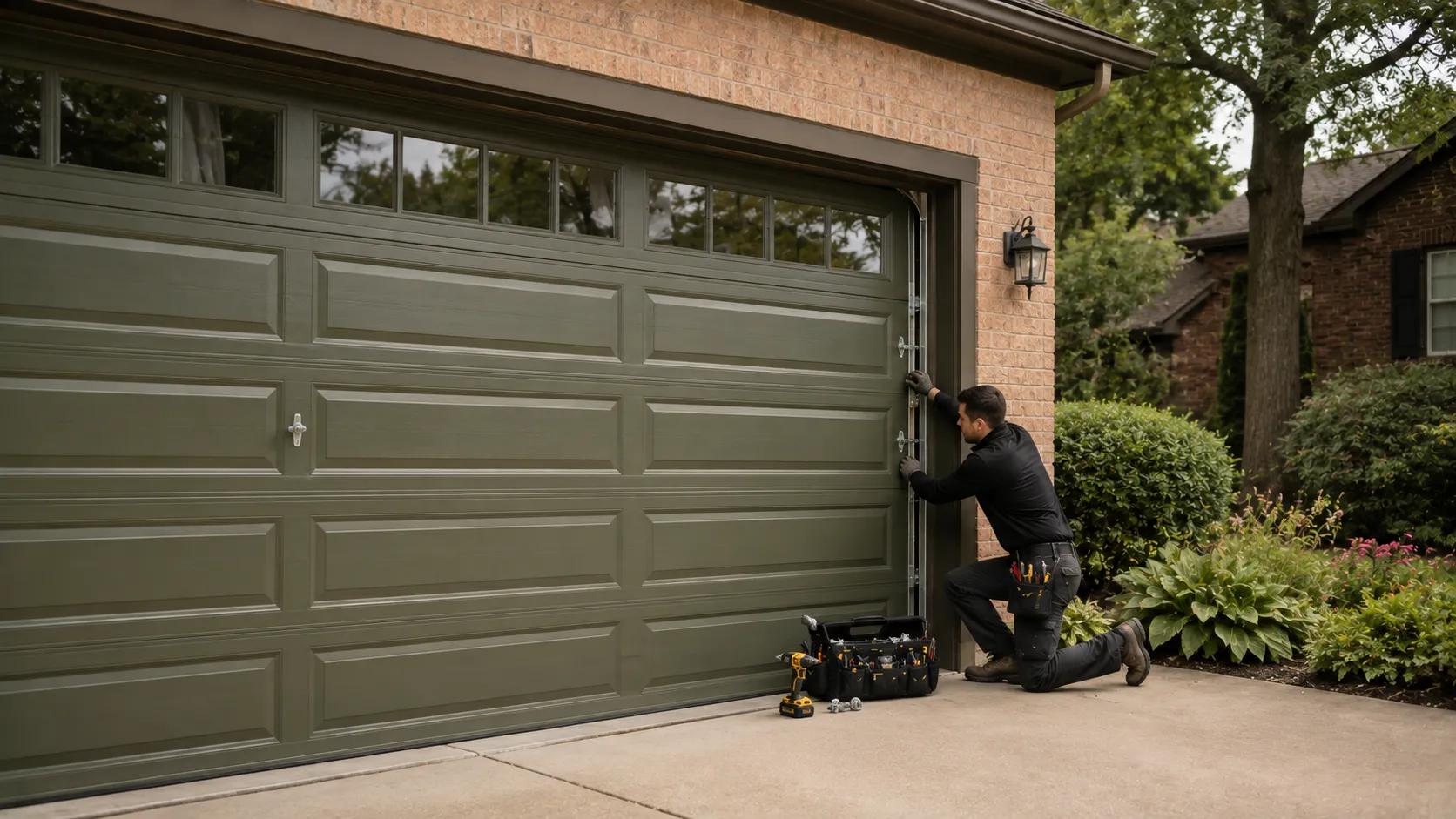
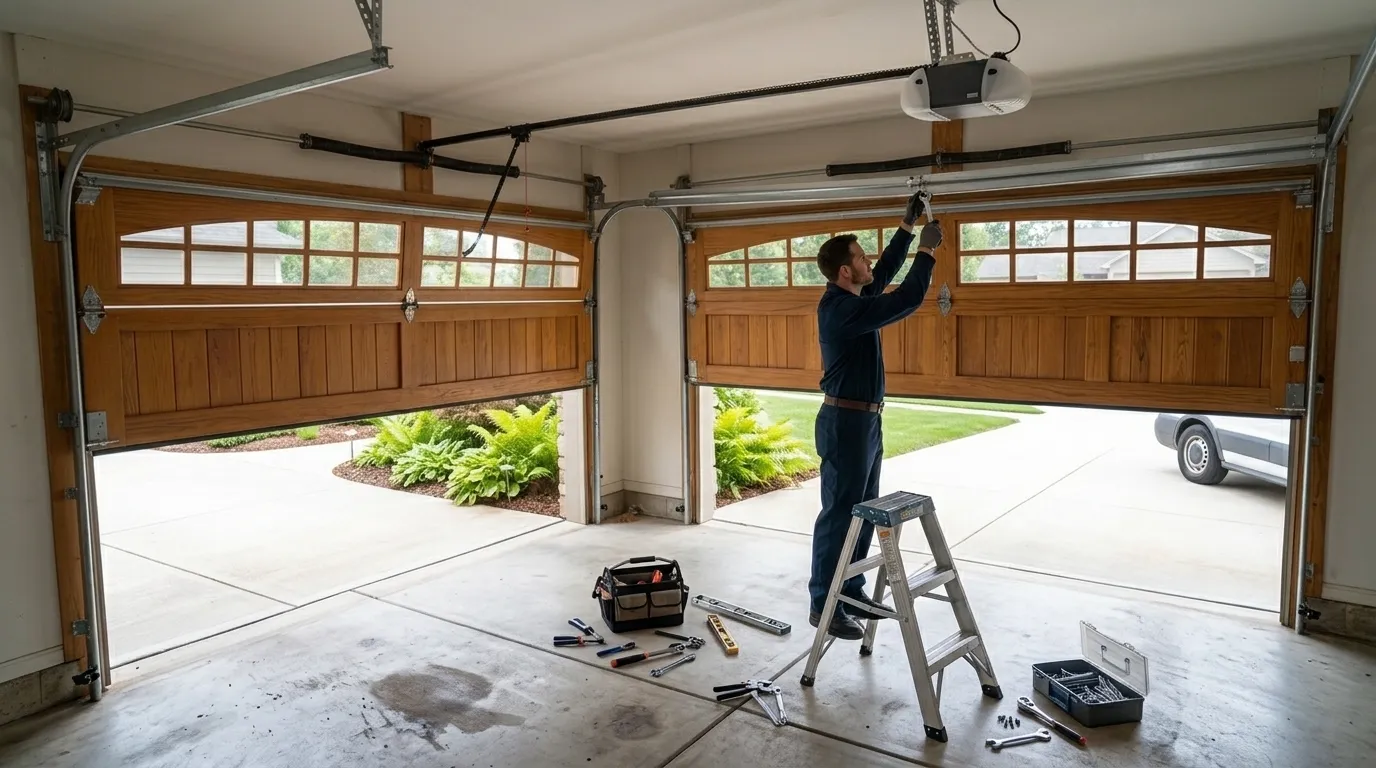
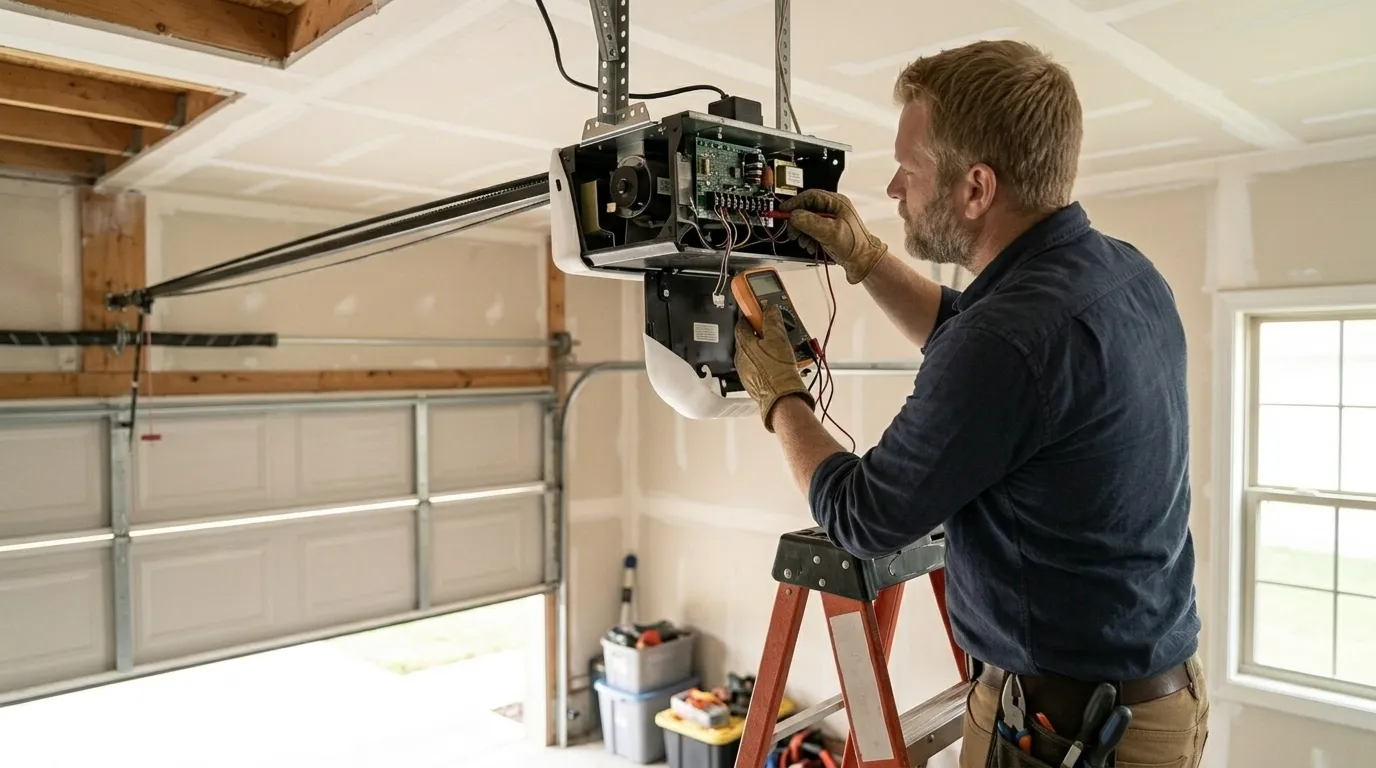
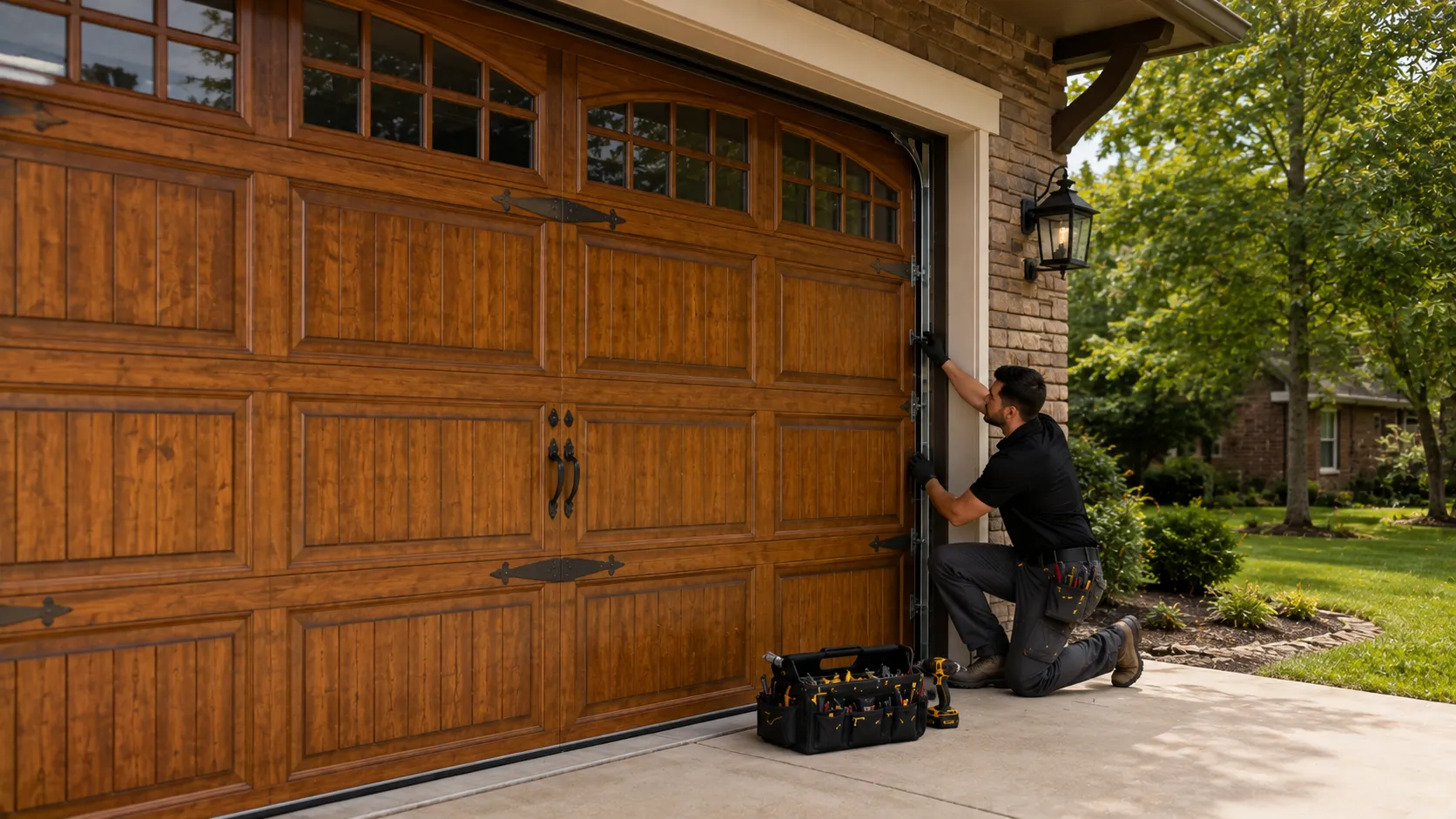
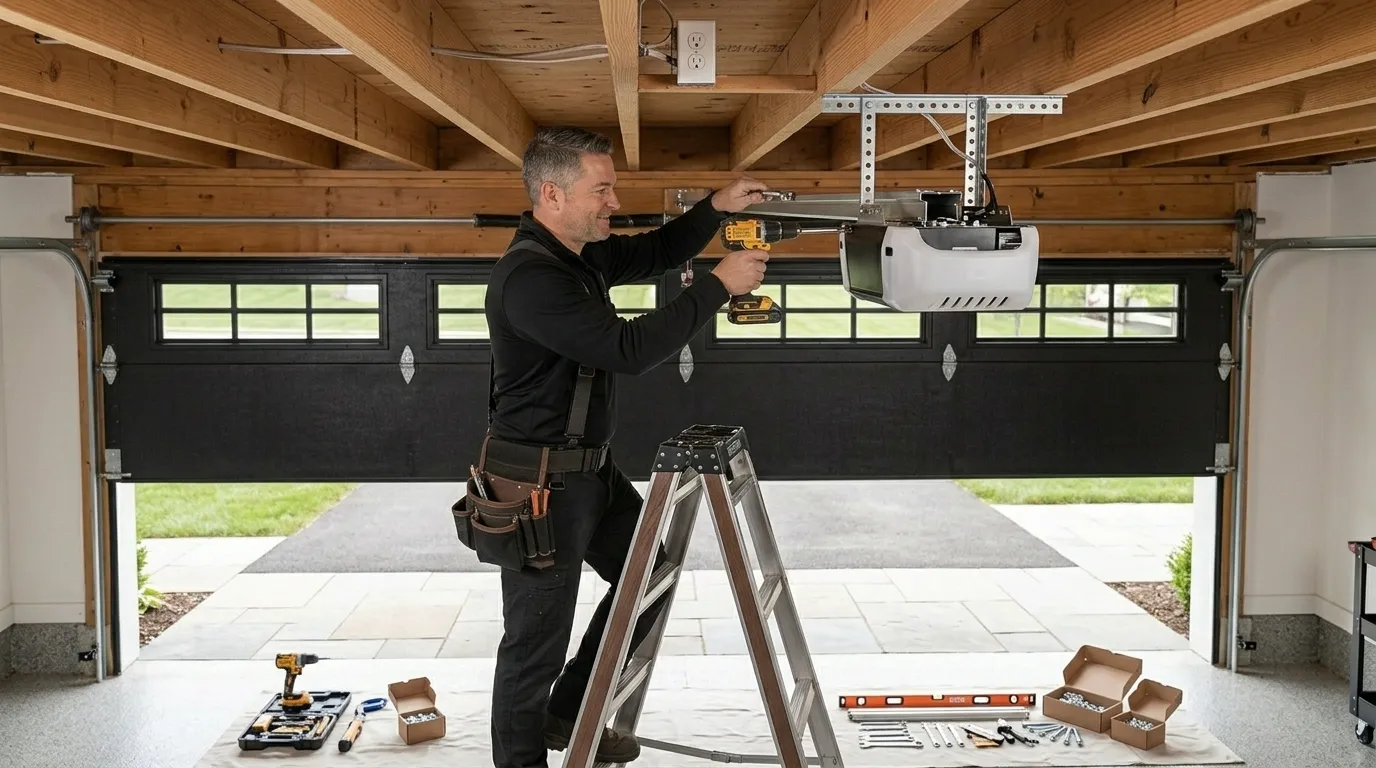
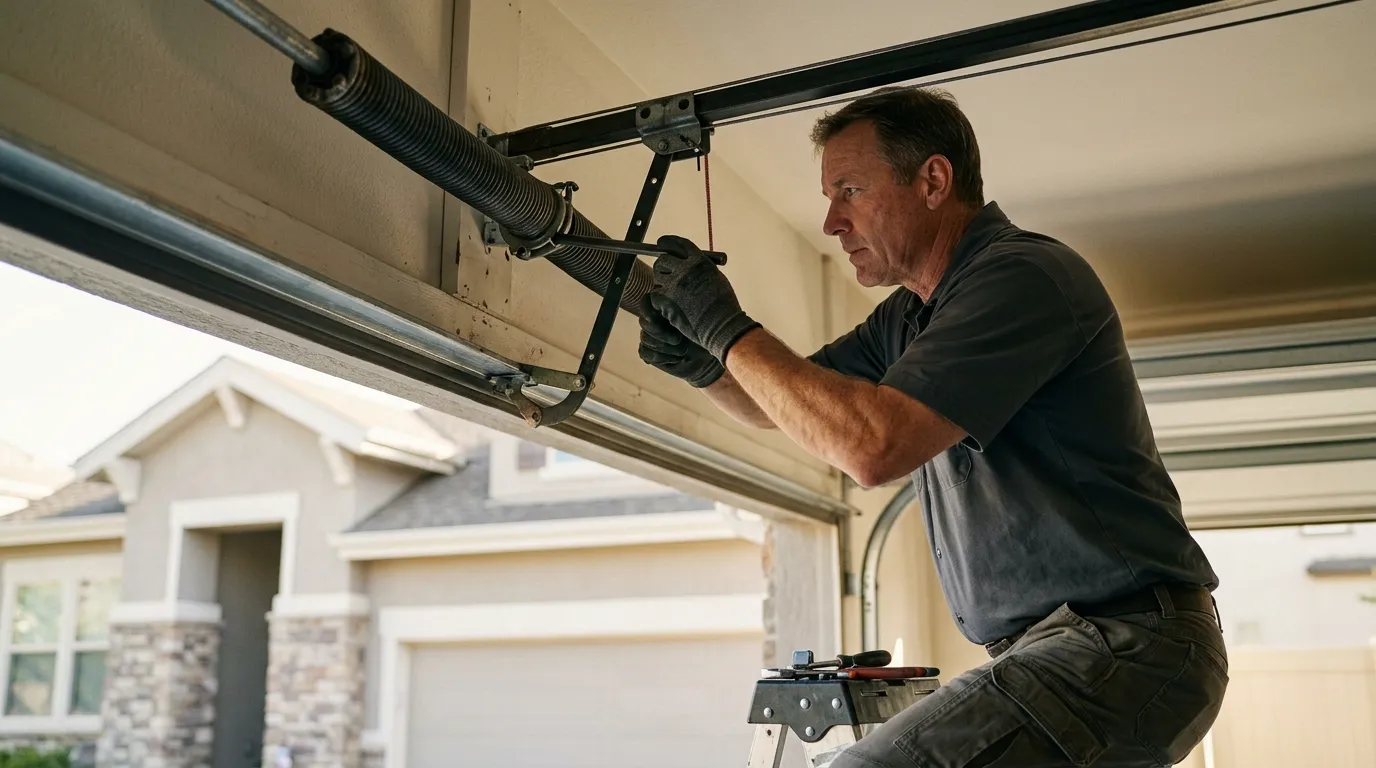
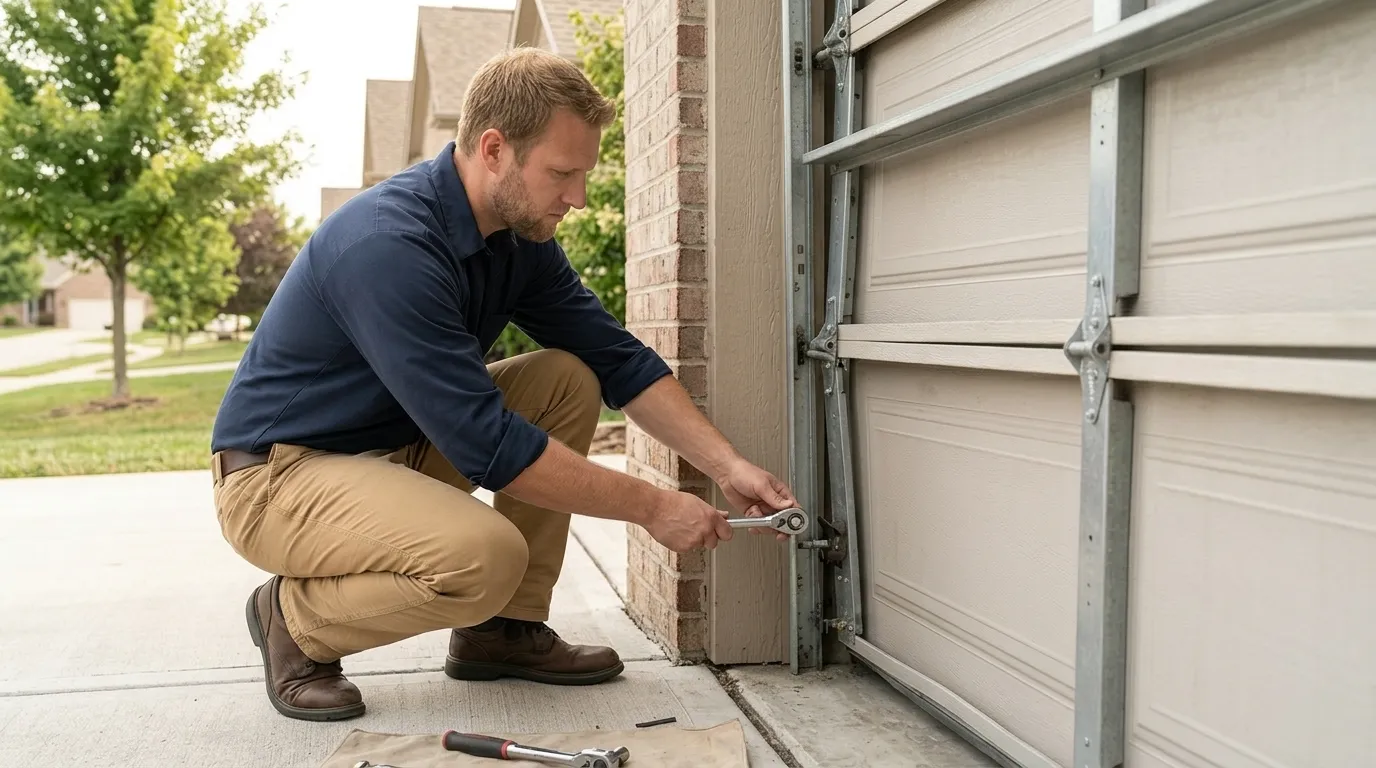
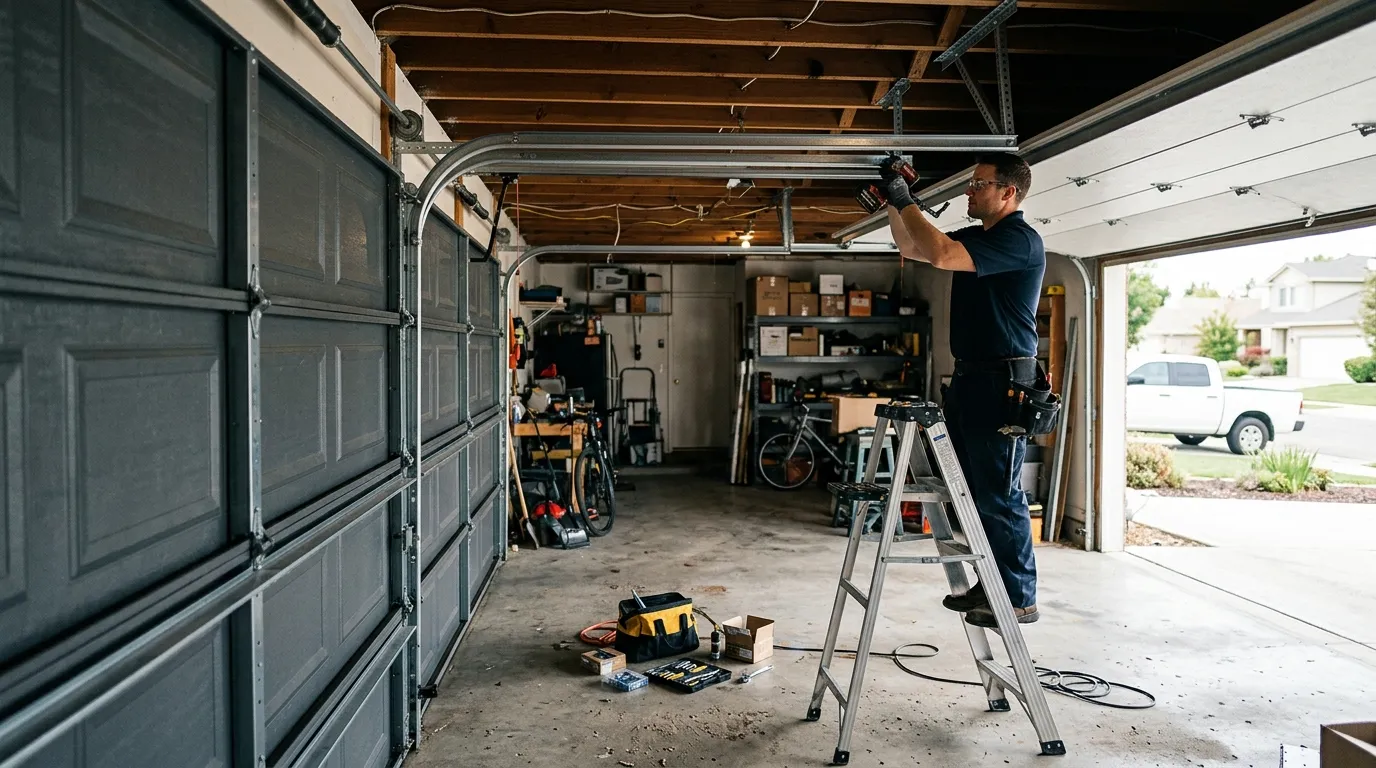
Doors from the late 1990s mostly run standard torsion springs on a single center shaft rather than the older side-mounted setups you'd find on 1970s-era garages. That's good news for repair - parts are more standardized and more available than for the oldest housing stock in our area. What we see more of in Stonegate is opener age. A garage door opener installed alongside a 1997-2000 build is now old enough that the circuit boards, logic controls, and safety sensors are past their reasonable service life, even if the door itself still swings fine.
The honest limitation here: if your opener predates 2000, we're not always going to be able to source an exact replacement board. Past a certain point, replacing the opener outright costs less than us hunting down obsolete parts, and we'll tell you that straight rather than run up a bill chasing a fix that won't hold. Springs, cables, and rollers on this generation of door are still well-stocked and repairable without much drama.
Getting Here
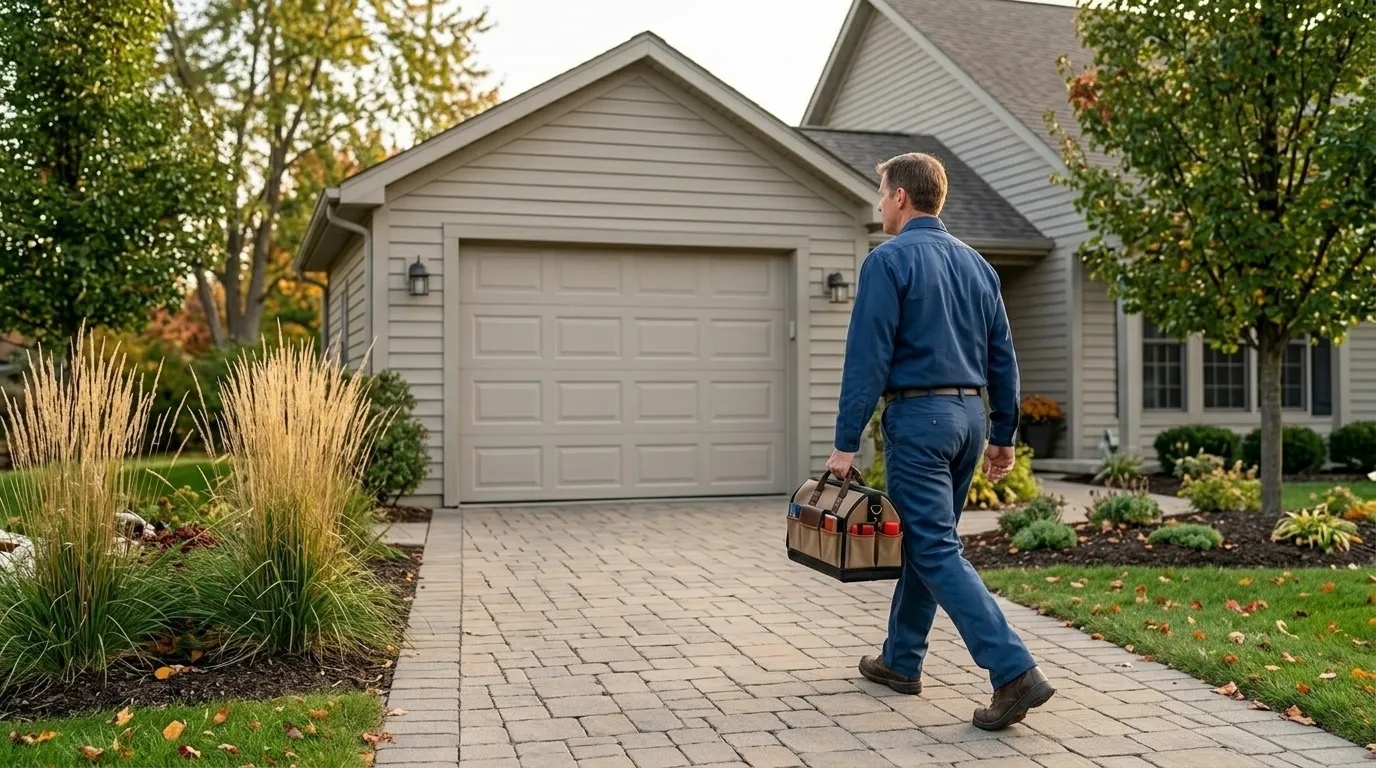
We run out of Denver, and Stonegate sits at the 16-mile mark on our route sheet - one of the farther stops in the service area. Grand View Estates is a mile closer at 15 miles, and Ken Caryl and Superior sit farther out at 18 and 19. We don't keep a depot in Stonegate; every job starts with a drive from Denver, so we plan the truck's day around that distance rather than promising something we can't back up.
Household income in Stonegate runs high for the region - median around $157,021, well above the $101,450 figure across the broader area we cover. That tends to track with more owners opting for full opener replacements over patch repairs, since the cost difference between fixing a marginal 20-year-old unit and installing new is smaller relative to the household budget here than it is in lower-income parts of our coverage.
Older vs Newer Streets
Because Stonegate's housing stock clusters tightly around 1997, you won't find the wide split between older and newer streets that shows up in areas with a broader build range. Almost everything here was framed within a few years of the same code cycle, so the garage doors, opener brackets, and track spans are more alike house to house than different.
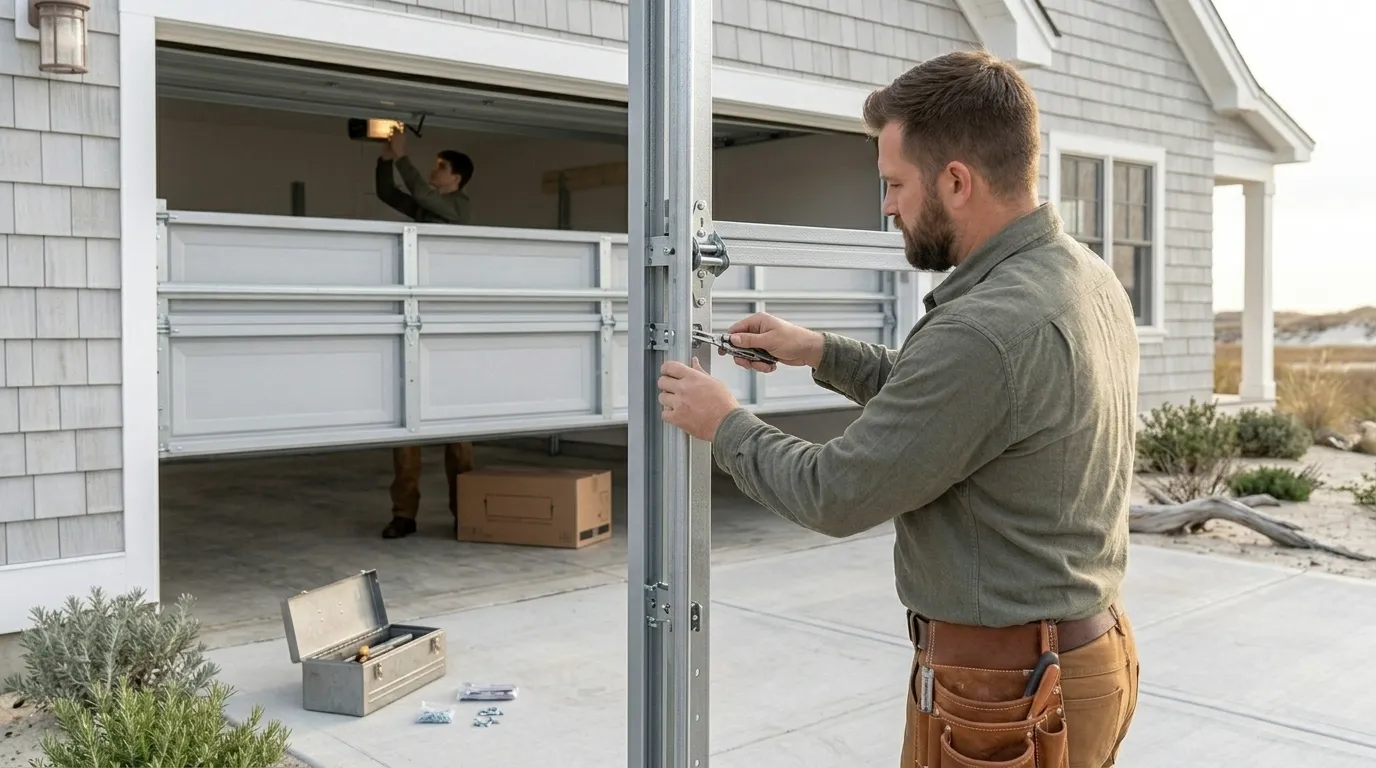
What little variation exists tends to be later infill construction versus the original build-out, and it shows up mostly in opener brand and header clearance rather than in spring type or door material. If your house is on one of the earliest-platted streets in the neighborhood, the opener is more likely to be near the end of its practical life; homes finished a few years later into the build-out often still run original hardware in decent shape. Either way, the door itself - steel panel, torsion spring, standard track - is close to the same across the area.
How it works
From “it’s stuck” to “it’s fixed”
01
Tell us what’s wrong
Describe the symptom - won’t open, loud bang, opener runs but the door won’t move.
02
On-site diagnosis
A technician tests the door under power and by hand and finds what actually failed.
03
Clear, up-front plan
You get the fix that’s needed and what drives the cost - before any work starts.
04
Repaired & tested
The repair is done, the door is set true and tested, and the work area left clean.
Serving Denver, CO - tell us what your door’s doing and we’ll take it from there.
No. We're based in Denver and drive out to Stonegate, about 16 miles each way. We don't keep a local depot here, so every visit is scheduled around that drive rather than a same-block response.
Is my opener too old to fix?
If it was installed with the house around 1997-2000, the circuit board or logic control may be past the point where parts are easy to source. We'll check on site - sometimes it's a simple sensor fix, sometimes replacement makes more financial sense than chasing an obsolete board.
Are Stonegate garage doors different from older Denver-area homes?
Yes. Most Stonegate doors were installed with standard center-shaft torsion springs typical of late-90s builds, unlike the side-mounted spring setups common on the 1950s-70s housing stock found closer to Denver.
Ready to get your garage door sorted?
Tell us what it’s doing and where you are in Denver - we’ll take it from there.