24/7 Emergency Service Open 7 days · 7am–8pm Serving Denver, CO & nearby
(720) 738-8063
Denver, CO

What Actually Happens During a Denver Service Call

A look at what a real service call checks on Denver homes built 1947-2006, from spring tension to weather seal, and why cold-band swings matter here.

What Actually Happens During a Denver Service Call

The Problem

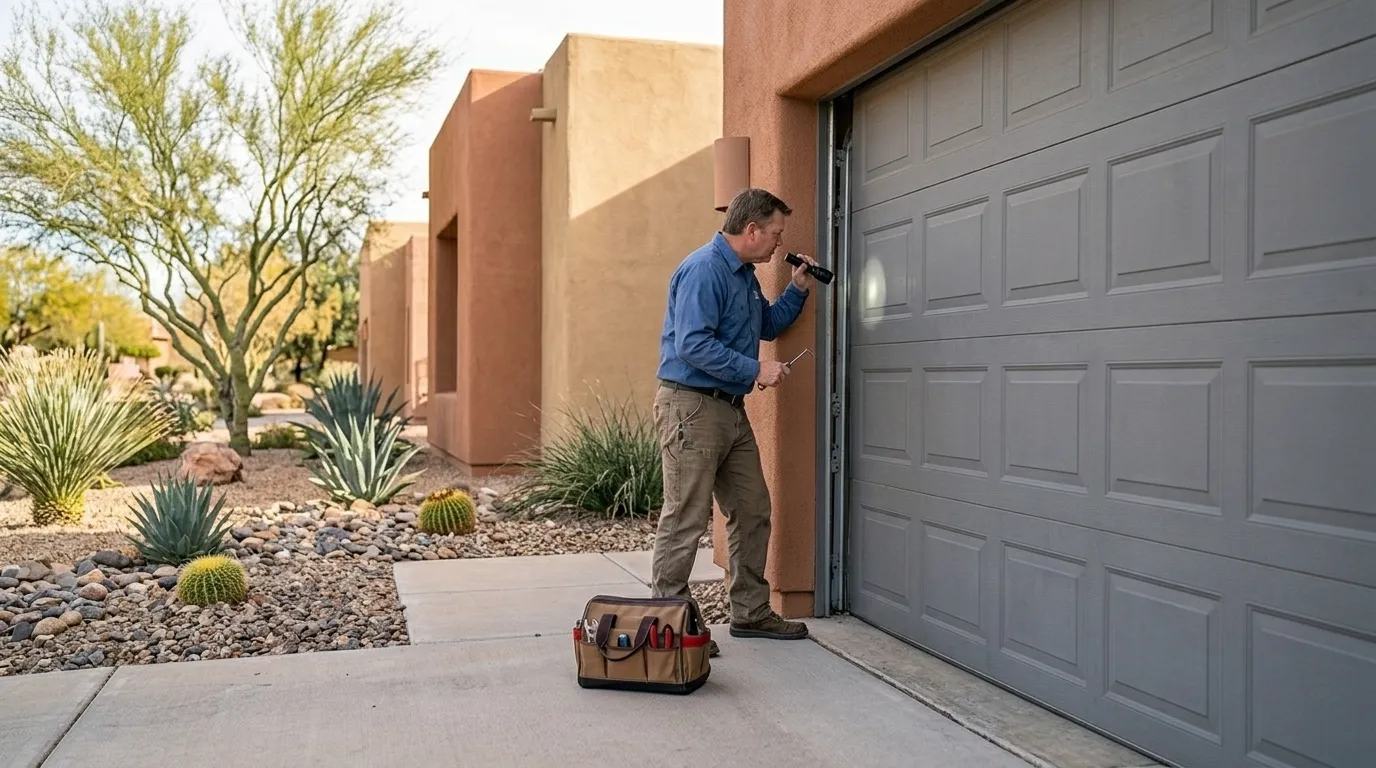
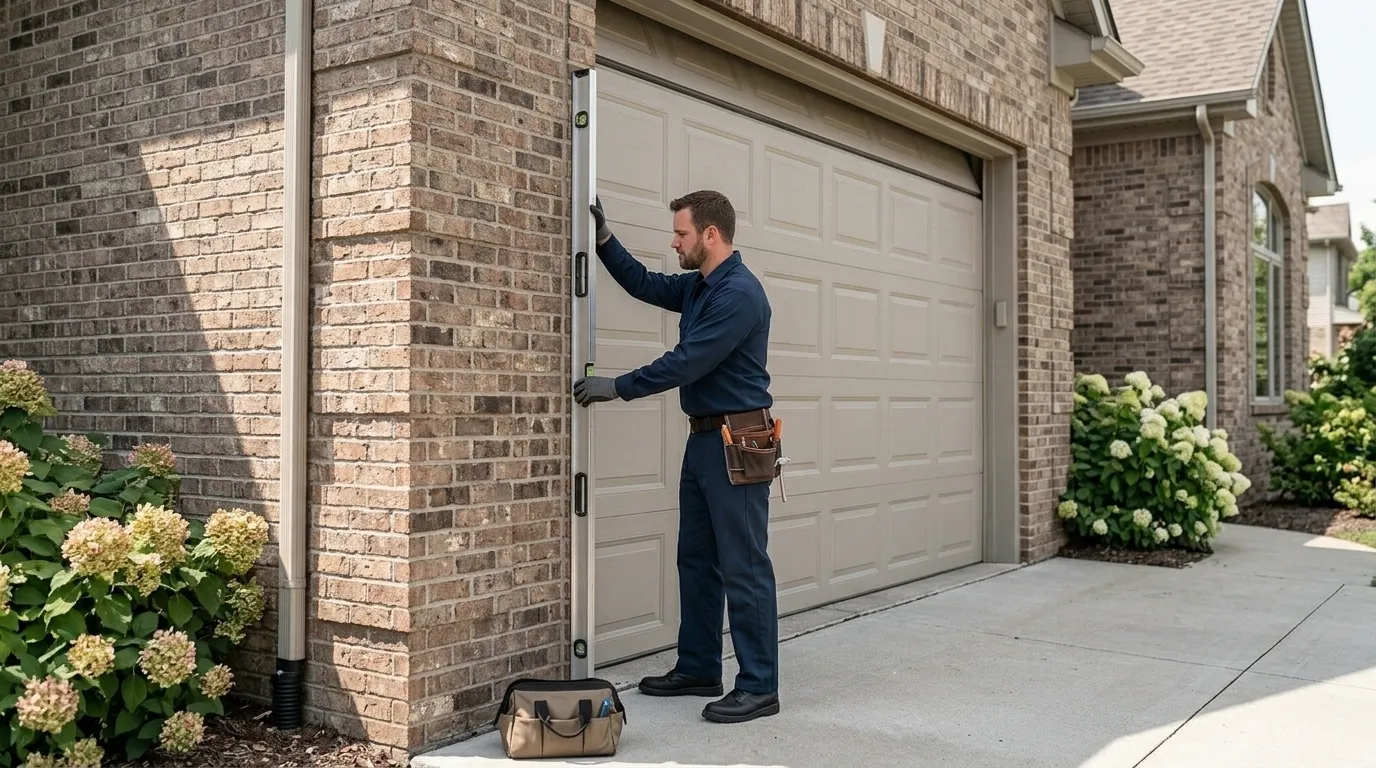
Most calls we get start the same way: a door that worked fine last week and now grinds, sags, or won't close square. In a service area where housing spans 1947 to 2006 with a median build year around 1981, that means we're working on a wide mix of hardware generations - some doors still running original torsion springs from a 1980s build, others on openers installed during a remodel decades later. A service call isn't one fixed checklist because the door in front of us could be forty years newer or older than the one at the last house. What we actually do is trace the symptom back: is it the spring losing tension, a track pulling out of alignment, or a panel that's taken on moisture and warped. We check the whole system, not just the part that's making noise, because on doors this age the failure you hear is rarely the only one building.

Where People Go Wrong

The most common mistake we see across this stretch of the metro - from the older stock near Central Park and North Park Hill out toward Montbello and Elyria-Swansea - is treating a symptom as the whole problem. A homeowner hears a squeal and sprays lubricant on the rollers, which quiets it for a week and hides that the real issue is a spring nearing the end of its cycle count. With housing here running mostly 1980s-90s stock, a lot of original springs and cables are well past the point where a five-minute fix holds. We also see people wait too long after a door starts reversing on its own or dropping unevenly - by the time it fully fails, it's often taken a cable or a bottom bracket with it, which turns a spring swap into a bigger repair. If your door only kicks up trouble in extreme cold or on the hottest days, that's not a coincidence worth ignoring.

What the Weather Here Does to It

This is a cold-band severe climate, and that matters more for a garage door than people expect. Steel contracts in a hard freeze, which tightens tolerances on tracks and rollers that were already worn - a door that rolled smoothly in September can bind or jump the track the first week temperatures drop hard. Torsion springs also lose a measurable amount of lifting power in deep cold, which is why a door that felt heavy to lift by hand in January isn't your imagination. On the flip side, wide daily temperature swings, common on this side of the state, put steady stress-and-release cycles on panel seams and weatherstripping. We see more cracked bottom seals and pulled corner brackets here than in a climate that just stays cold or just stays warm. A service call in this kind of climate has to check for cold-tightened hardware, not just wear.

The Seasonal Bit

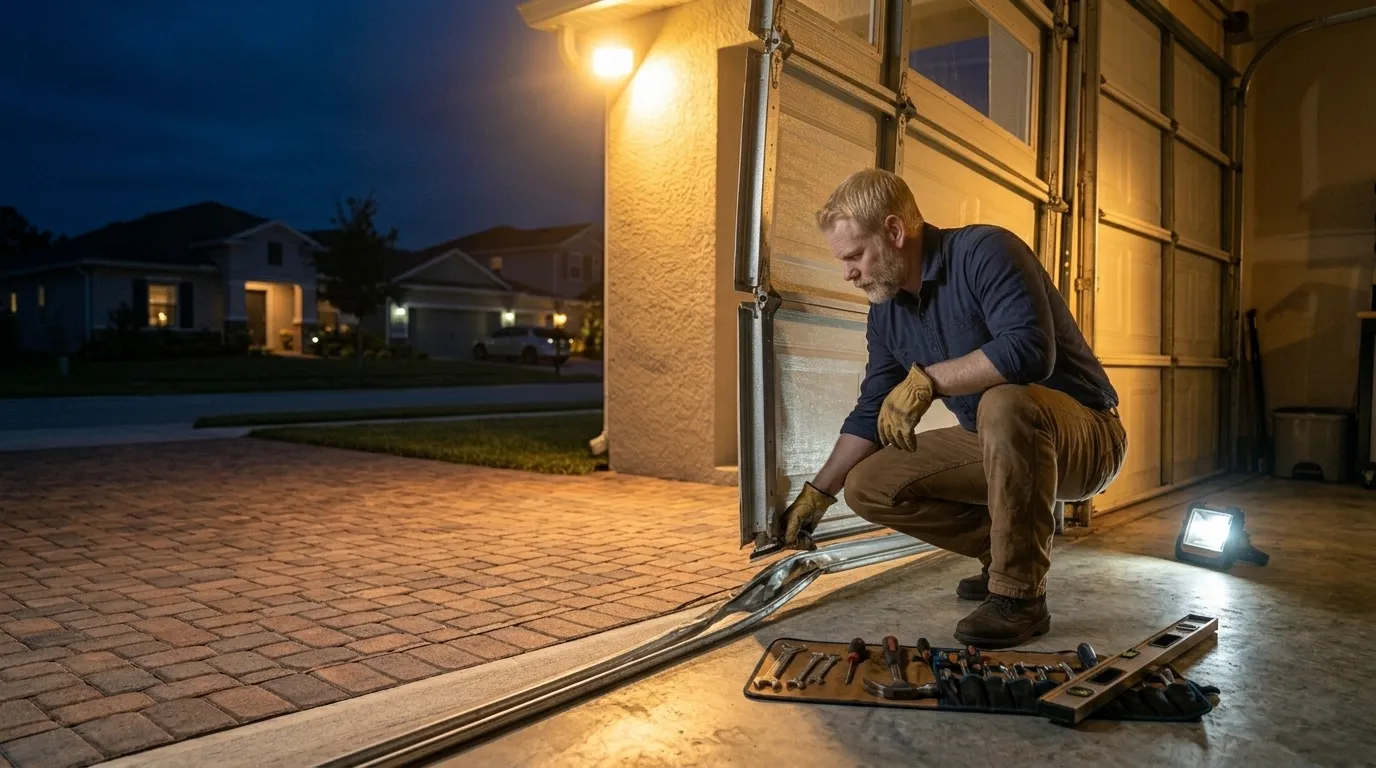
Because of that cold-severe swing, the timing of a service call matters. Fall, before the hard freezes set in, is when a spring or cable that's marginal will actually fail - the cold finishes off what summer heat already stressed. We'd rather catch a worn spring in October with a scheduled call than get flagged for an emergency in a January cold snap when the door won't lift at all. One honest limit here: if a spring or cable already shows visible fraying or rust pitting, we won't just adjust it and send you off for winter - that's a replacement call, not a repair, because a partial fix on hardware this stressed doesn't hold through a Denver winter. It costs more up front but it's the call that doesn't leave you stuck with a dead door on the coldest morning of the year.

How it works

From “it’s stuck” to “it’s fixed”

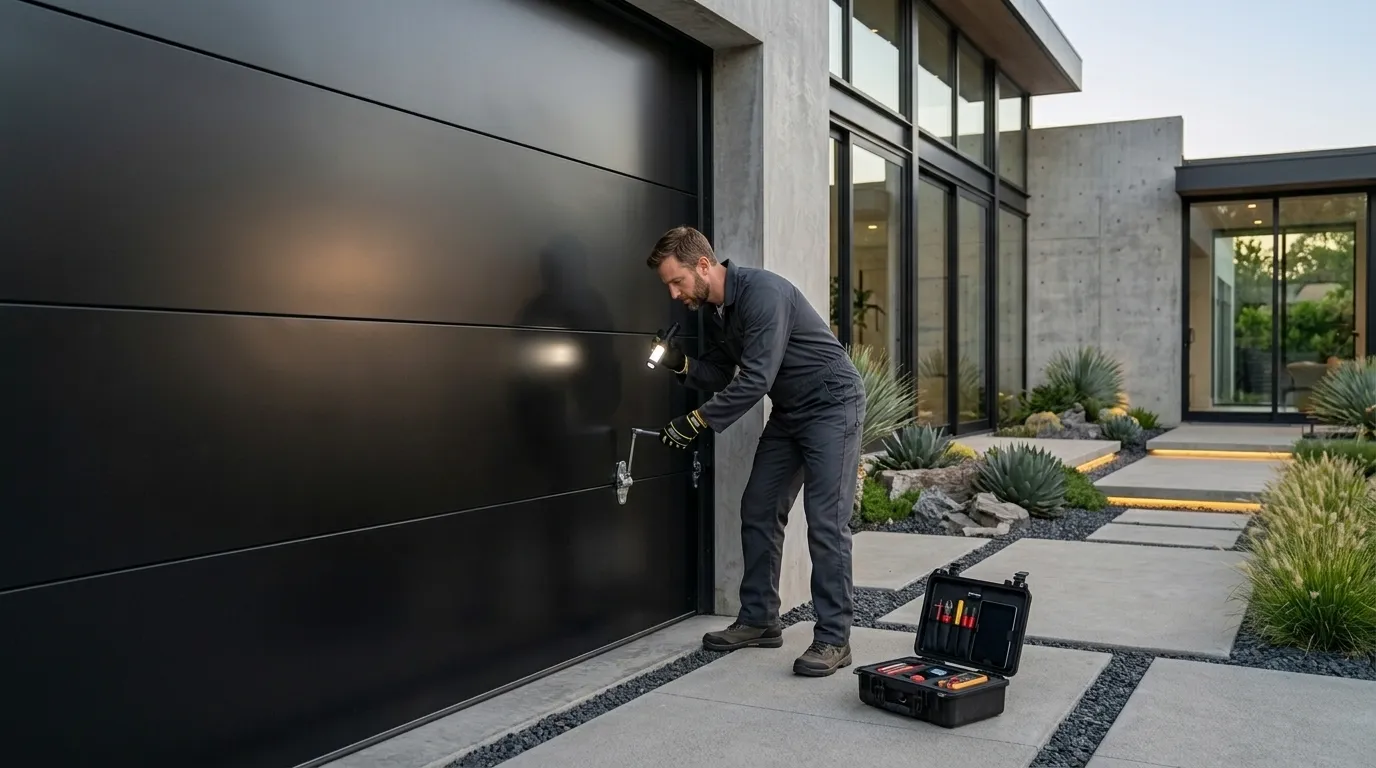
Tell us what’s wrong - Denver garage door service

Tell us what’s wrong

Describe the symptom - won’t open, loud bang, opener runs but the door won’t move.

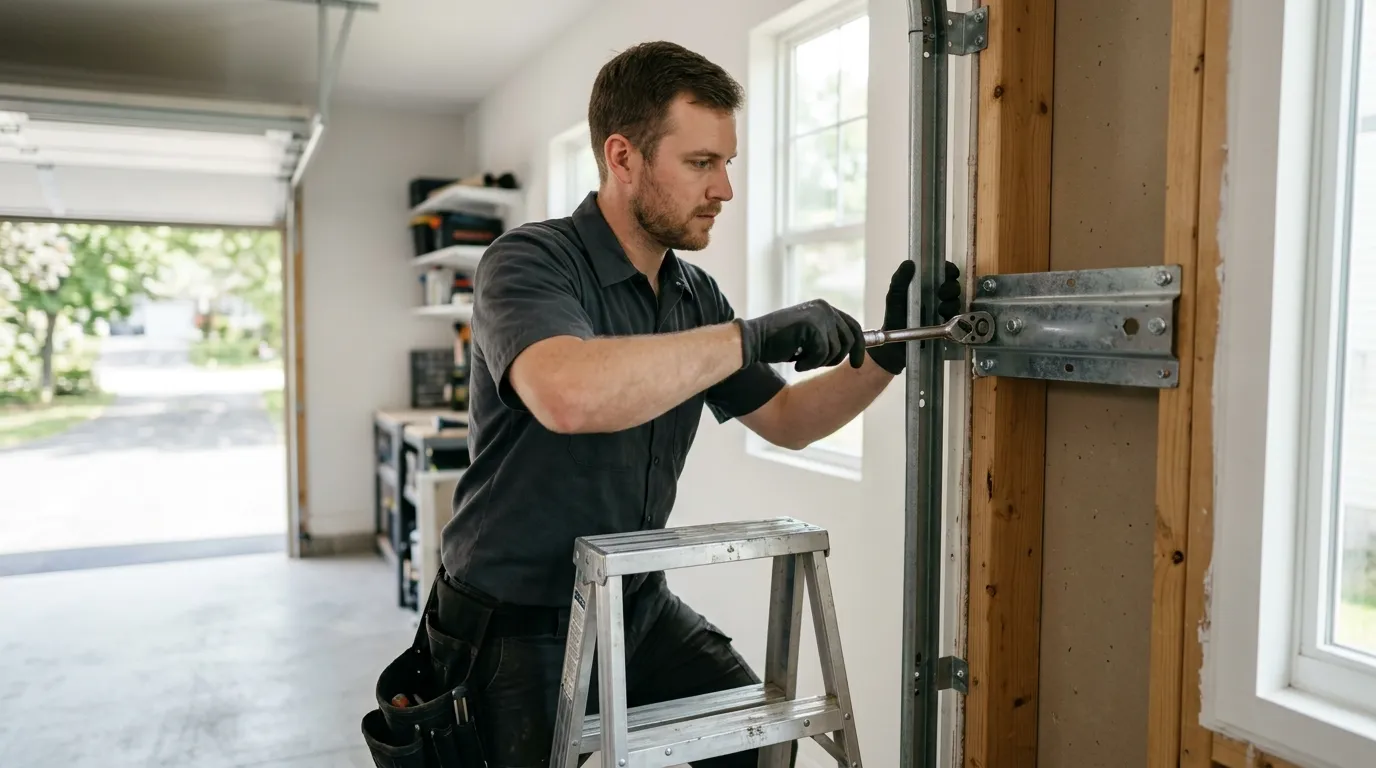
On-site diagnosis - Denver garage door service

On-site diagnosis

A technician tests the door under power and by hand and finds what actually failed.

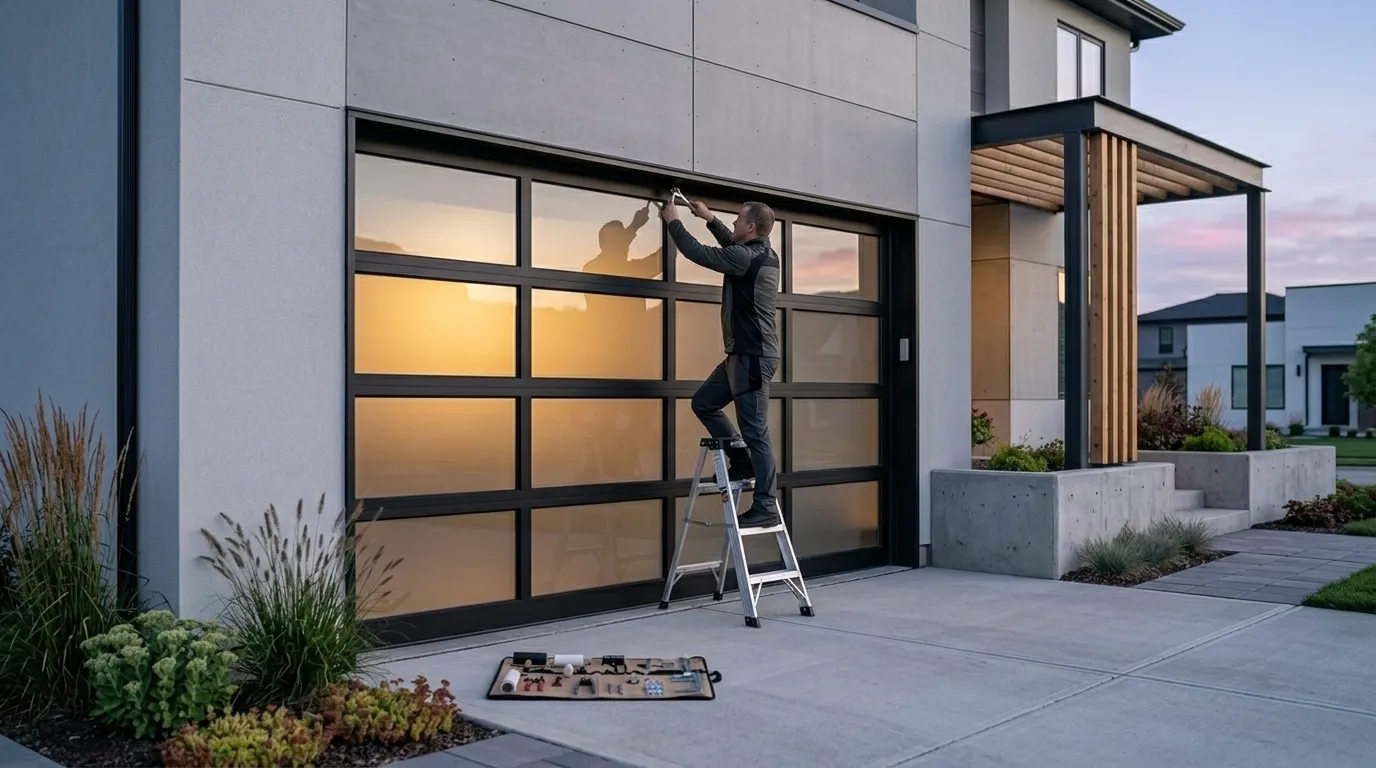
Clear, up-front plan - Denver garage door service

Clear, up-front plan

You get the fix that’s needed and what drives the cost - before any work starts.

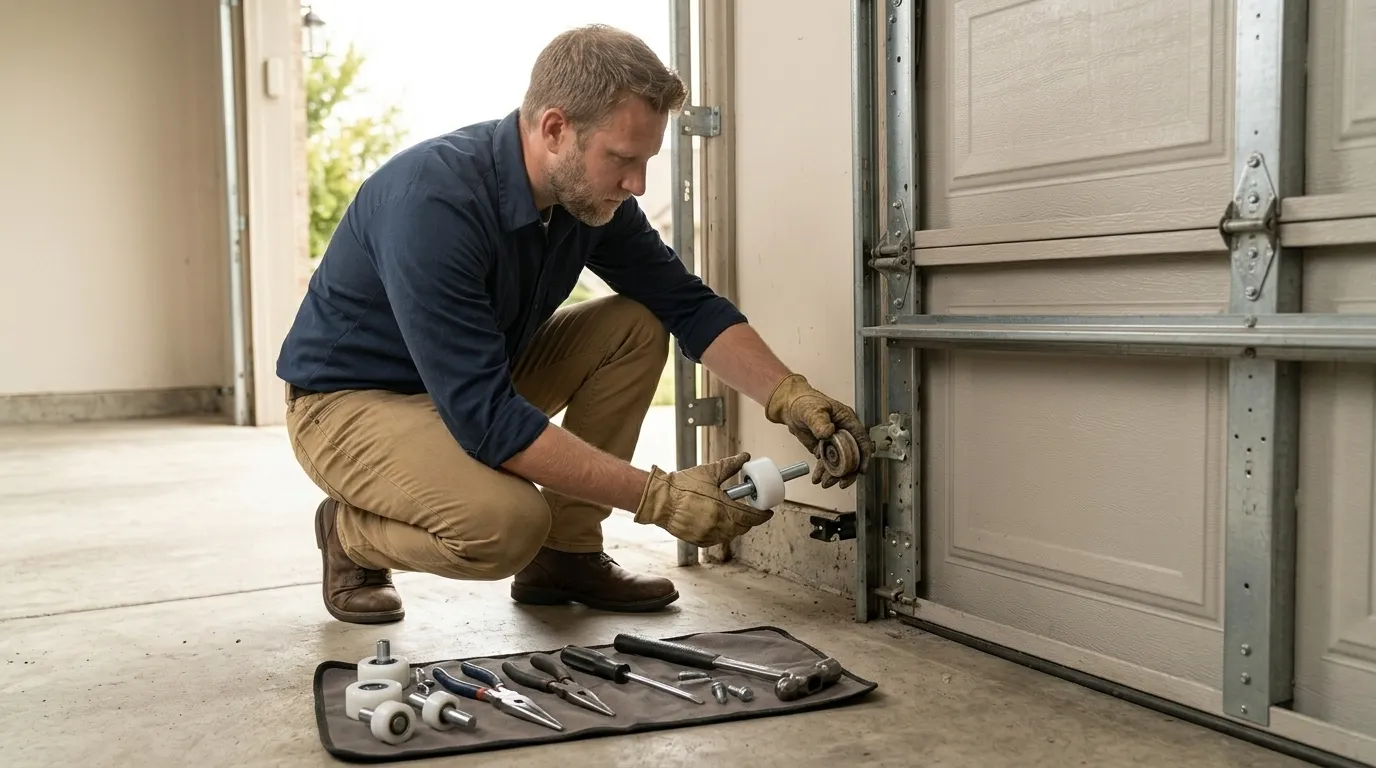
Repaired & tested - Denver garage door service

Repaired & tested

The repair is done, the door is set true and tested, and the work area left clean.

Serving Denver, CO - tell us what your door’s doing and we’ll take it from there.

How we work

What to expect

  • Diagnosis firstEvery visit starts by finding what actually failed - not a pre-written parts list.
  • The right part for the doorSprings and openers matched to the door’s weight and age, so the fix holds up.
  • Straight answersWhen a repair makes more sense than a replacement - or the reverse - you hear it plainly.
  • Clean, careful workTension released safely, hardware set true, the door tested under power before we leave.
Questions

Frequently asked

Straight answers about garage door repair in Denver. Still unsure? Ask us directly.

Why does my garage door get harder to lift in winter?

Torsion springs lose measurable lifting power in hard cold, and this is a cold-band severe climate, so the effect is real, not seasonal imagination. Combined with steel tracks tightening slightly in the freeze, a door that felt normal in fall can feel noticeably heavier once temperatures drop hard in December and January.

My house was built in the 1980s - does that affect what a service call finds?

Yes. Housing across this service area runs mostly 1980s-90s stock, with the broader range going back to 1947. A lot of that original hardware - springs, cables, rollers - is well past its expected cycle life, so a service call on a house from that era often turns up wear that a newer install wouldn't have yet.

Should I just lubricate a noisy door myself?

Lubricant can quiet a squeal temporarily, but it doesn't fix a spring losing tension or a track pulling out of alignment, which are common on hardware from the 1980s-90s stock common here. If the noise comes back within a week or two, that's usually a sign of a mechanical issue, not a dry hinge.

Do you always replace a spring instead of repairing it?

No, but if a spring or cable already shows fraying or rust pitting, we won't patch it - a partial fix on hardware that stressed doesn't hold through a Denver winter. If the hardware is sound and just out of adjustment, we adjust it. The call depends on the actual condition, not a default answer.

Ready to get your garage door sorted?

Tell us what it’s doing and where you are in Denver - we’ll take it from there.

Request a QuoteCall