Denver homes built between 1947 and 2006 have track and roller setups that struggle with hard freeze-thaw swings. Here's why doors jump track and what to check first.
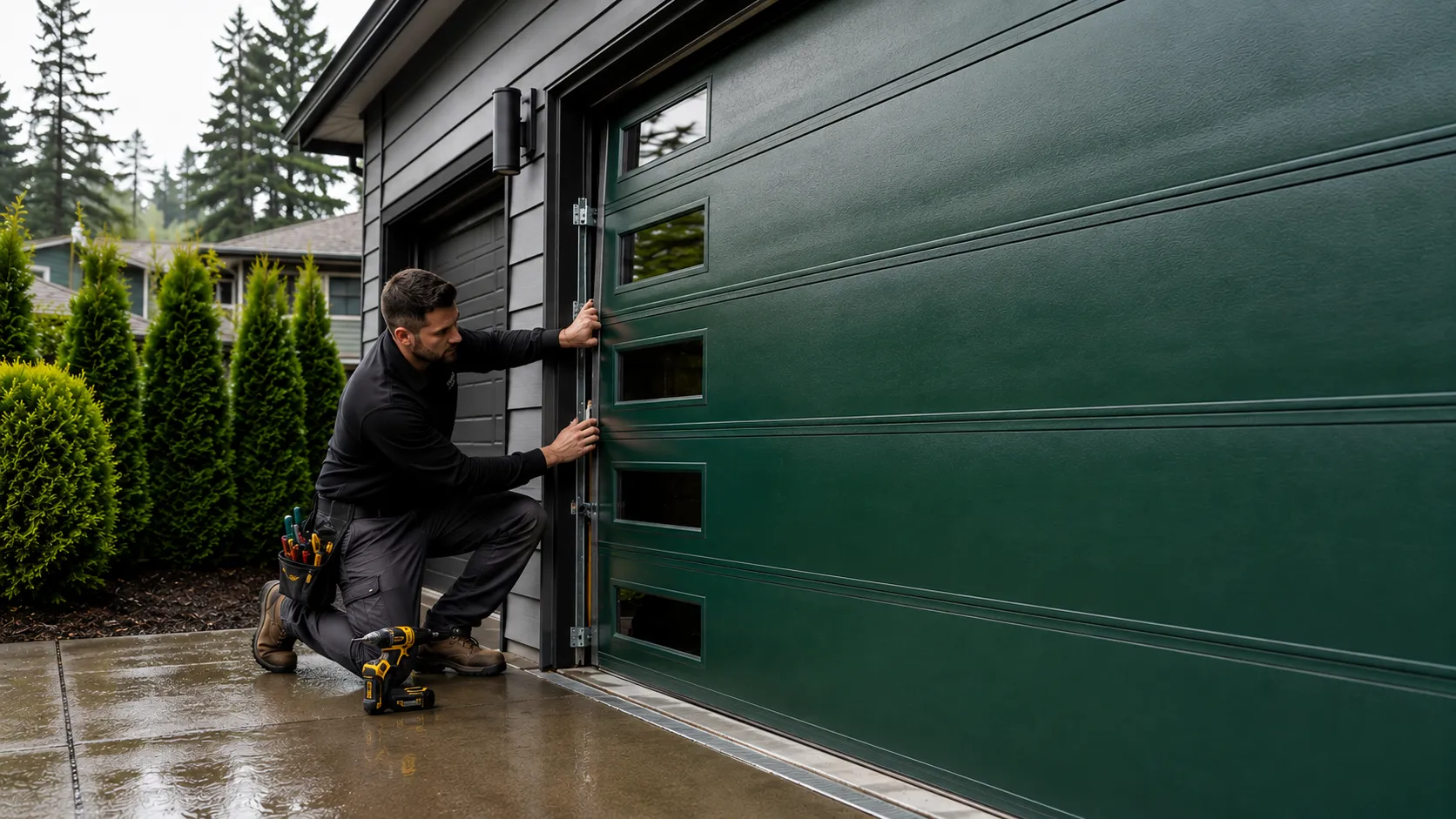
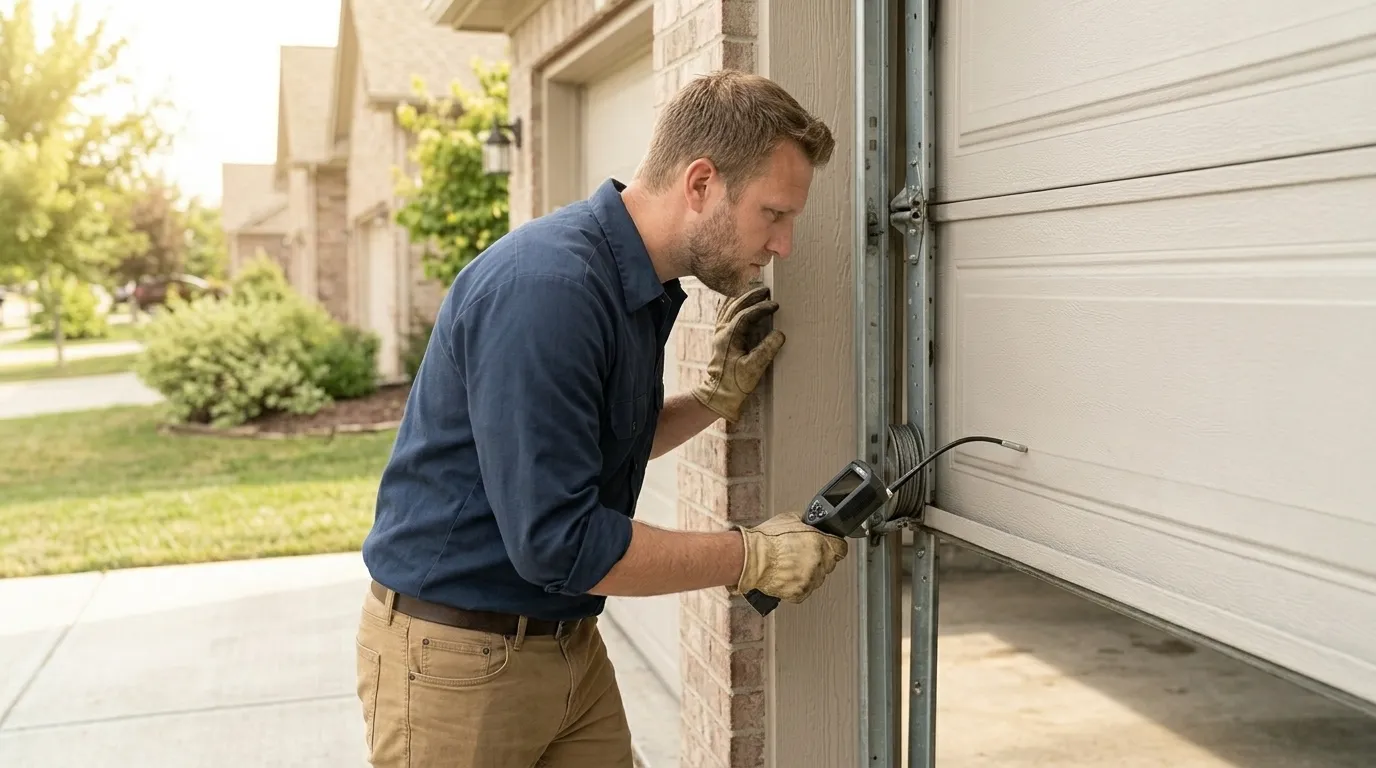
A door off track doesn't happen because of one bad day. It happens because the rollers, the track, and the door panel stop agreeing with each other, usually over months. In a house built anywhere from 1947 up through the early 2000s - which covers most of the stock in this service area, with a median build year around 1981 - the track brackets were set once, torqued to the framing that existed then, and never touched again. Wood framing shifts. Concrete slabs settle a fraction of an inch. Over 20 or 30 years that fraction adds up, and the track that was dead straight in 1981 is now bowed just enough that a roller catches the lip instead of riding smooth through it. You'll see it first as a shudder near the top of travel, then a grinding, then one day the door leans and won't close square. It's rarely the opener's fault. The opener is just the last part to notice something's wrong.
Where People Go Wrong
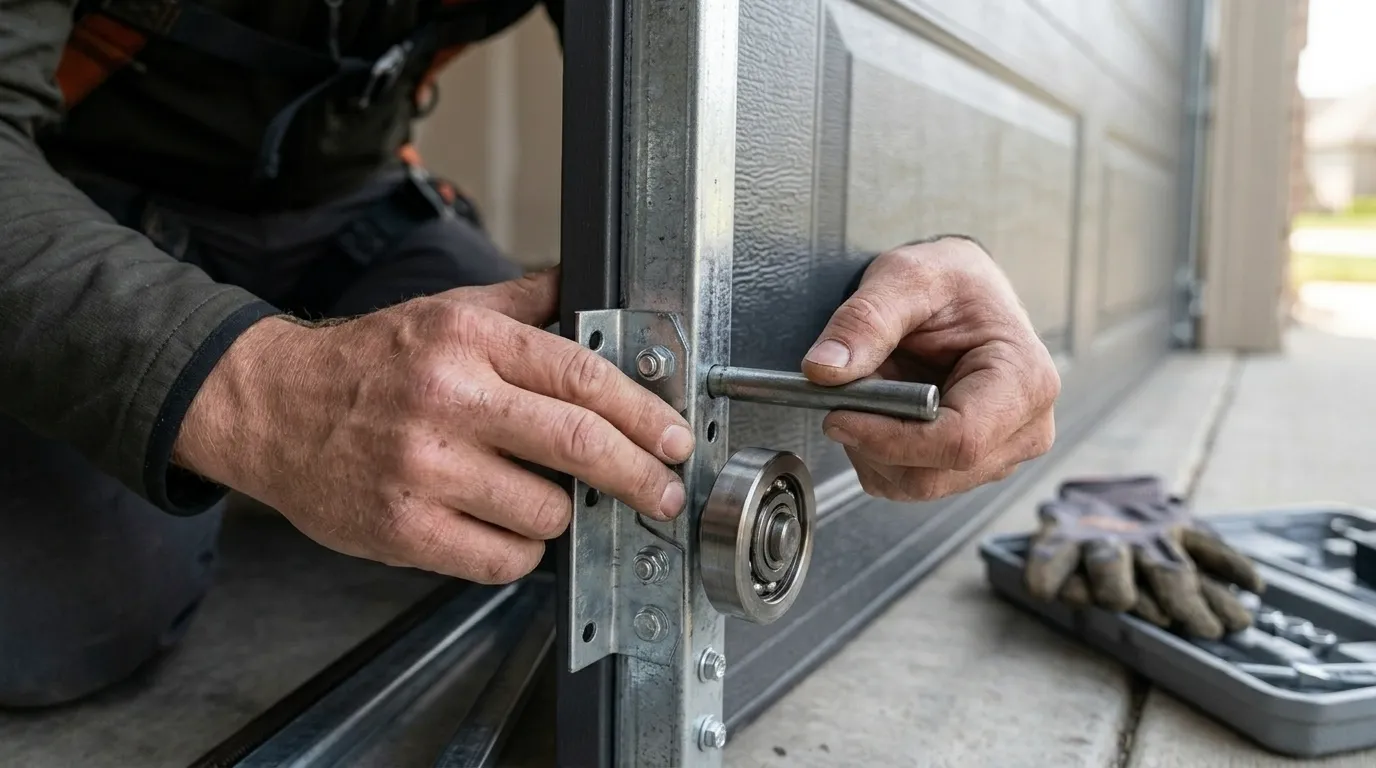
The usual mistake is bending the track back into place with a pry bar and calling it fixed. That buys a week, maybe a month, because bending steel that's already been stressed doesn't restore its original shape - it just moves the weak point somewhere else on the rail. The other mistake, especially common in the older end of this housing stock (pre-1970s builds), is tightening loose track bolts without checking whether the bracket itself has pulled away from the framing. If the wood behind the bracket has dried and shrunk over 50-plus years, a tighter bolt just strips the hole further. We'll straighten a track if the bend is minor and the rail hasn't cracked, but past a certain point the honest call is a new section of track, not a repaired one - and we'll tell you which one you're looking at before we start.
What the Weather Here Does to It
This area sits in a cold, severe climate band, and that matters more for garage doors than most people expect. Steel track contracts in hard freezes and expands again on the warm days that follow - and this region gets both, often within the same week. That cycling loosens fasteners at the bracket points faster than it would in a milder climate, which is exactly where a track starts to drift out of alignment. Nylon and steel rollers respond differently to cold too: nylon stiffens and can chip at the edge where it meets a track that's slightly out of true, while a steel roller with dry bearings just gets louder and rougher until it jumps. Neither failure mode announces itself politely. You get a few weeks of extra noise, then a morning where the door won't move right.
The Seasonal Bit
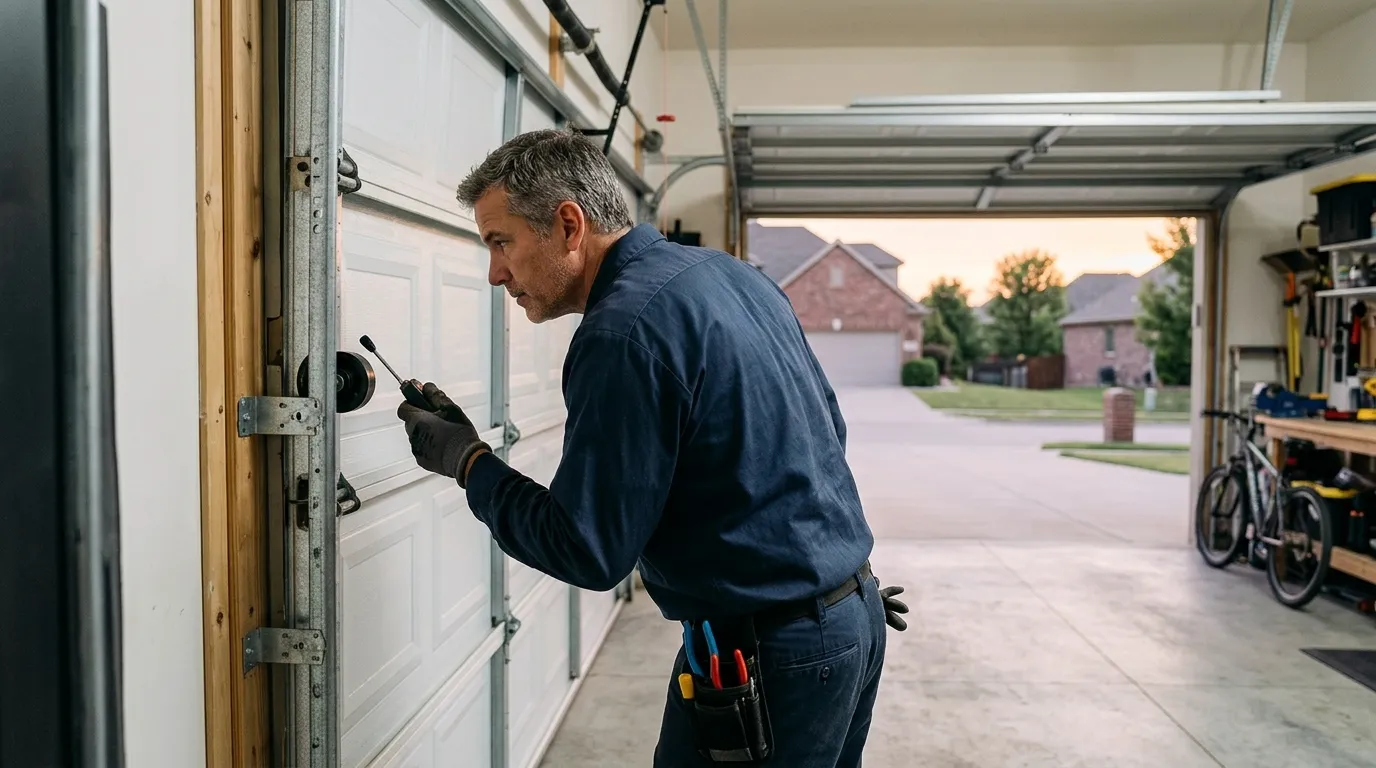
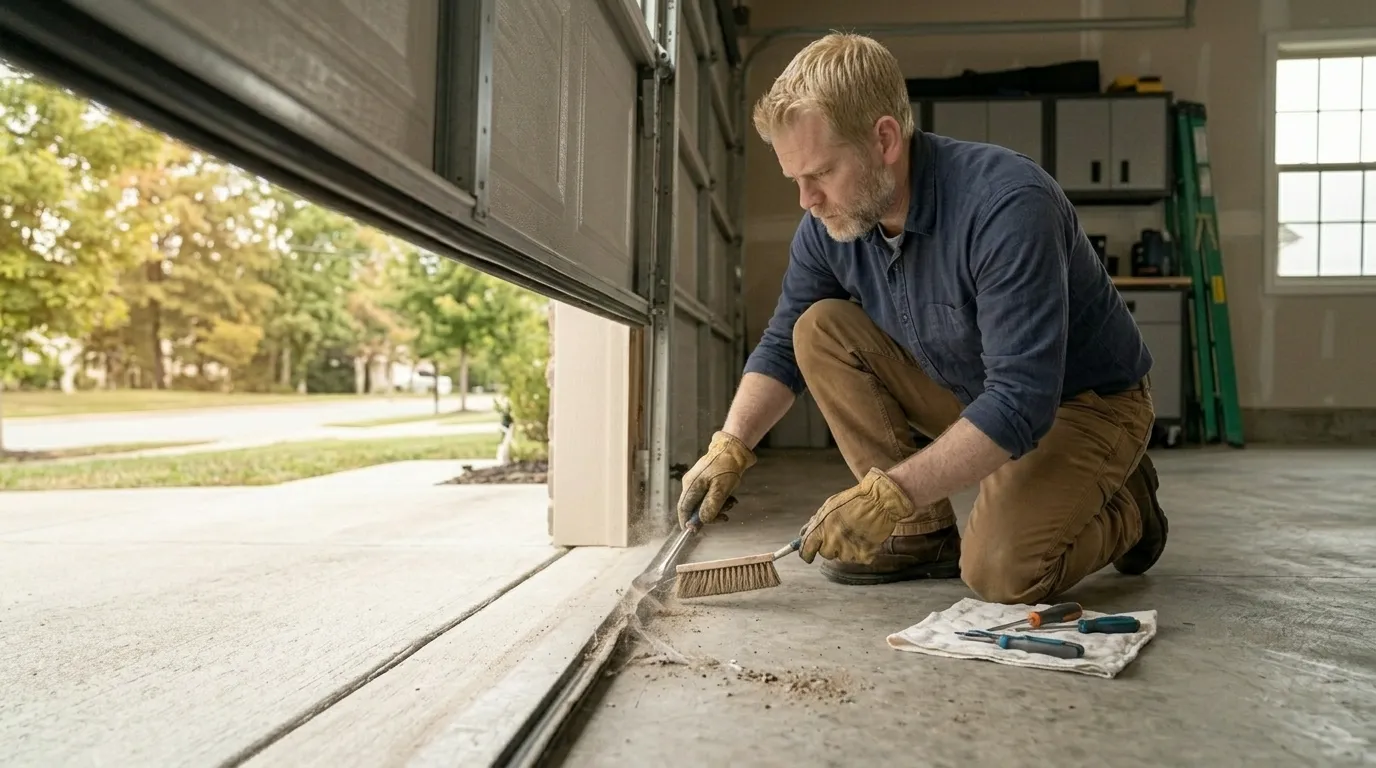
The pattern we see locally tracks the freeze-thaw swings, not the calendar month. A cold snap followed by a 50-degree afternoon does more damage to alignment than a steady deep freeze does, because the steady cold at least holds still. Homes across the older neighborhoods here - the ones built well before 1980 - tend to show track problems earlier in the season because the framing has more decades of movement already built into it, while newer builds closer to the median year of 1981 or after generally hold alignment longer into winter before anything shifts. Either way, a five-minute check before the hard cold sets in - rollers spinning freely, brackets snug, track free of visible bow - catches most of this before it becomes a jumped roller at 6am on a work day.
How it works
From “it’s stuck” to “it’s fixed”
01
Tell us what’s wrong
Describe the symptom - won’t open, loud bang, opener runs but the door won’t move.
02
On-site diagnosis
A technician tests the door under power and by hand and finds what actually failed.
03
Clear, up-front plan
You get the fix that’s needed and what drives the cost - before any work starts.
04
Repaired & tested
The repair is done, the door is set true and tested, and the work area left clean.
Serving Denver, CO - tell us what your door’s doing and we’ll take it from there.
How do I know if my door is actually off track versus just noisy?
Off track usually shows as the door sitting crooked in the opening, or one side dragging while the other moves freely. Noise alone - squeaking or grinding - is more often dry rollers or a loose bracket, not a full derailment. If the door still closes flush and square, it's probably not off track yet, but it's worth checking before it gets there.
Can I push the door back onto the track myself?
We don't recommend it. A door under spring tension that's already off track can drop or swing unexpectedly once you disturb it, and a torsion spring failure at that point is a serious injury risk. It's a short job for someone with the right clamps and bars, but not a safe one to improvise.
Does the age of my house matter for this kind of repair?
It does. Houses built in the older part of this area's housing stock, well before the 1981 median, often have brackets mounted to framing that's shifted more over the decades, so track work sometimes means resetting the bracket location, not just the rail. Newer builds usually just need the rail itself addressed.
Is a bent track ever worth straightening instead of replacing?
Sometimes, if the bend is minor and the rail hasn't cracked or kinked sharply. Past that point, straightened steel tends to fail again at the same spot within a season, so we'll usually recommend replacing that section instead of re-bending it a second time.
Ready to get your garage door sorted?
Tell us what it’s doing and where you are in Denver - we’ll take it from there.