Denver homes built mostly 1947-2006 face severe cold winters that snap torsion springs fast. Learn why local housing age and climate make timing matter here.
Most of the housing stock around here went up between 1947 and 2006, with the median build year sitting at 1981. That's not trivia - it means a huge share of garage doors in this service area are running on hardware that's older than the owner realizes. A torsion spring doesn't last forever. It's rated for a number of open-close cycles, and once it's near the end of that count, cold makes it worse, not better. Steel that's flexed for three or four decades gets brittle at the molecular level long before it looks worn from the outside. You don't see the fatigue. You just hear the bang when it lets go. Across the 31 named areas we work in, from the older pockets near Central Park and North Park Hill to newer stretches out toward Stonegate, the pattern repeats: doors that have never had the spring swapped, sitting on original hardware, waiting for a cold snap to find the weak point. That's the problem in one sentence - old springs and hard winters don't mix, and this area has both in volume.
Where People Go Wrong
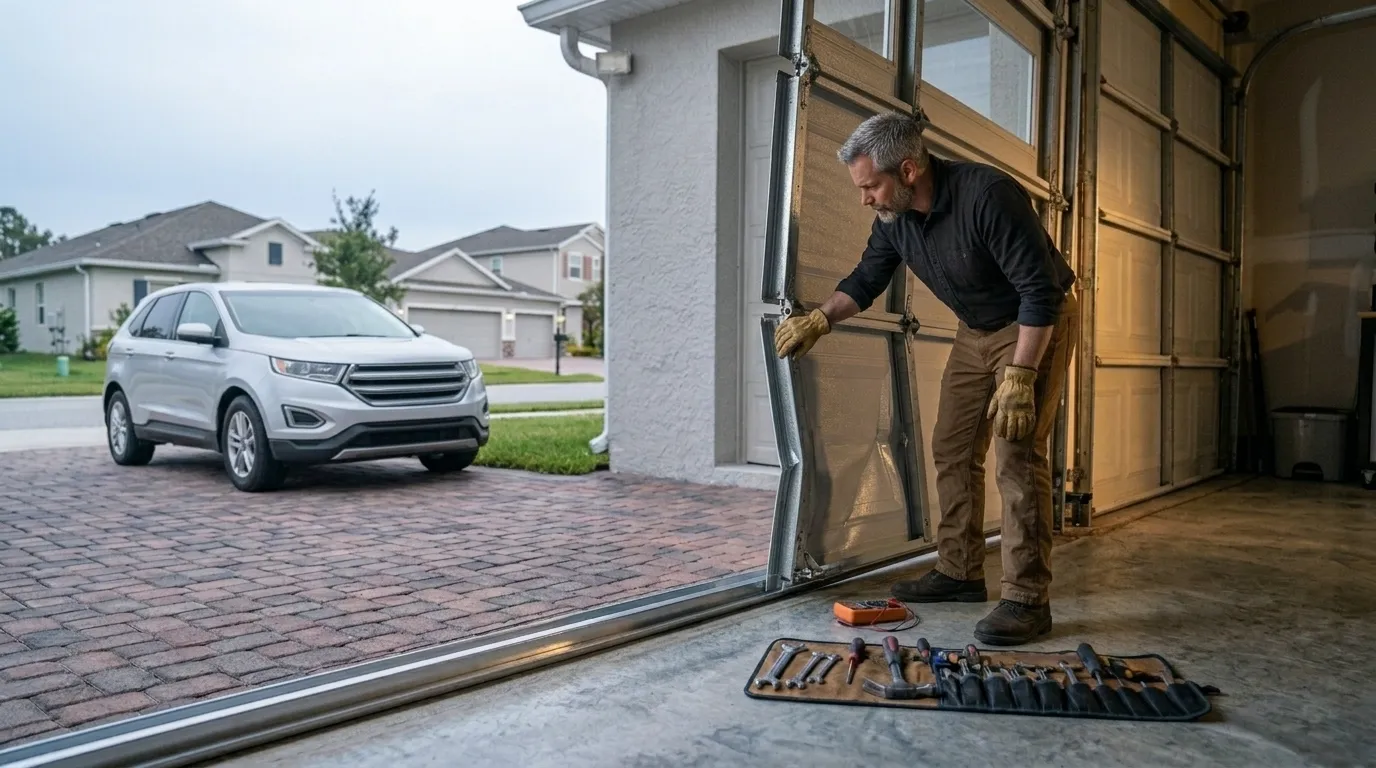
The most common mistake is treating a slow, noisy, or hard-to-lift door as a lubrication problem instead of an age problem. WD-40 on a spring that's thirty-plus years old doesn't buy you safety, it buys you a few more openings before the coil separates. The second mistake is waiting for total failure before calling anyone, which in a house from the 1980s or 90s stock common to this area usually means the spring goes on the coldest morning of the year, right when you need the door most. The third mistake, and it's an easy one, is assuming the opener is the problem when the opener is just straining against a spring that's no longer doing its job. We'll be honest: not every noisy door needs a same-day emergency call. Sometimes it's a season or two away from needing work, and pushing it is fine as long as you know what you're watching for. Where it goes wrong is not paying attention at all until the cable snaps or the spring separates with the door up.
What the Weather Here Does to It
Denver sits in a cold-severe climate band, and that matters for a very specific mechanical reason: torsion springs are wound steel, and cold steel is less forgiving steel. As temperatures drop hard, the metal contracts and loses some of the flex it had in warmer months. A spring that was already near the end of its cycle life in October can go in January simply because the same stress that it handled fine at 60 degrees now finds a weak point at 10 degrees. It's not that cold weather ages a spring faster over time - it's that cold weather is when an already-tired spring shows its hand. Ice buildup on tracks adds a second problem, making the door heavier to lift right when the spring has the least reserve left to lift it. Combine an old spring, common on housing from this area's 1980s and 90s stock, with a hard freeze, and you get the calls we see most in winter: a door that won't budge, or one that came down wrong.
The Seasonal Bit
Across the service area there are roughly 219,760 households and 96,547 owner-occupied houses, most sharing a similar hardware era because they were built in the same stretch of decades. That means when a cold snap hits, it doesn't hit one house - it hits a lot of houses with the same age spring at once, which is why fall is the better time to get a spring looked at than the first cold week of the year. With a median household income of $101,450 in this area, replacing a spring before it fails is usually a manageable expense compared to an emergency call plus a door that's been forced or damaged trying to open on a dead spring. One limitation worth saying plainly: we can't always get a matching replacement part same-day for older or less common torsion setups, especially on doors from the earlier end of that 1947 build range. If your hardware is unusual, expect the job to take a little longer to source parts right.
How it works
From “it’s stuck” to “it’s fixed”
01
Tell us what’s wrong
Describe the symptom - won’t open, loud bang, opener runs but the door won’t move.
02
On-site diagnosis
A technician tests the door under power and by hand and finds what actually failed.
03
Clear, up-front plan
You get the fix that’s needed and what drives the cost - before any work starts.
04
Repaired & tested
The repair is done, the door is set true and tested, and the work area left clean.
Serving Denver, CO - tell us what your door’s doing and we’ll take it from there.
Why did my spring break on the coldest morning of the year
Cold doesn't age a spring by itself, but it does expose one that's already near the end of its life. Steel loses flexibility as it gets colder, so a spring that had a little life left in warmer months can give out under the same stress once temperatures drop hard, which is common in Denver's cold-severe winters.
How do I know if my door's spring is original
If your house was built in the range common to this area, the 1980s or 90s, and no one has mentioned replacing the spring, it's likely original. A spring that age has usually cycled well past its rated lifespan, even if it still looks fine sitting in the coils.
Is it worth replacing a spring myself before winter
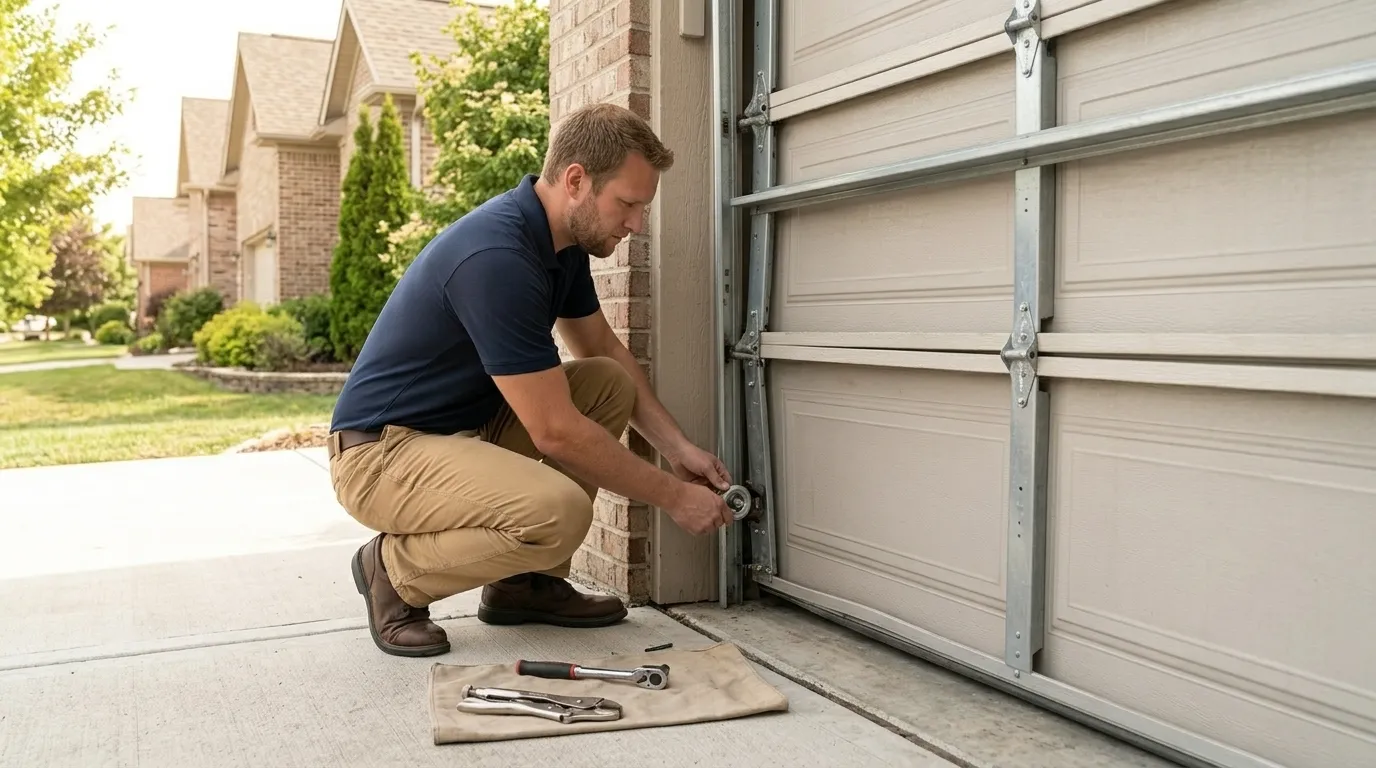
Torsion springs are under heavy tension and not a safe DIY job - that's not us being cautious, it's just the mechanics of it. If your door is loud, slow, or heavy to lift by hand, get it looked at before the first hard freeze rather than after.
Do you carry parts for older doors from this area
Not always same-day. Some homes here date back to the late 1940s through the 2000s, and less common older hardware sometimes takes longer to source. We'll tell you upfront if a part needs to be ordered rather than promise a fix we can't deliver that day.
Ready to get your garage door sorted?
Tell us what it’s doing and where you are in Denver - we’ll take it from there.