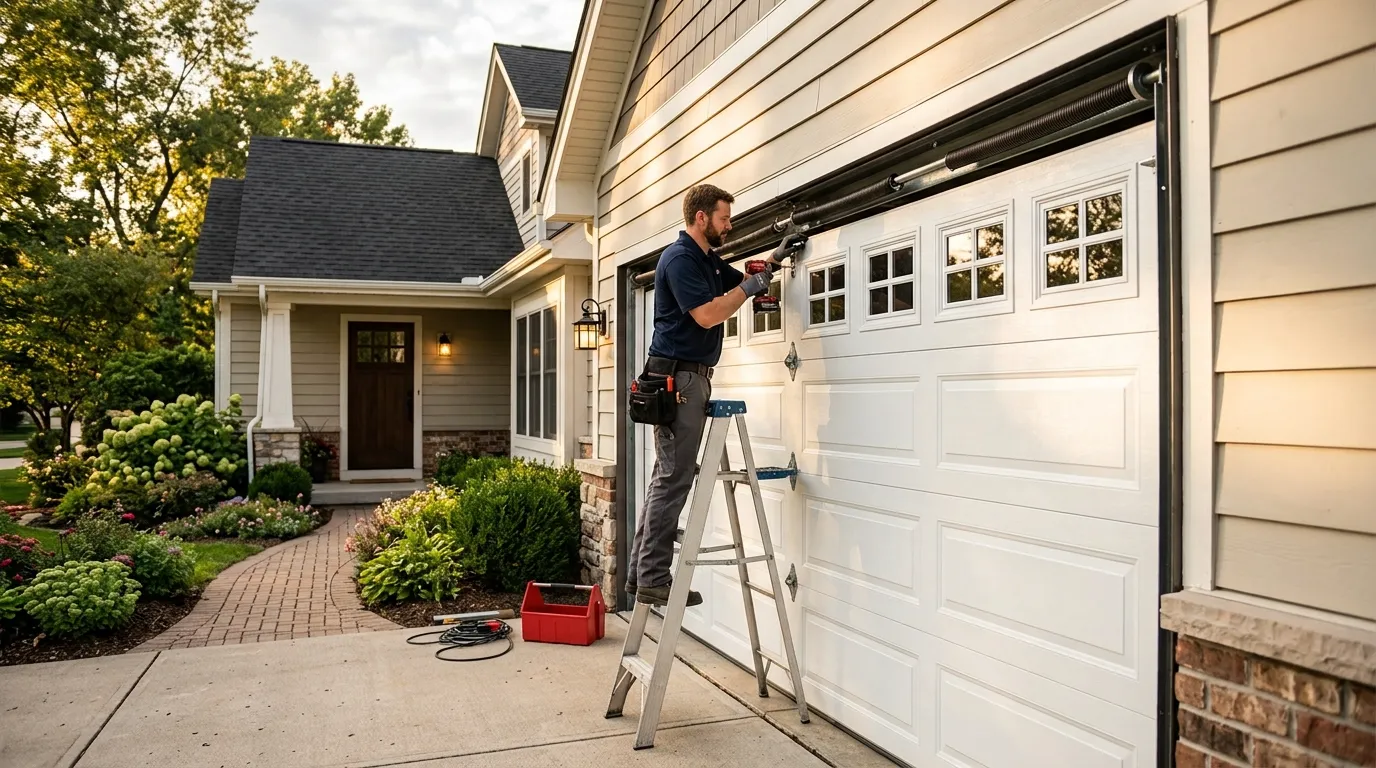
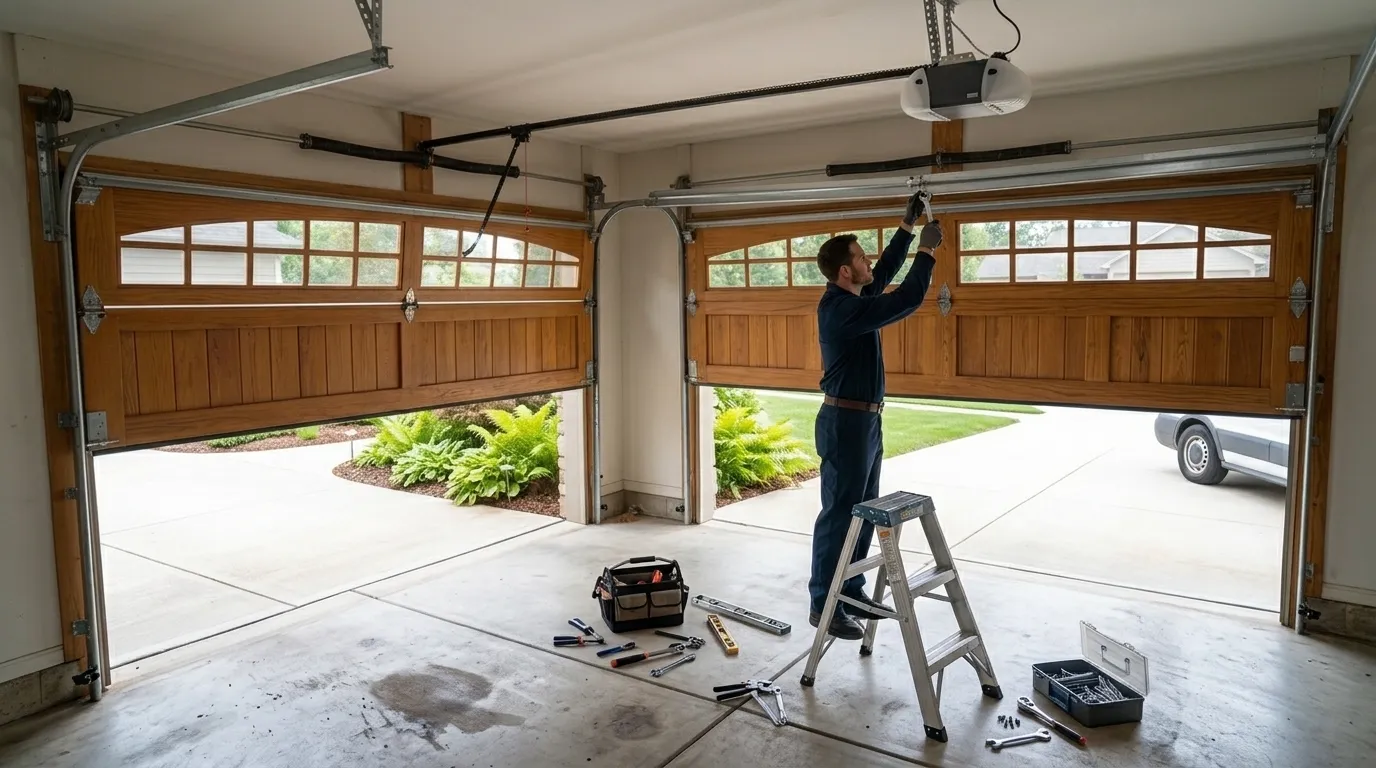
Denver homes built between 1947 and 2006 lose more heat through garage door gaps than owners expect. Here's why the seals fail and what actually stops the draught.
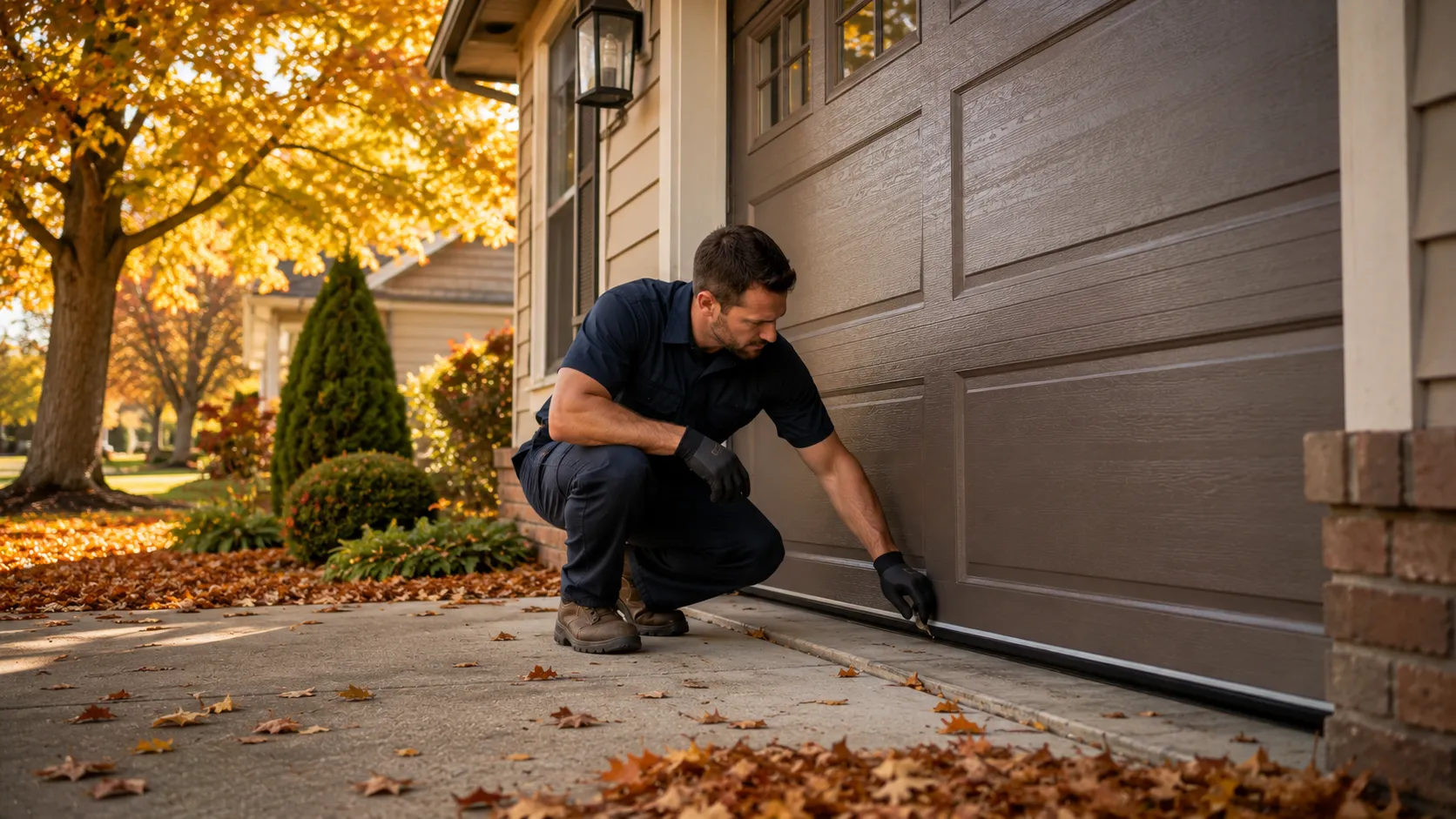
Walk into most garages built across this area between 1947 and 2006 - the range that covers the bulk of the housing stock here - and you'll feel a draught along the bottom of the door before you see it. The bottom seal, the vinyl strip set into the aluminum track along the floor, is the first thing to give out in a cold-band climate like Denver's. It hardens, it splits at the corners, and once it does, cold air rolls in under the door and sits in the garage all winter. If that garage shares a wall with a bedroom or a laundry room, which a lot of the 1980s-90s builds around here do, you'll feel it inside the house too. This isn't a door that's broken. It's a door doing exactly what a 30-to-70-year-old seal does once the rubber compound gives up. The fix is usually a $20-$40 part, but a lot of owners never get past pricing a new opener before they find that out.
Where People Go Wrong
The most common mistake is throwing foam tape at a bottom seal problem. Foam tape compresses in about a season and does nothing once the vinyl underneath is already cracked. The second mistake is ignoring the side and top seals - the U-shaped astragal that runs up the jambs - because they're less visible than the bottom sweep. On houses from the earlier end of the 1947-2006 build range, those jamb seals were often installed once and never touched again, which means they've had 40-plus years to shrink away from the wood or steel frame. The third mistake, and the expensive one, is treating a draughty door as an opener problem. An opener doesn't seal anything. If the door closes flush and the draught is still there, the opener was never the issue - the seal or the track alignment was. We won't sell a new opener to fix a seal problem, and if a technician tells you otherwise, get a second opinion.
What the Weather Here Does to It
Denver sits in a cold-severe climate band, and that matters for a garage door in a specific way: it's not steady cold, it's swing. A 40-degree temperature drop between afternoon and overnight is normal here, and that swing is what actually destroys seals - not the cold itself. Vinyl and rubber expand and contract with every swing, and over enough cycles the material fatigues and cracks at the stress points, usually the bottom corners of the door and the spot where the side seal meets the header. Steel panels do the same thing on a smaller scale, contracting enough overnight that a door aligned perfectly in July can bind or gap in January. If your door has started sticking or dragging only in the colder months, that's the track responding to the same swing, not a new problem showing up out of nowhere.
The Seasonal Bit
The check worth doing before the first hard freeze is simple: close the door, walk around the outside on a bright day, and look for daylight at the bottom corners and along the top. If you see light, air's getting through. On the older end of this area's housing stock - the pre-1980 builds - that gap is often paired with a track that's shifted slightly out of plumb over the decades, so a seal replacement alone won't fully close it; the track needs a look too. On the newer end, from the 1990s and 2000s, the seals are usually the whole story. Either way, this is a job worth doing once a year here, given the swing this climate puts the material through, rather than waiting until the garage is visibly cold. We don't recommend replacing a seal in the middle of a hard freeze if it can wait a few days - the vinyl doesn't seat properly against cold jambs, and you'll be redoing it in spring.
How it works
From “it’s stuck” to “it’s fixed”
01
Tell us what’s wrong
Describe the symptom - won’t open, loud bang, opener runs but the door won’t move.
02
On-site diagnosis
A technician tests the door under power and by hand and finds what actually failed.
03
Clear, up-front plan
You get the fix that’s needed and what drives the cost - before any work starts.
04
Repaired & tested
The repair is done, the door is set true and tested, and the work area left clean.
Serving Denver, CO - tell us what your door’s doing and we’ll take it from there.
How often do garage door seals need replacing in Denver?
There's no fixed interval, but given the temperature swings typical of this cold-severe climate band, a lot of seals here show cracking well before the 10-year mark you'd expect in a milder area. Check yours once a year, ideally before the first hard freeze, rather than waiting for a visible draught.
My house was built in the 1980s - is the seal original?
It's possible. Most of the housing stock in this area dates to the 1980s and 90s, and if nobody's mentioned replacing the garage door seal, there's a real chance it's original. Vinyl that old has usually hardened past the point of doing its job, even if it looks intact from a few feet away.
Can I just add foam tape instead of replacing the seal?
You can, but it's a short-term patch. Foam tape compresses within a season and won't seal once the vinyl strip underneath has cracked. It buys you a few weeks, not a winter.
Is a draughty garage door an opener problem?
No. The opener moves the door; it doesn't seal it. If the door closes flush and you still feel a draught, the problem is the seal or the track alignment, not the opener. Replacing the opener won't fix a seal issue.
Ready to get your garage door sorted?
Tell us what it’s doing and where you are in Denver - we’ll take it from there.