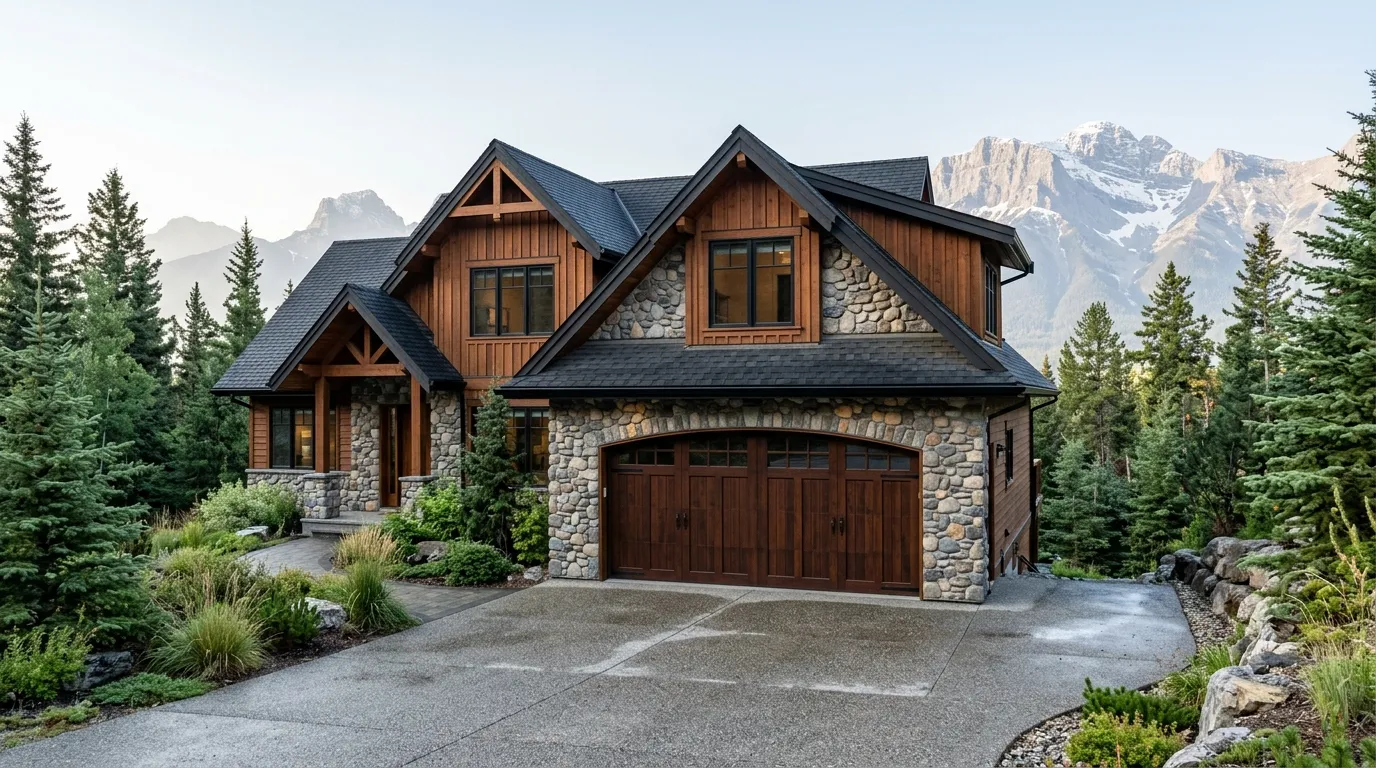
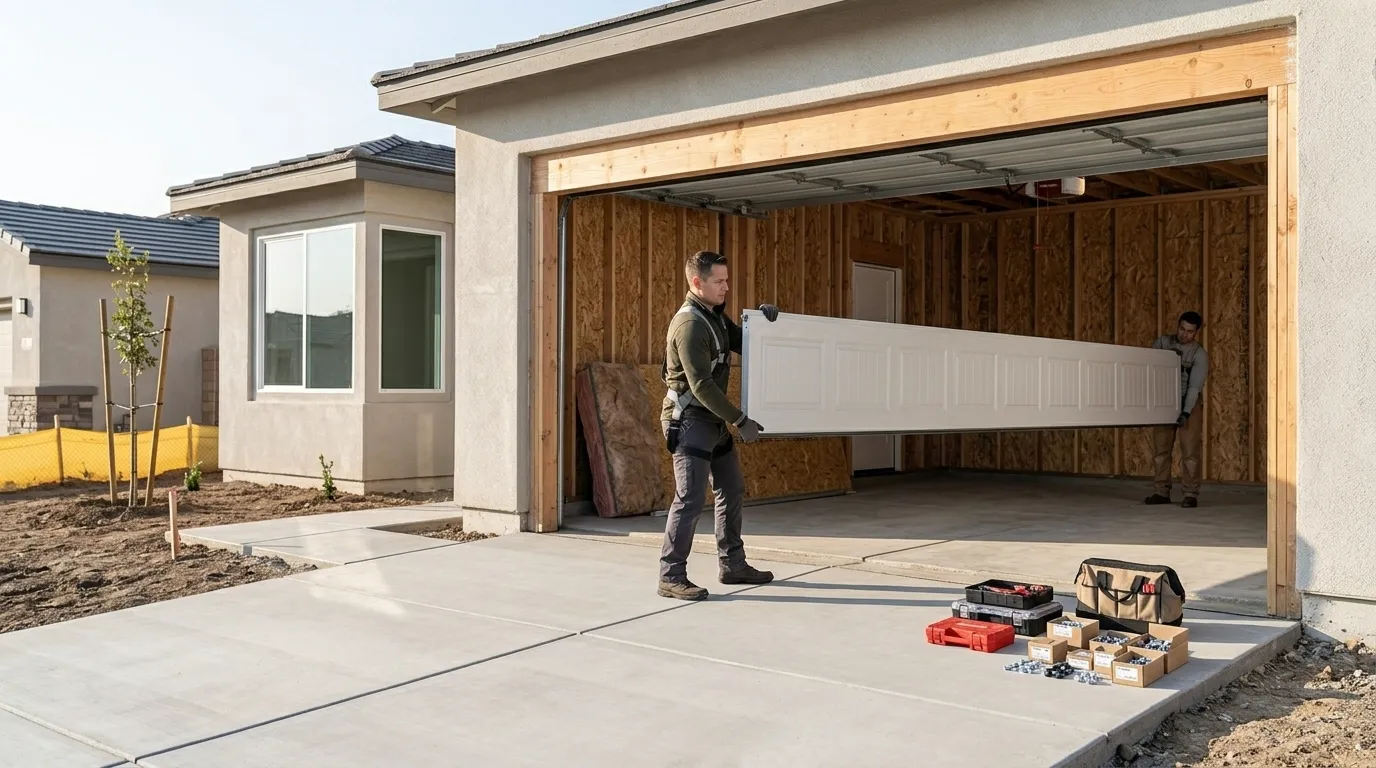
Meridian is one of the newer pockets we cover. Most of the housing here went up around 2005, which is a full generation past the 1981 median for the wider service area covered by Go Denver Garage Door. Across the 31 named communities we work in, you'll find plenty of 1980s and 90s stock - split-levels with steel doors on worn extension springs. Meridian isn't that. With about 2,669 households, it's a smaller, younger pocket, and the median income here runs around $90,496, a bit under the $101,450 median for the broader area. That income and build-year combination usually means larger two-car openings, insulated doors, and openers that still have their original circuit boards rather than three replacements' worth of history. The garages themselves tend to be deeper too, built for the trucks and SUVs that came standard with early-2000s suburban construction rather than retrofit to fit them.
How That Shows Up in the Door
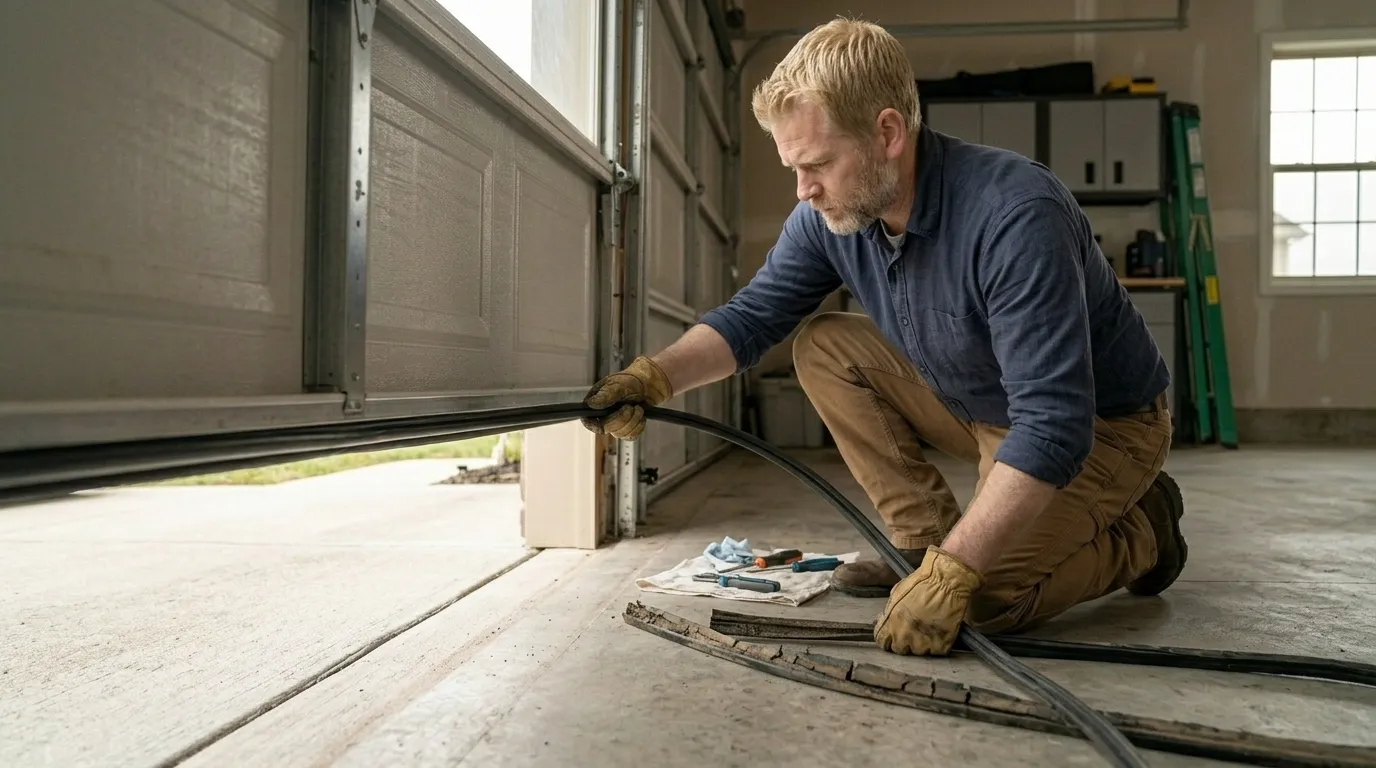
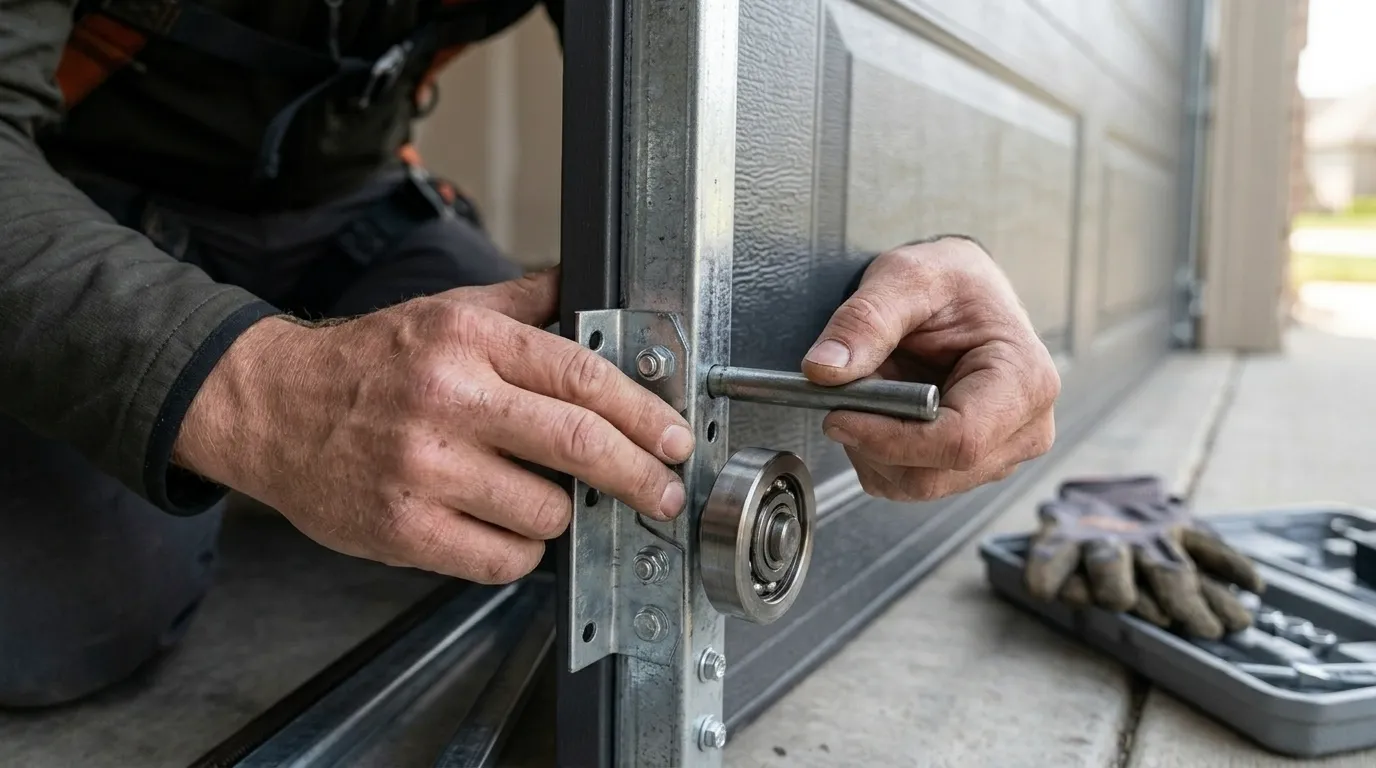
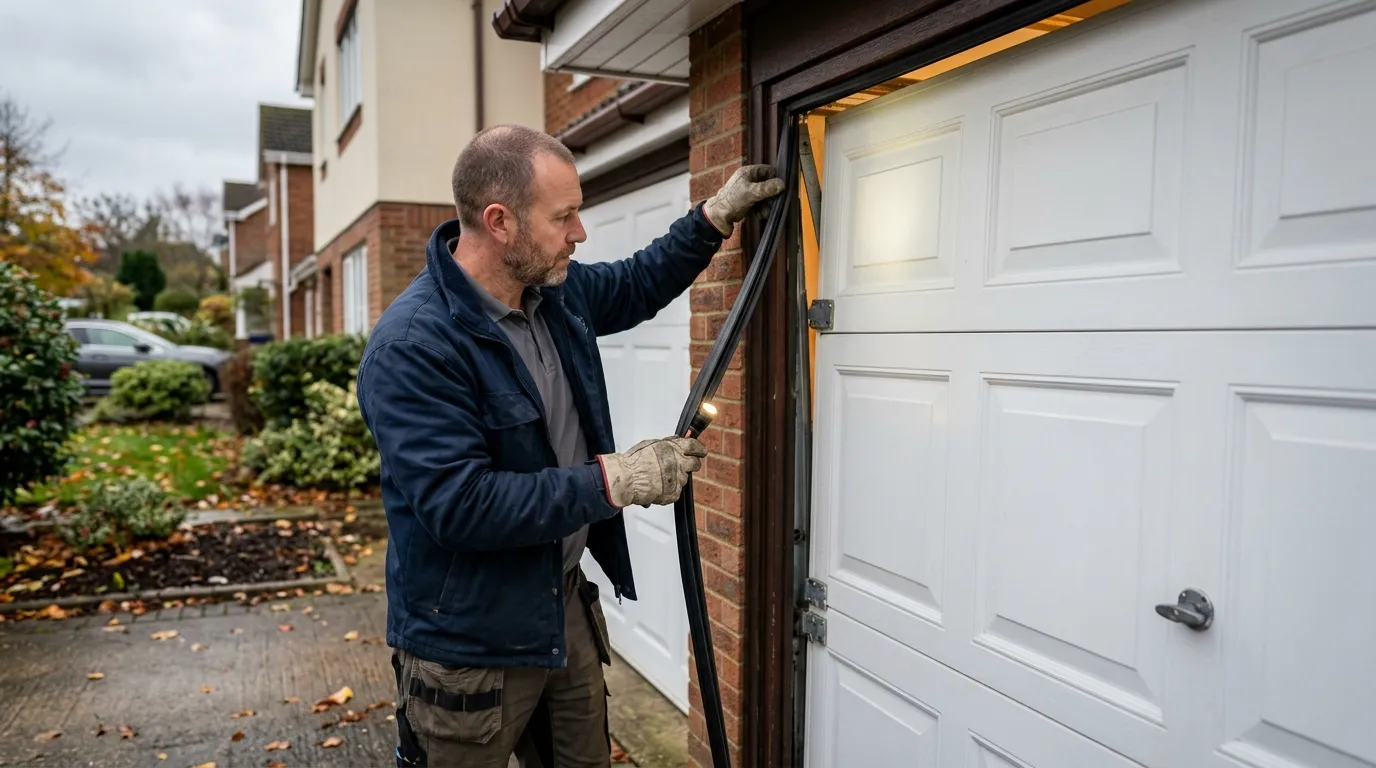
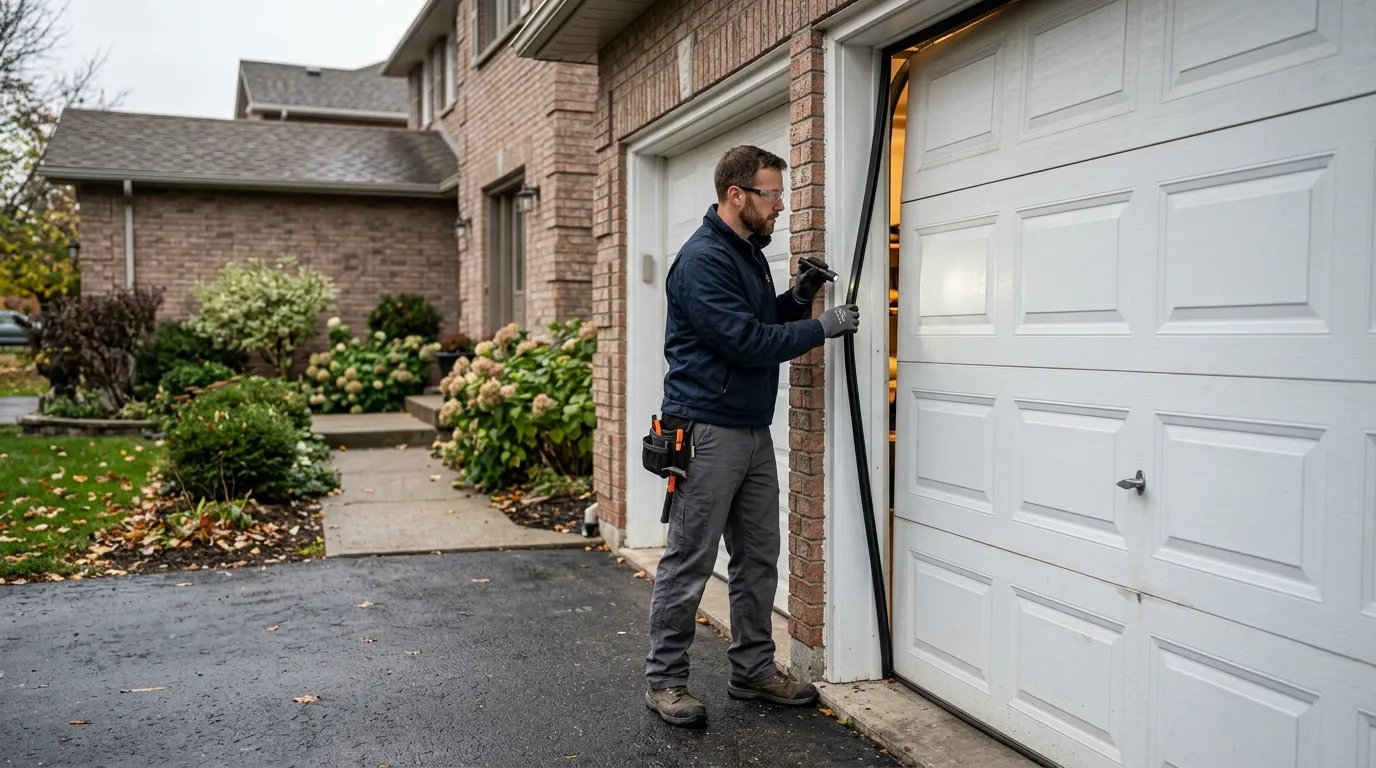
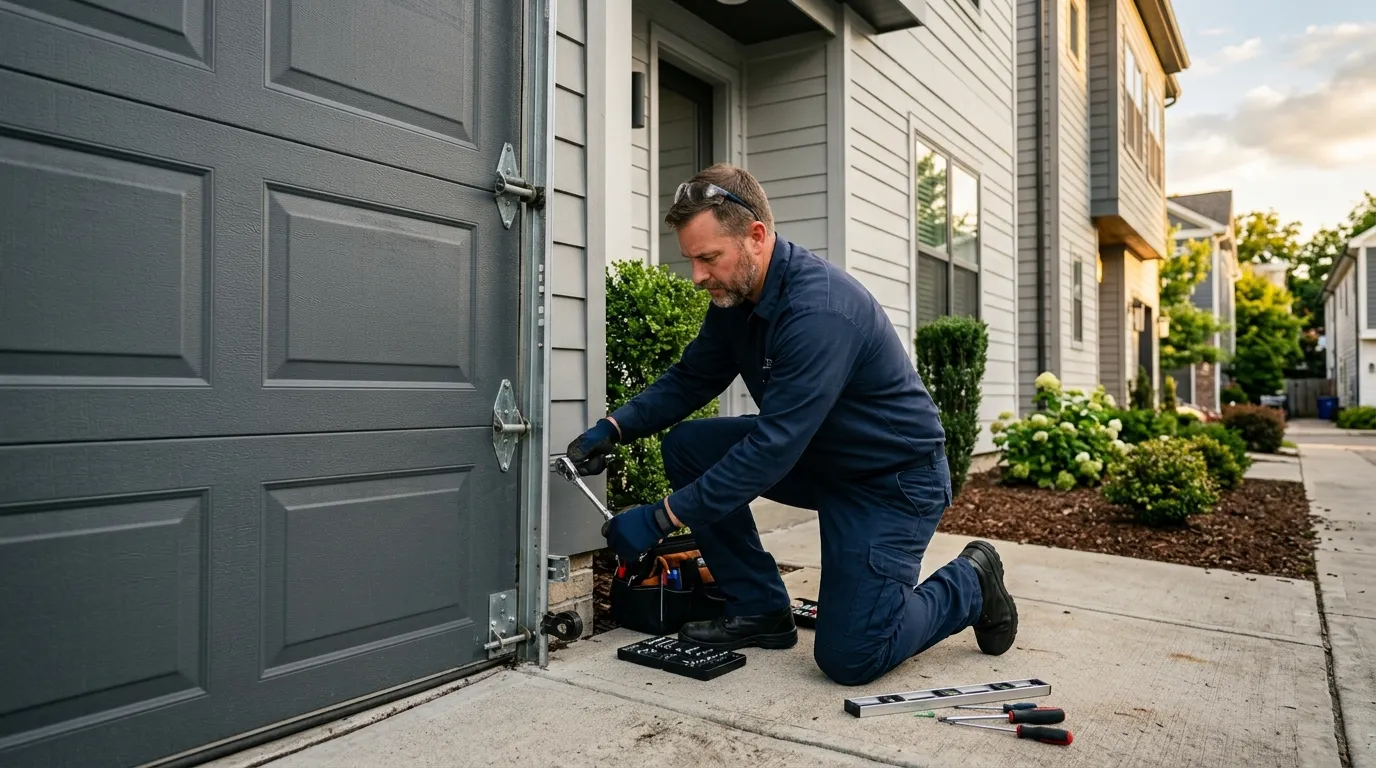
A 2005-era door in a COLD-severe climate zone like this one usually means a steel sandwich door with a foam core, factory-set torsion springs rated for a specific cycle count, and a chain or belt-drive opener with a keypad. The common failures we see on this vintage aren't the same as what shows up on a 1985 door. You're less likely to find bent single-layer panels and more likely to find worn nylon rollers, a torsion spring that's hit the end of its rated cycles right on schedule, or a logic board opener that's aged out even though the door itself still looks fine. Weatherstripping on these doors also tends to be a factory-molded bottom seal rather than a bolt-on strip, so replacement parts aren't always something you can grab off a generic shelf. One limitation worth saying plainly: if your opener is an early smart-home integration model from that era, we may need to order a control board rather than swap it same-visit, since those aren't stocked the way universal openers are.
Getting Here
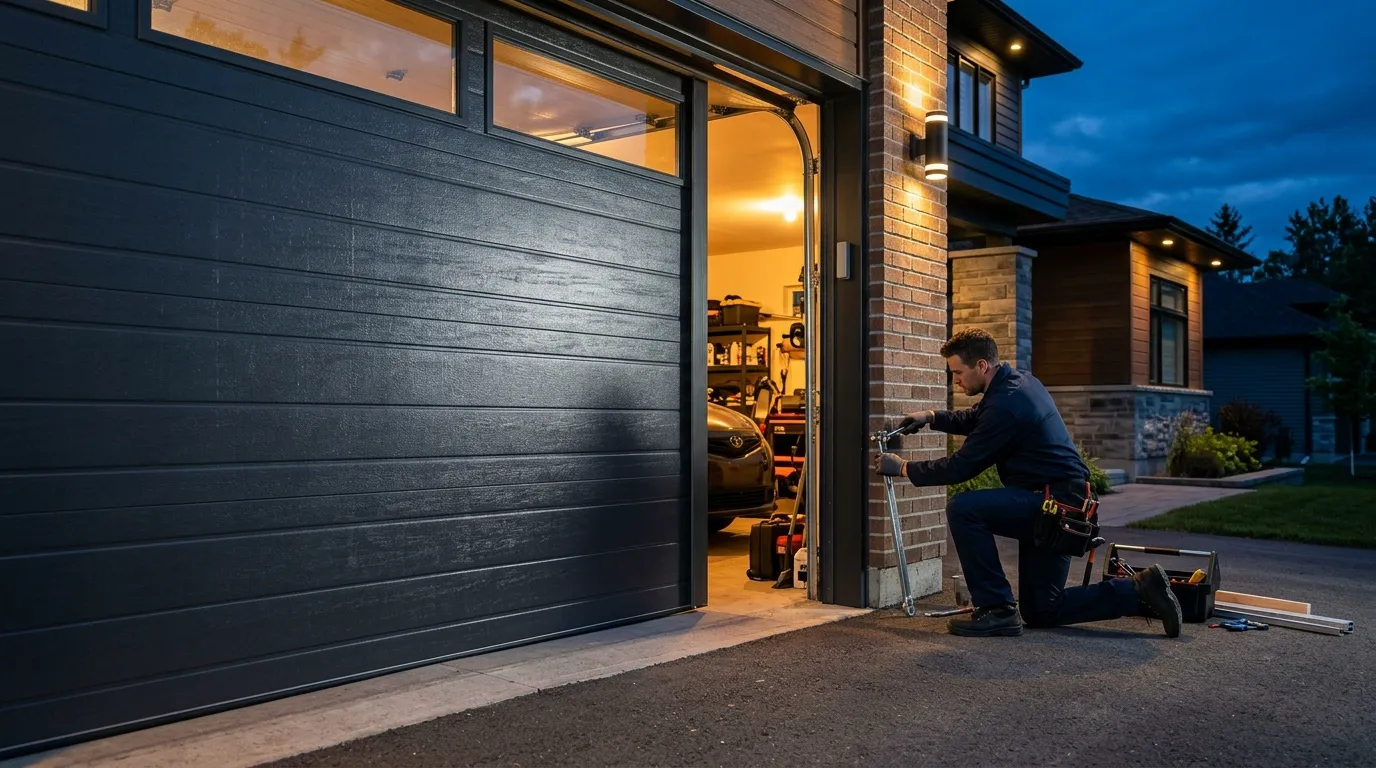
Meridian sits about 15 miles from Denver, making it one of the farther stops on our route compared to closer-in areas like Glendale or Derby. We don't keep a depot or crew stationed in Meridian - every truck runs out from Denver, same as it does for the rest of the coverage area. That distance doesn't change the work once we're on-site, but it does mean scheduling a call with enough lead time matters more out here than it would for a five-mile job. If you're weighing whether to call now or wait, a spring that's already sagging or a door that's dropped off track by more than an inch isn't one to sit on regardless of how far the truck has to come.
Older vs Newer Streets
Because Meridian's housing clustered so tightly around 2005, you don't get the mixed vintage you'd find in older parts of the service area - no block with a 1955 original next to a 1990s remodel. That consistency actually makes diagnosis faster: if one door on a street needs a torsion spring, the neighbor's door was very likely built with the same spring rating and the same opener line. It also means fewer surprises from outdated hardware like the side-mounted torsion setups you'd find in older 1950s stock elsewhere. The tradeoff is that when a batch of openers from a given production year has a known weak point, it tends to show up across several houses on the same street around the same time, since they were all installed within a year or two of each other.
How it works
From “it’s stuck” to “it’s fixed”
01
Tell us what’s wrong
Describe the symptom - won’t open, loud bang, opener runs but the door won’t move.
02
On-site diagnosis
A technician tests the door under power and by hand and finds what actually failed.
03
Clear, up-front plan
You get the fix that’s needed and what drives the cost - before any work starts.
04
Repaired & tested
The repair is done, the door is set true and tested, and the work area left clean.
Serving Denver, CO - tell us what your door’s doing and we’ll take it from there.
No. Go Denver Garage Door runs all its trucks from Denver, about 15 miles away. There's no local depot in Meridian, so we build in travel time when we schedule a call here rather than treating it like a five-minute-away job.
Are Meridian's garage doors different from older parts of the service area?
Yes. Most homes here were built around 2005, versus a service-area median closer to 1981. That means steel sandwich doors with foam cores and factory torsion springs are standard, not the single-layer wood or bare steel doors you'd find in older 1980s-built neighborhoods nearby.
Will an older-style spring or opener fit my Meridian door?
Usually not directly. Doors built around 2005 typically use torsion springs matched to specific cycle ratings and openers with circuit boards from that era. We match parts to what's actually on your door rather than assuming an older or generic part will work.
Ready to get your garage door sorted?
Tell us what it’s doing and where you are in Denver - we’ll take it from there.