Garage door repair and spring service for Grand View Estates, a 1980s-built subdivision 15 miles from Denver. We know the hardware that came with these houses.
Grand View Estates is a small pocket - about 207 households - and the houses here went up around a single stretch of time, centered on 1981. That's not a guess pulled from the wider service area; it's the actual median for this subdivision, and it lines up with the broader pattern across our coverage, where most stock dates to the 1980s and 90s. A neighborhood built in one push like this tends to have one generation of garage doors and openers going in at roughly the same time, which means a lot of these systems are aging out together rather than in a scattered way. Household income here runs well above the wider service area - median around $170,375 versus roughly $101,450 across the full area - and that shows up in the kind of upgrades we see requested: full door replacements and insulated sections rather than patch repairs. When a neighborhood was built close together in time, the failures cluster together too. If one house on a street needs a new spring, the one three doors down often needs it within a year or two.
How That Shows Up in the Door
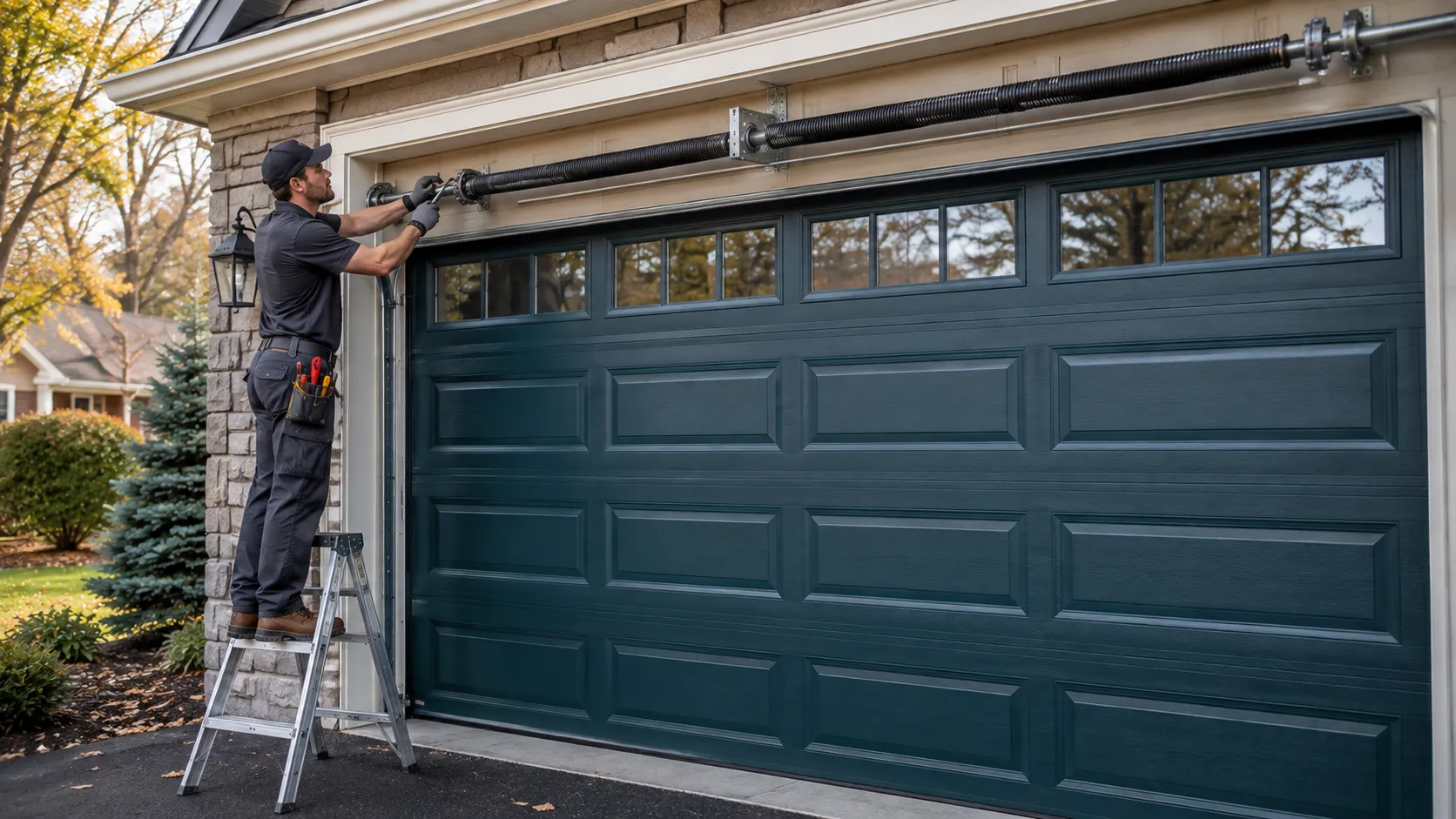
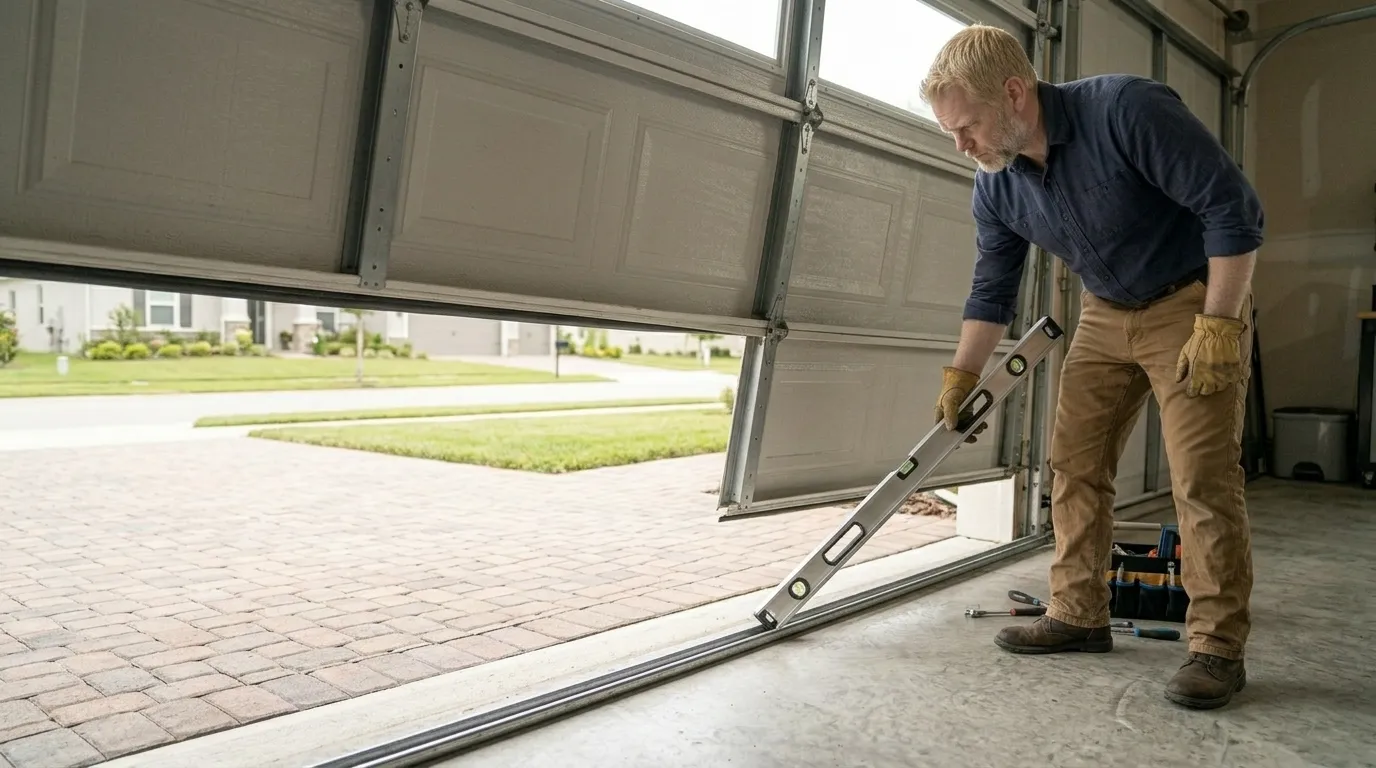
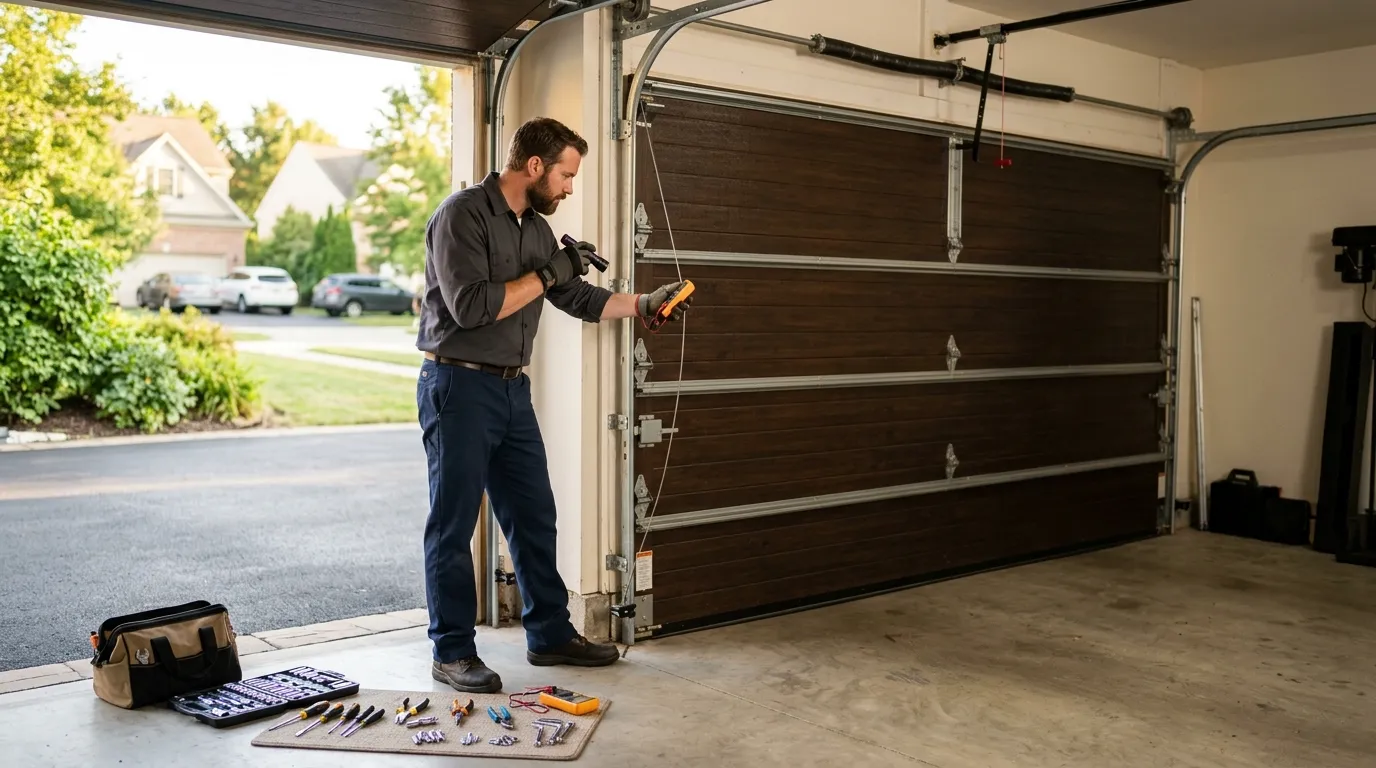
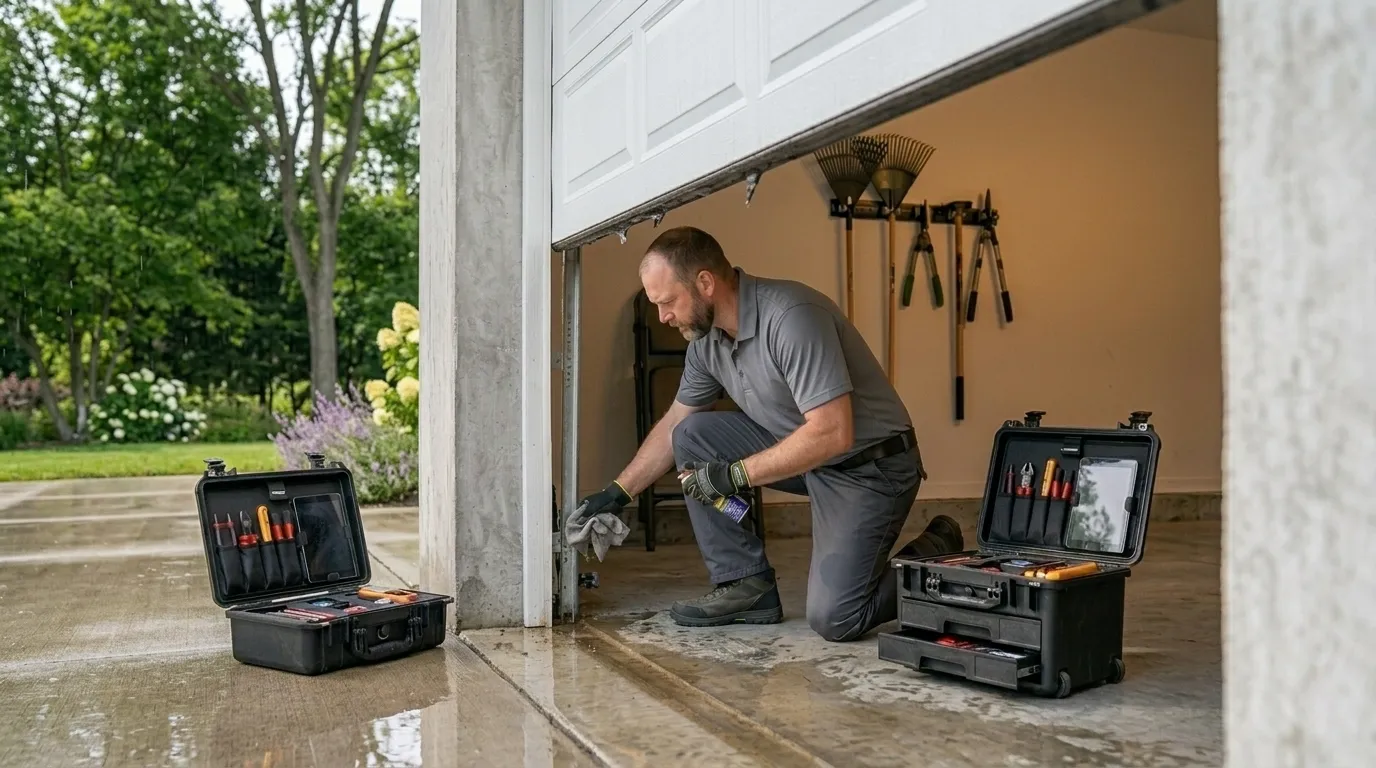
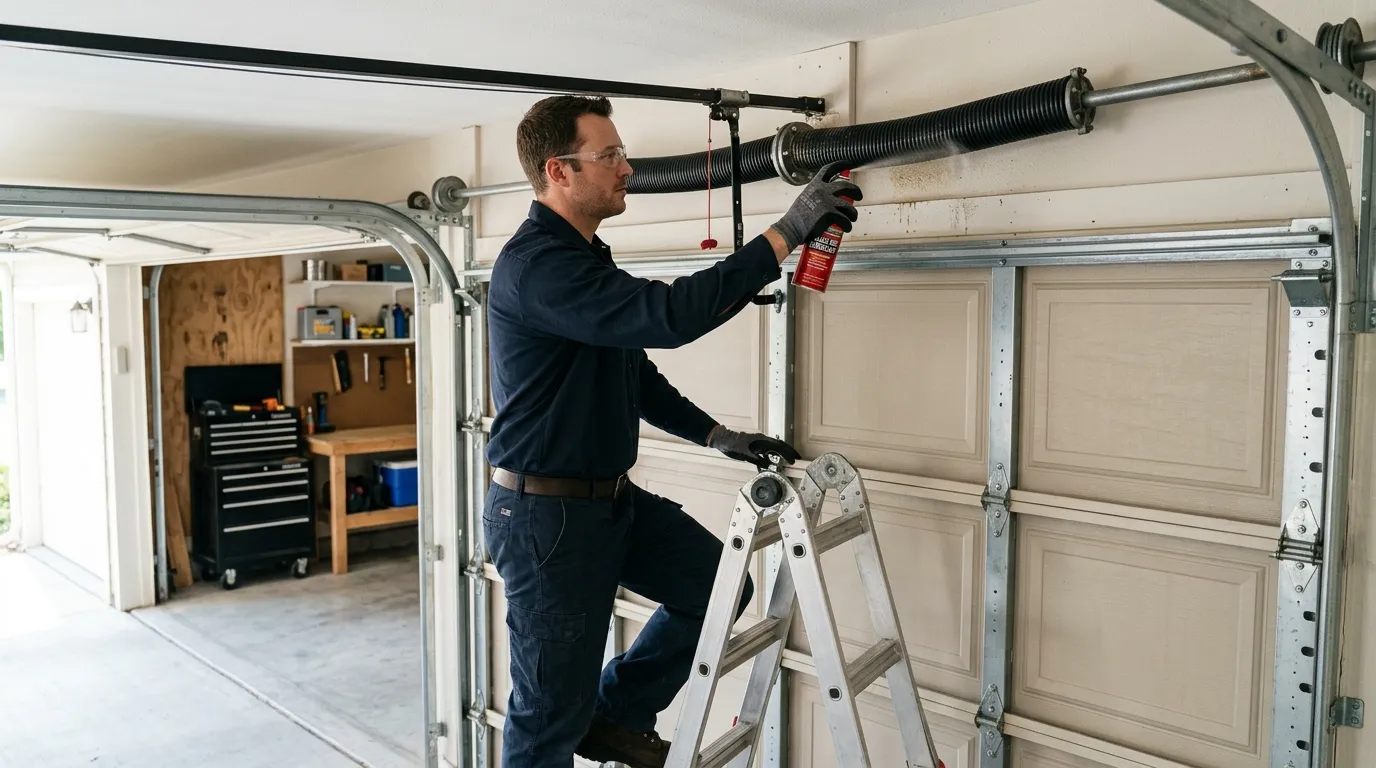
A door installed around 1981 usually means steel panels on a torsion or extension spring system that's been replaced at least once by now, if it's been replaced at all. Springs rated for a normal cycle count don't last four decades - if the original spring is still on the door, it's overdue, full stop. The climate here is classed as cold and severe, and that matters more for a door this age than for a newer one: older weatherstripping has usually hardened and cracked, and steel panels from that era weren't always insulated to the standard you'd see in a door sold today. Cold makes lubricant thicken and metal contract, so an aging system that was already marginal tends to bind or slip off track right when the temperature drops. We won't tell you a 40-year-old door needs to become a 40-year-old door forever - at some point the housing and track are worn enough that spot repair is money spent twice. But that's a call we make in person, not something to assume from the build year alone.
Getting Here
Grand View Estates sits about 15 miles out from our Denver base - we don't keep a truck or depot in the area, we drive out for the job. That distance puts it in the same general band as Meridian and Todd Creek, both also around 15 miles, and a bit closer in than Watkins at 17 or Superior at 19. It's farther out than closer-in stops like Glendale or Derby, which sit 5 to 6 miles from Denver. None of that changes what we bring to the job, but it's worth knowing up front if you're timing a repair around a work schedule - we're not around the corner, we're coming from town.
Older vs Newer Streets
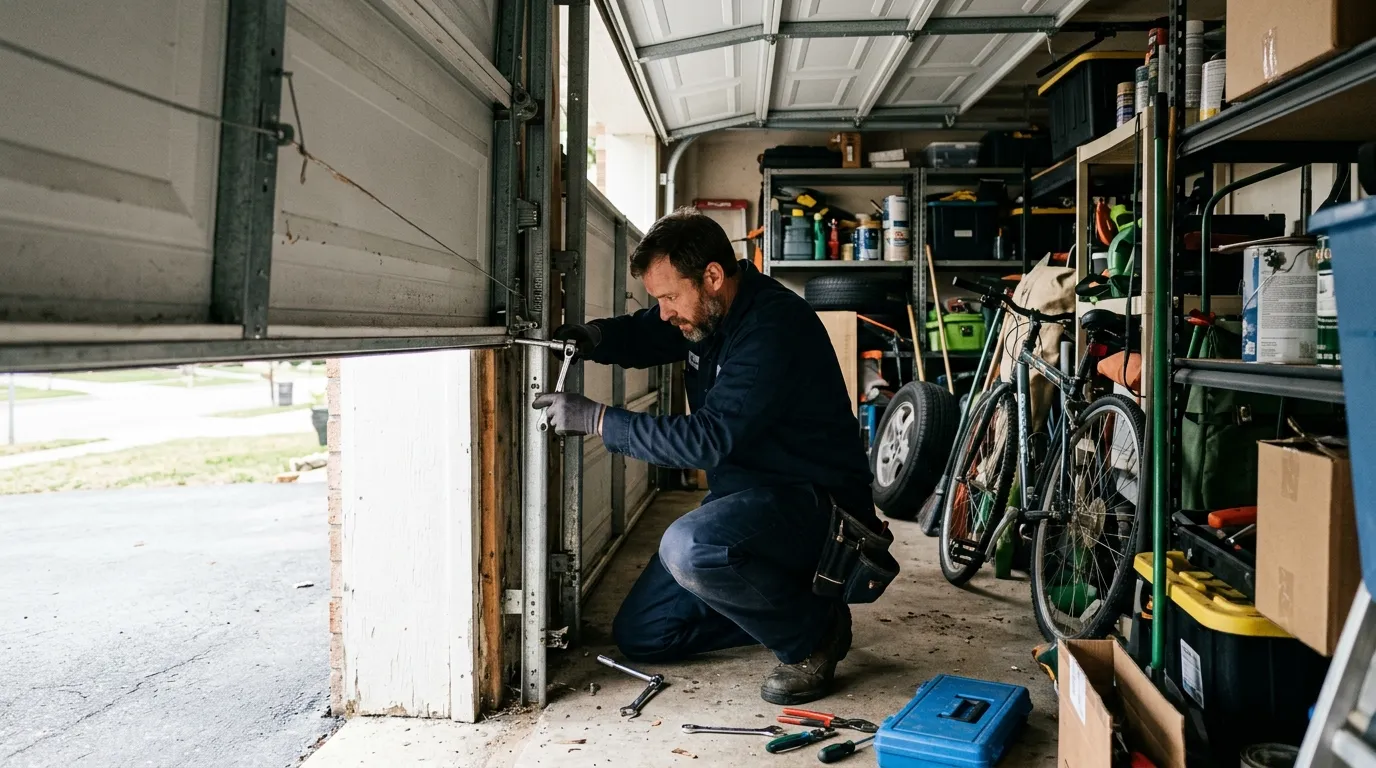
In a lot of the service area, 'older vs newer' means a real split - houses from the late 1940s next to ones from the 2000s, with genuinely different door types and hardware. Grand View Estates doesn't have that spread. With build dates clustering around 1981 and only about 207 households total, you're not going to find much variation street to street; most of the neighborhood is working with the same generation of door and opener. That's actually a useful thing to know: if a symptom shows up on one house - a spring giving out, a track pulling away from the jamb - it's a reasonable bet the same thing is coming for the neighbors, not a one-off. The honest limitation here is that we can't point you to a specific street or block with older stock, because the data we have doesn't break down finer than the neighborhood as a whole.
How it works
From “it’s stuck” to “it’s fixed”
01
Tell us what’s wrong
Describe the symptom - won’t open, loud bang, opener runs but the door won’t move.
02
On-site diagnosis
A technician tests the door under power and by hand and finds what actually failed.
03
Clear, up-front plan
You get the fix that’s needed and what drives the cost - before any work starts.
04
Repaired & tested
The repair is done, the door is set true and tested, and the work area left clean.
Serving Denver, CO - tell us what your door’s doing and we’ll take it from there.
How old are most garage doors in Grand View Estates?
The neighborhood's median build year is 1981, and it went up in a fairly tight window, so most original garage door hardware here is well past its expected service life. If your spring or opener has never been replaced, it's a strong candidate for one now, especially heading into cold weather.
Do you have a crew based in Grand View Estates?
No. We work out of Denver and drive to Grand View Estates for every job, about 15 miles each way. We don't keep a depot or truck stationed in the area.
Does the cold weather here actually affect an older garage door?
Yes. This area falls in a cold, severe climate band, and older steel doors and worn weatherstripping handle that worse than newer insulated ones. Stiff or cracked seals, thickened lubricant, and metal contraction all show up more in winter on a system already near the end of its life.
Is it worth repairing a 1981-era door or should I replace it?
It depends on what's actually worn - a spring or opener swap can be worth it, but if the track, panels, and hardware are all original, repeated patch repairs usually cost more over time than one replacement. We'll tell you honestly which side of that line your door is on when we look at it.
Ready to get your garage door sorted?
Tell us what it’s doing and where you are in Denver - we’ll take it from there.