Garage Door Service for Glendale's 1980s Housing Stock
Glendale homes built around 1983 carry 80s-era steel doors and torsion hardware built for Denver-area winters. Go Denver Garage Door works on this stock from 5 miles away.
Glendale's housing stock centers on 1983, right in the middle of the broader 1947-2006 range across the service area. That means most garages here went up during the run of steel-panel doors and torsion-spring conversions that replaced the old extension-spring setups of the 60s and 70s. With 2,678 households packed into a small footprint, this isn't a town of sprawling new-build subdivisions - it's a dense pocket of mid-80s construction, and the doors reflect it.
At a median household income of $68,952, a lot of these garages have had one owner, sometimes two, and the original opener or spring has often outlasted a couple of cars in the driveway. That's not a knock - it's just what 40-year-old hardware looks like when nobody's had a reason to replace it yet.
We're not guessing at this from a city-wide average. The area's own numbers track close to the wider Denver service region's 1981 median build year, which tells us the doors we see in Glendale aren't some outlier - they're a tight, predictable slice of the same era, just with less income cushion for a homeowner to swap a whole system out on a whim.
How That Shows Up in the Door
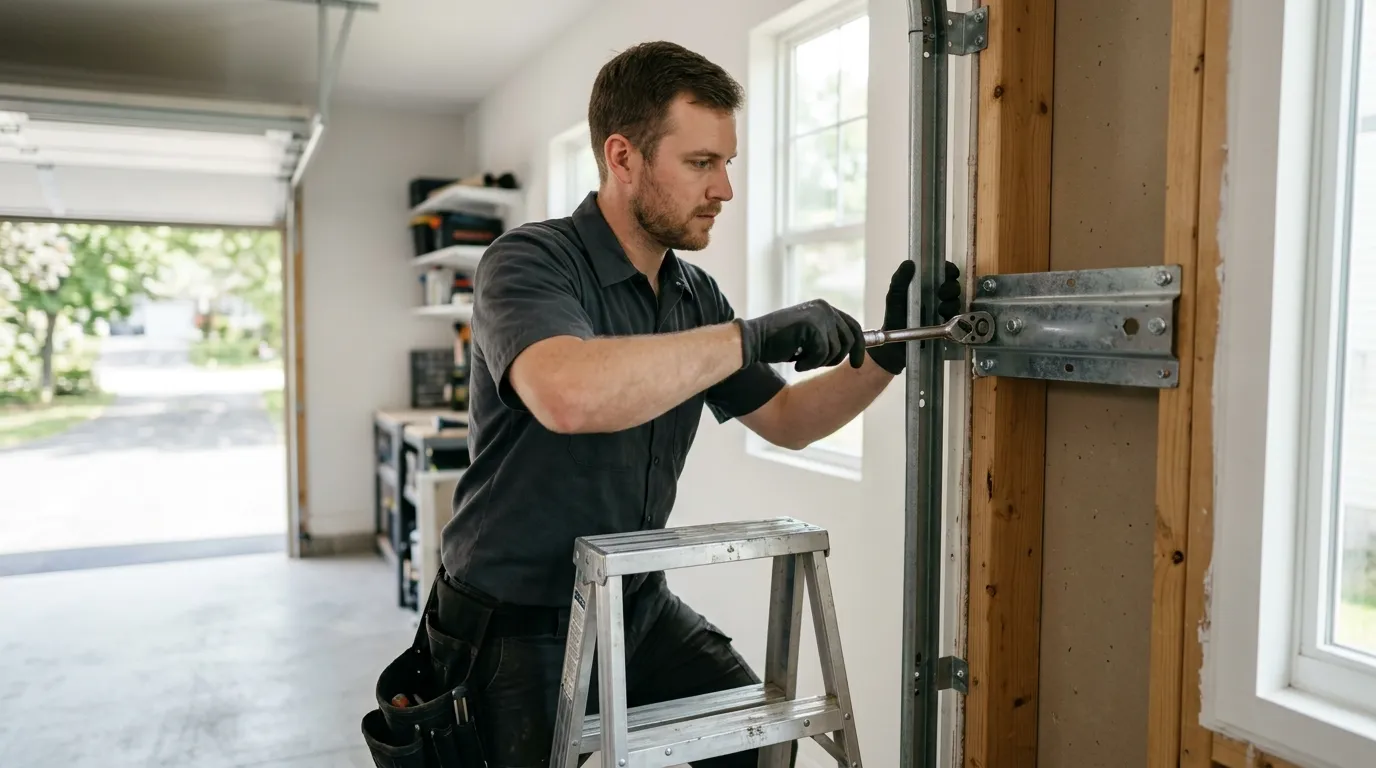
A door built around 1983 usually means a torsion spring rated for a lighter, non-insulated steel panel - not the heavier insulated doors that became common later. When a homeowner in Glendale upgrades to a heavier insulated door but keeps the original spring or torsion bar, the spring undersizes fast and cycles out early. That's one of the more common calls we get from houses in this build window.
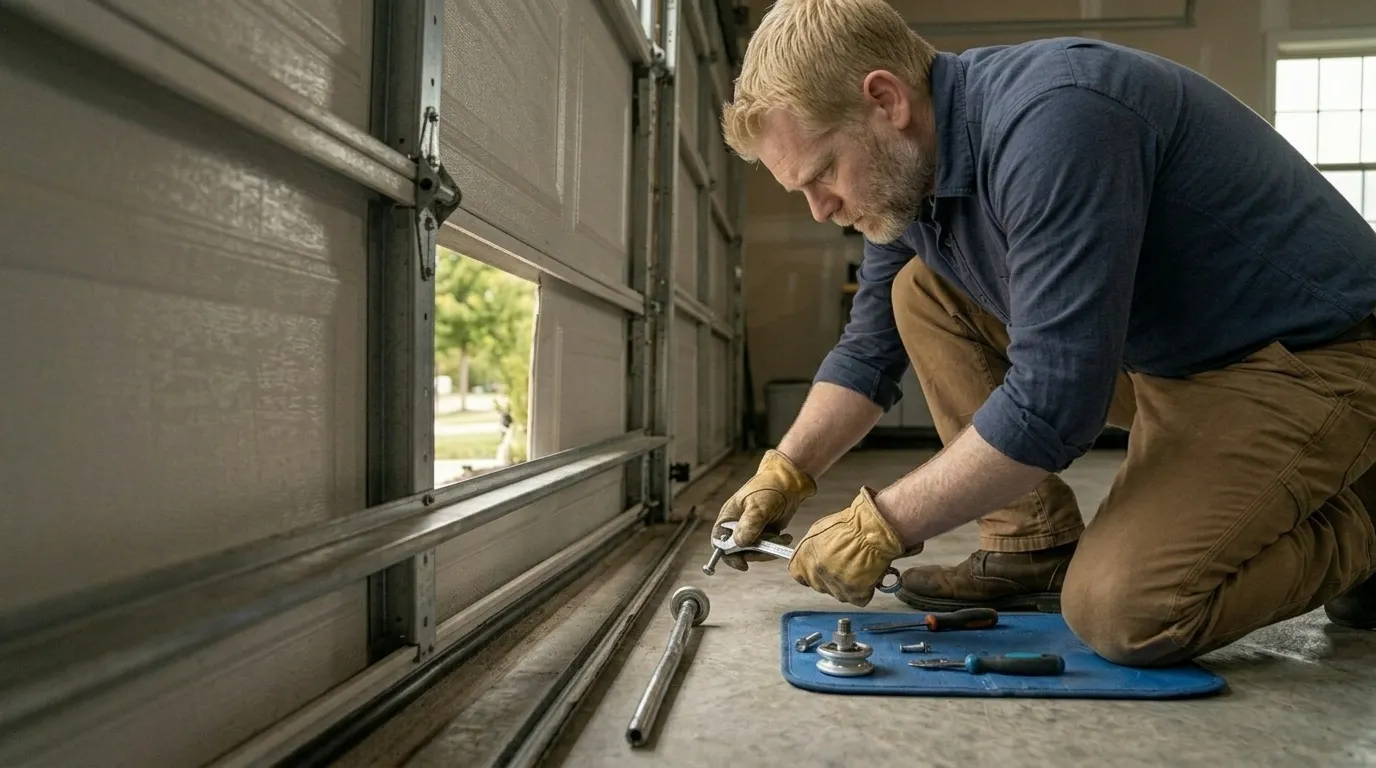
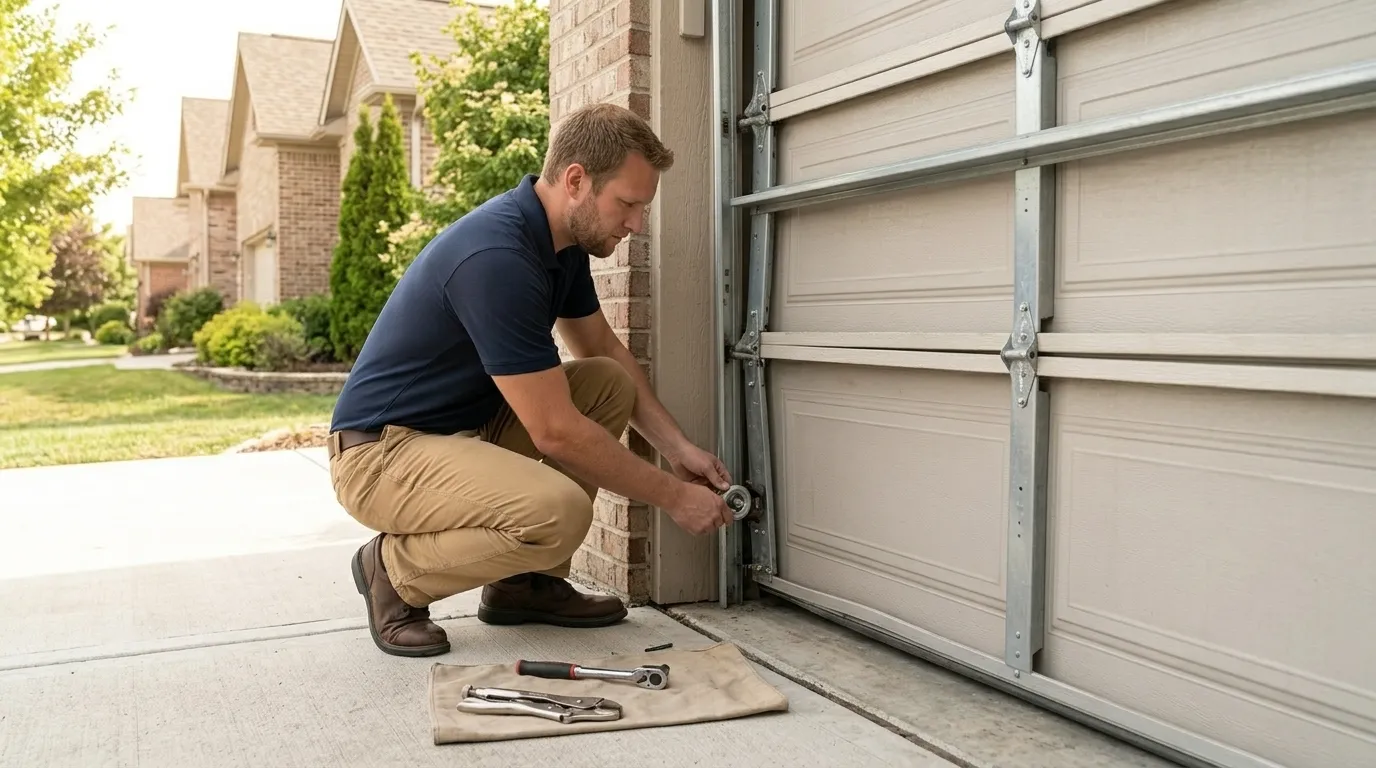
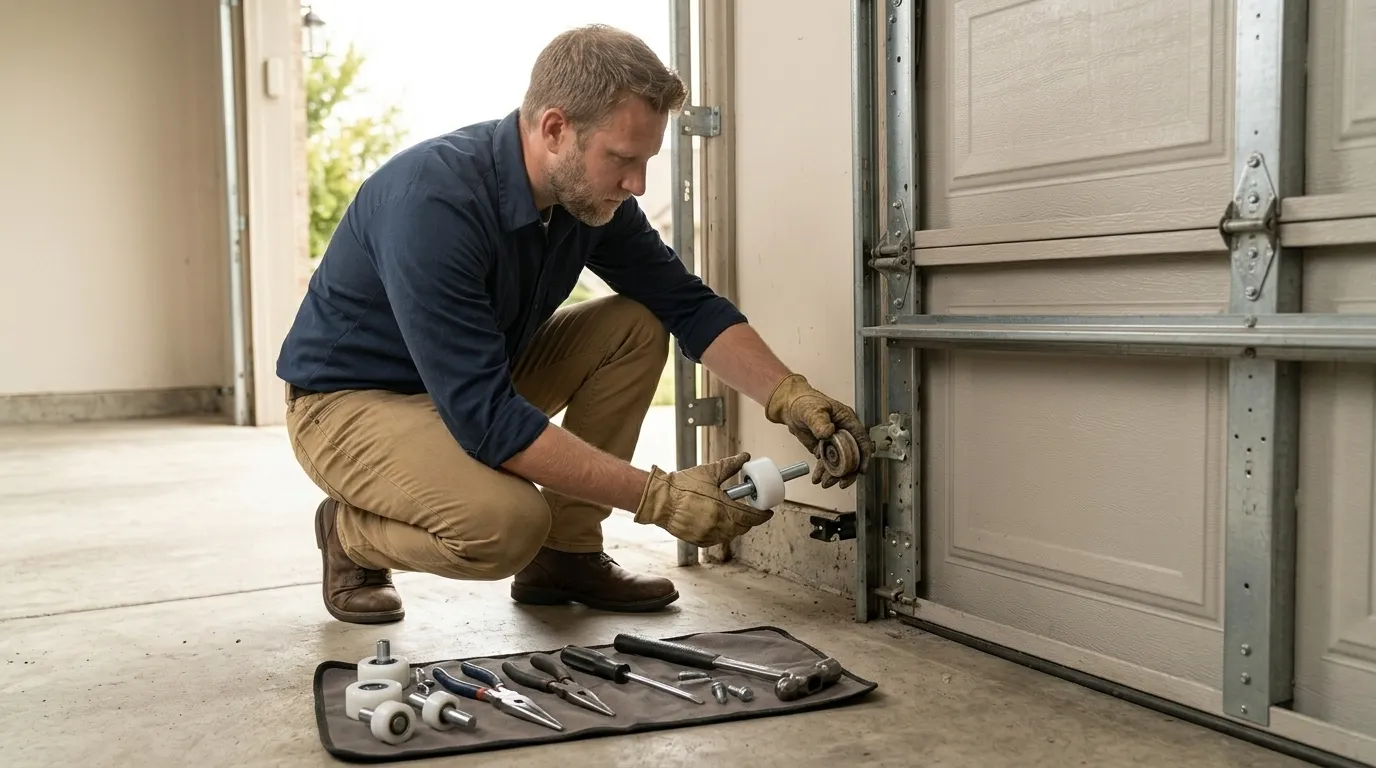
Denver's climate band is classified cold and severe, which matters more than people think for doors this age. Original nylon rollers and steel tracks from the early 80s weren't speced for decades of hard freeze-thaw cycling, and by now most of them are stiff, pitted, or bent slightly out of true. Openers from that era, if original, are usually chain-drive units with worn drive gears - not a safety issue by itself, but a noisy one, and parts for the oldest of these are getting harder to source.
We won't tell you to replace a door that's still doing its job. If the spring is rated wrong for a later panel swap, that's a spring job, not a door job - and we'll say so.
Getting Here
Glendale sits about 5 miles from Denver, which is where our trucks run from - we don't keep a depot or stage equipment in Glendale itself. That distance is short enough that a same-day call for a torsion spring or a stuck opener rarely runs into trouble; it's a quick trip down from Denver on most days.
The area sits close to Cherry Creek (11 miles) and Cherry Hills Village (9 miles), and near Central Park (1 mile NW) and Northeast Park Hill (2 miles W) - all part of the same general stretch we cover out of Denver, not separate service zones with their own crews. We're upfront that we travel to Glendale rather than being based in it, because a homeowner deciding between companies should know who actually has a truck nearby versus who's simply listing the town.
Older vs Newer Streets
Within Glendale, the age spread isn't huge, but it's there. Streets closer to the 1983 median tend to have the original torsion setup, sometimes with a replacement opener bolted onto old brackets. Anything built noticeably later in the broader 1947-2006 window down toward the 2000s end usually has heavier insulated doors, extension or torsion springs rated for that added weight, and openers with rolling-code safety sensors as standard - no retrofit needed.
The practical difference: a call to an older-stock house is more likely to be about a spring mismatched to a heavier door someone installed later, or rollers that have seized in cold snaps. A call to a newer-stock house tends to be opener electronics or a sensor alignment issue after a bump.
Neither is better or worse to work on - they're just different jobs, and knowing which decade a house falls into before we show up saves time diagnosing on-site.
How it works
From “it’s stuck” to “it’s fixed”
01
Tell us what’s wrong
Describe the symptom - won’t open, loud bang, opener runs but the door won’t move.
02
On-site diagnosis
A technician tests the door under power and by hand and finds what actually failed.
03
Clear, up-front plan
You get the fix that’s needed and what drives the cost - before any work starts.
04
Repaired & tested
The repair is done, the door is set true and tested, and the work area left clean.
Serving Denver, CO - tell us what your door’s doing and we’ll take it from there.
No. We run out of Denver, about 5 miles away, and travel to Glendale for calls. We don't keep a depot or stage a truck in town, but the distance is short enough that most service calls here don't involve a long wait.
Why did my spring break after I upgraded to a heavier door?
Glendale's housing stock centers on 1983, when torsion springs were commonly rated for lighter, non-insulated steel doors. If a heavier insulated door went in later without a spring upgrade, the original spring is undersized and will wear out and break sooner than it should.
Do older Glendale garages need track or roller replacement more often?
Often, yes. Steel tracks and nylon rollers from the early 1980s weren't built for decades of the cold, severe freeze-thaw cycling this area gets, and by now many are pitted or slightly bent. That shows up as noise, sticking, or a door that binds partway through its cycle.
Ready to get your garage door sorted?
Tell us what it’s doing and where you are in Denver - we’ll take it from there.