Garage Door Service for Federal Heights, Built Later Than Most of the Area
Federal Heights homes mostly date to 1990, later than the Denver-area median of 1981. We travel from Denver to fix the springs, openers, and tracks that era's doors actually need.
Across the wider Denver service area, the typical house went up in 1981, with construction spanning 1947 to 2006. Federal Heights sits later than that: the median build year here is 1990. That decade-plus gap matters. A neighborhood built in the late 1980s and early 1990s got a different generation of garage door hardware than one built in the 1960s or 70s - steel doors were more common by then, torsion spring sizing had shifted, and openers started showing up as standard rather than an add-on.
With 5,162 households in Federal Heights, this isn't a handful of houses we're talking about - it's most of the town built inside a fairly tight 15-to-20 year window. That kind of consistency is useful for us. It means when we get a call from here, we usually already know roughly what door, what spring configuration, and what opener era we're walking into before we open the truck.
Median household income here is $57,957, noticeably below the wider service area's $101,450. We mention that because it shapes the calls we get - more repair requests, fewer full-replacement jobs on the first call, and more interest in fixing the specific broken part instead of swapping the whole door.
How That Shows Up in the Door
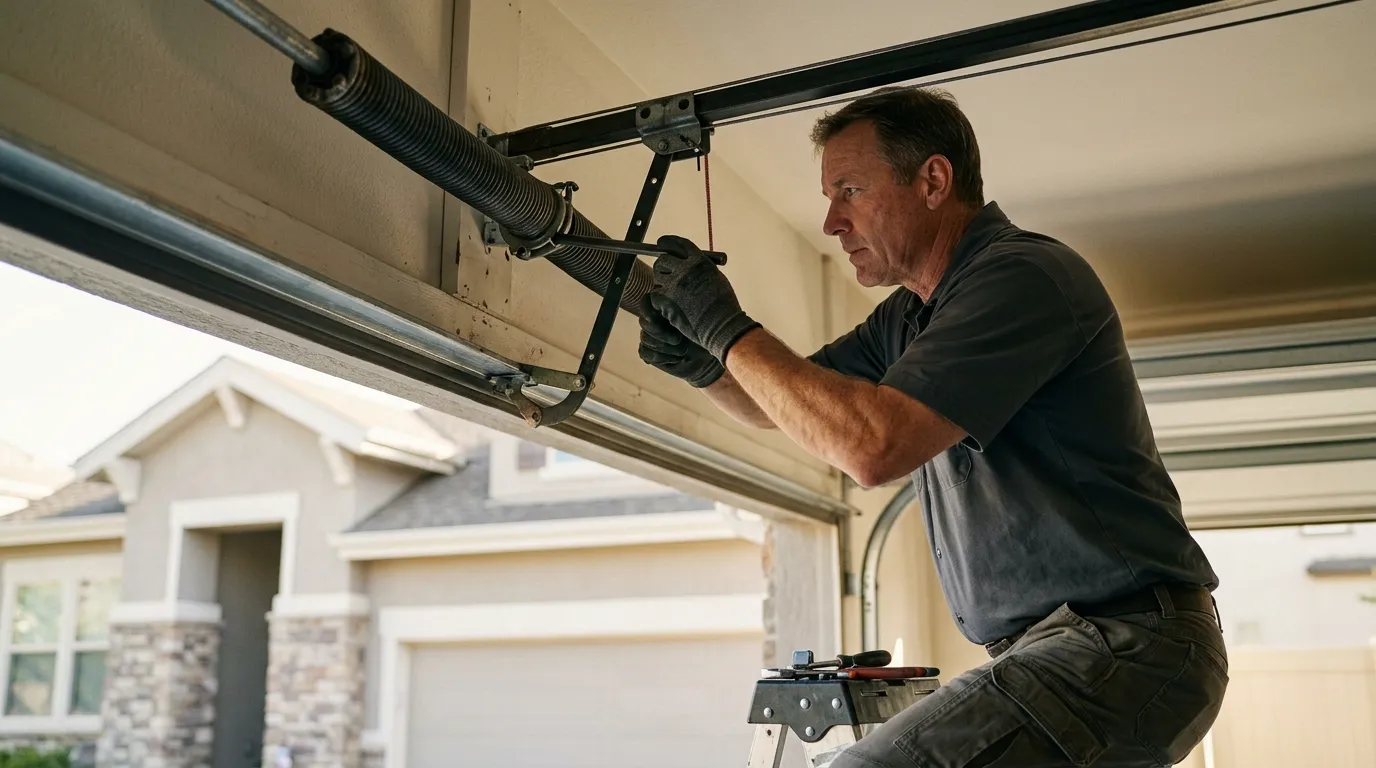
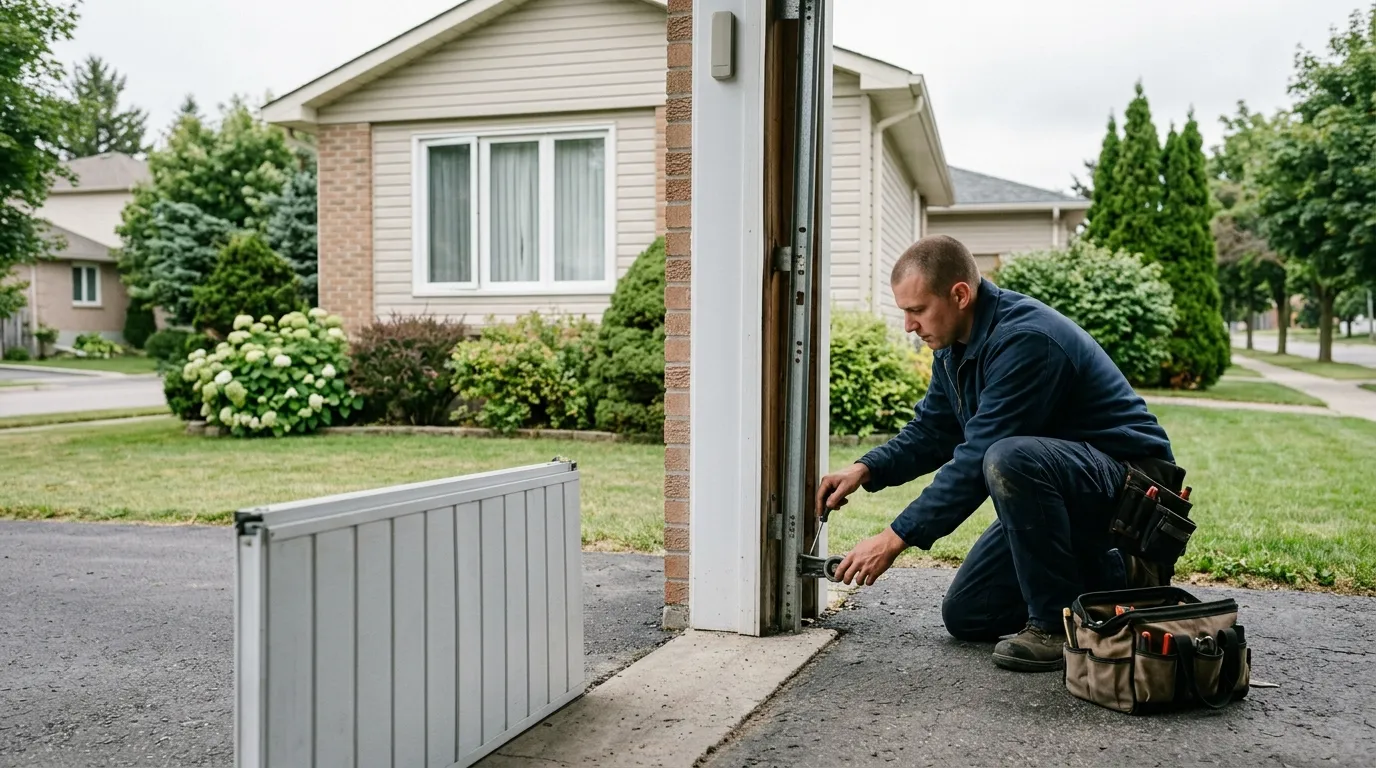
Doors installed around 1990 in this climate band - which runs cold and severe for the whole service area - were built for insulation standards and steel gauges that are dated now but not ancient. The common failures we see on this vintage: torsion springs original to the house finally giving out after decades of winter cycling, nylon rollers cracked from cold, and openers from that era (chain-drive, older logic boards) failing outright rather than just getting noisy.
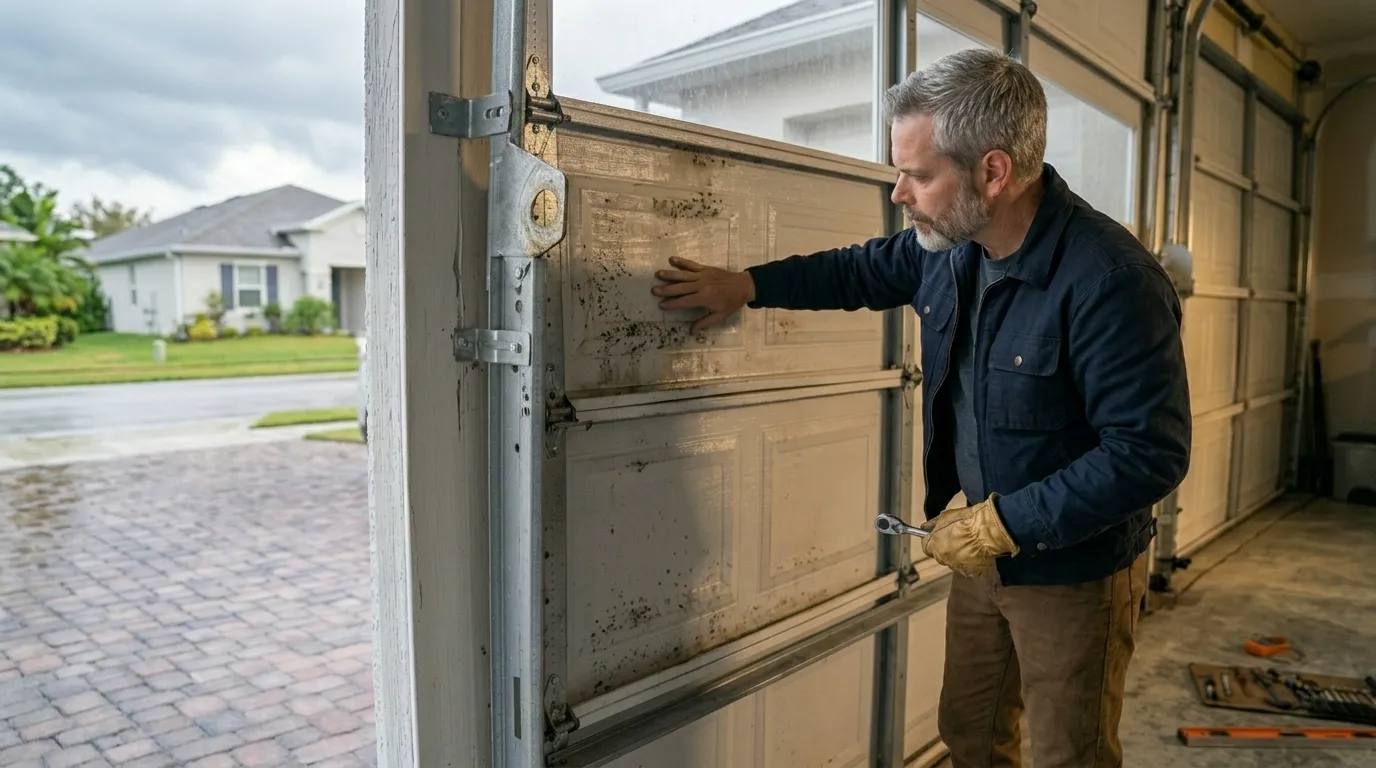
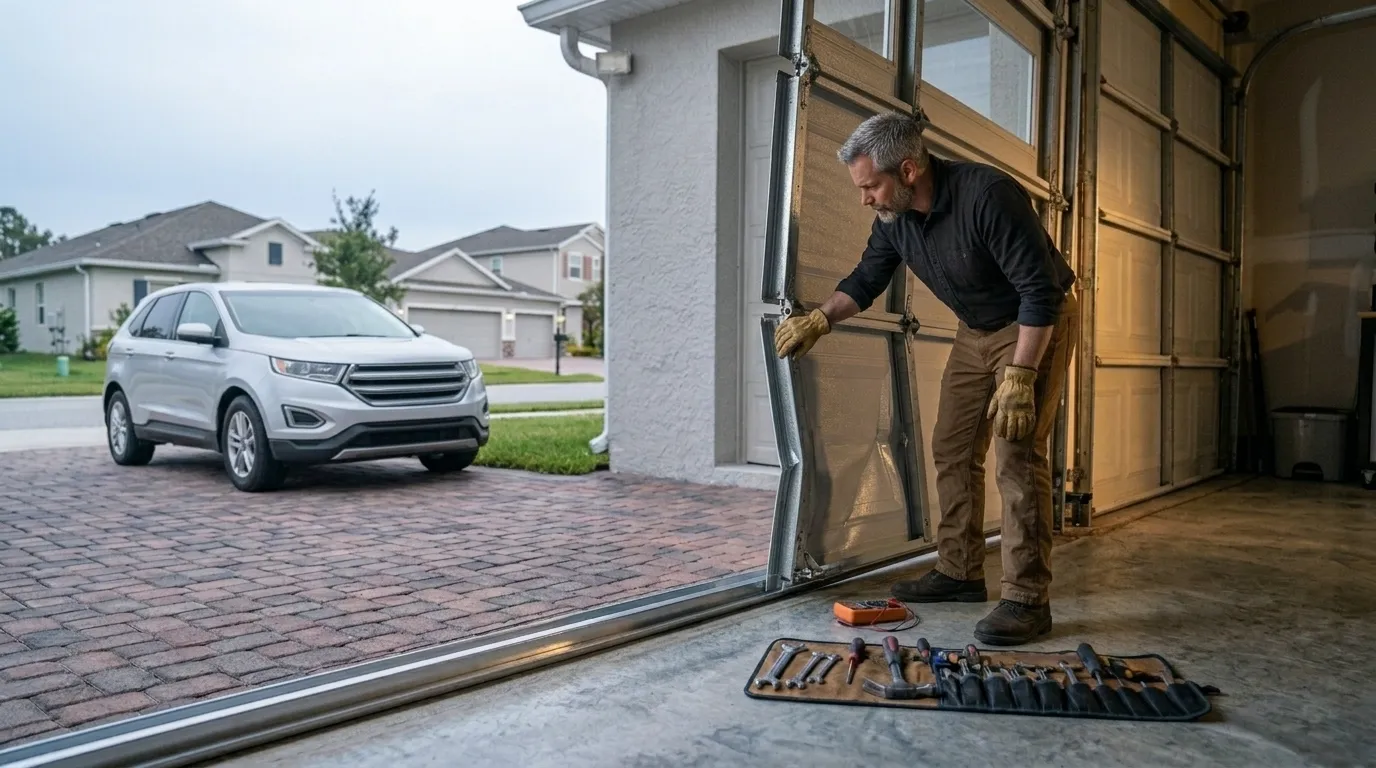
We don't see much of the oldest failure mode - wood doors on side-mounted extension springs - because Federal Heights mostly missed that building period. What we do see is steel panel doors with delamination at the bottom section, where thirty-plus winters of moisture and temperature swings have worked the seams.
One limitation worth being straight about: if the opener is original to a 1990 install, we often can't get an exact replacement logic board. At that point we're talking about a full opener swap, not a board repair, and we'll tell you that on the phone before we drive out, not after.
Getting Here
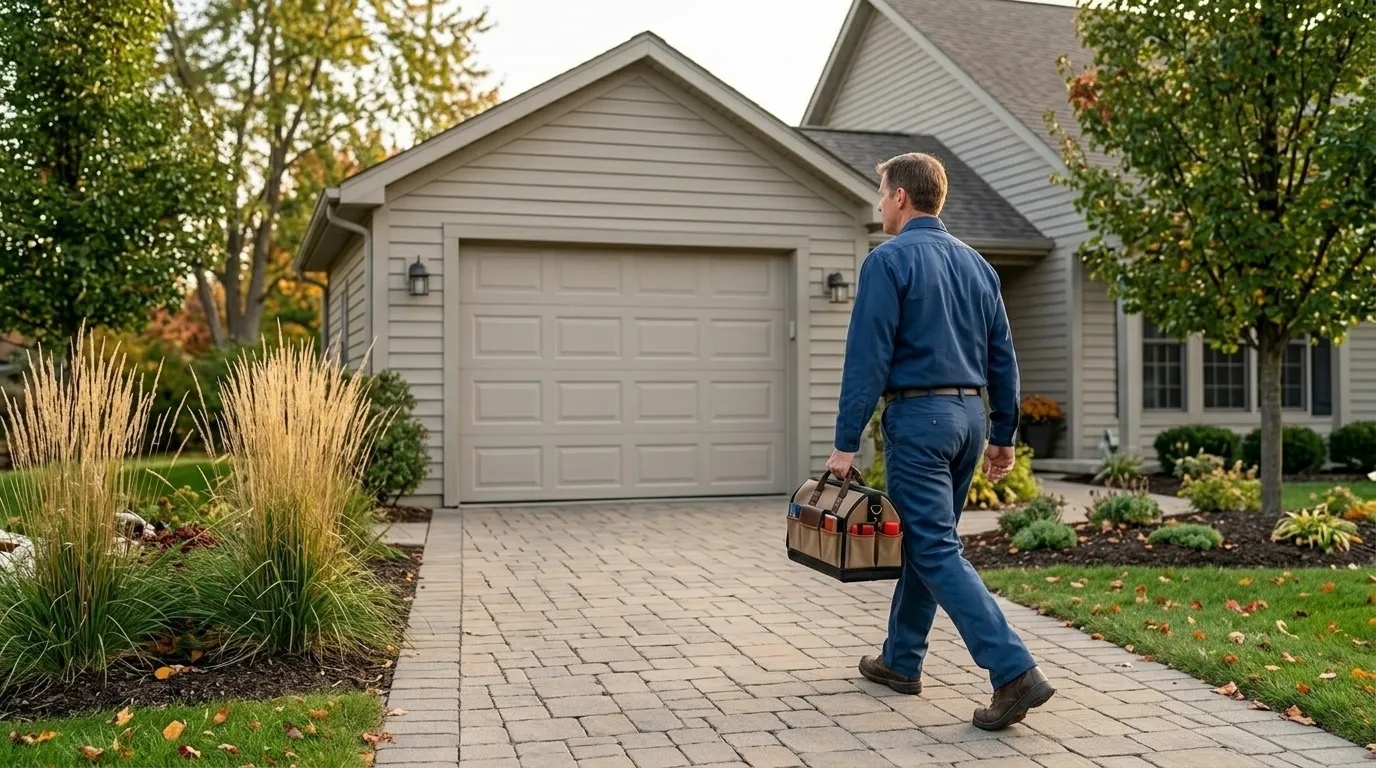
We run out of Denver, and Federal Heights is about 10 miles out. That's a short enough drive that same-day calls are realistic, but we're not based in town, so there's no local depot to swing by - the service comes to your driveway, not the other way around.
Federal Heights sits among a cluster of close-in areas we also reach on the same routes: Welby is about 7 miles out, North Washington around 6, and Westminster around 13. Knowing the drive times helps us stack calls efficiently, which is part of why we can keep quoting the area at all rather than treating it as a one-off trip.
Older vs Newer Streets
Even within a town built mostly in one era, there's spread. Pockets of Federal Heights that went up earlier - closer to the older end of the region's 1947 start date - still run torsion springs sized for lighter, single-layer doors, and those springs are further past their expected cycle count than the rest of town. Streets built nearer or after 1990 are more likely to have double-layer steel doors and springs rated for the heavier weight, which fail less often but cost more to replace when they do.
The practical difference: on an older street here, a spring call is often a straightforward swap. On a newer street, the same call might mean waiting on a heavier-gauge spring that isn't sitting on the truck as standard stock, since it's less common across the wider service area's older housing mix. We'll tell you on the phone which category your door likely falls into before we quote a repair window.
How it works
From “it’s stuck” to “it’s fixed”
01
Tell us what’s wrong
Describe the symptom - won’t open, loud bang, opener runs but the door won’t move.
02
On-site diagnosis
A technician tests the door under power and by hand and finds what actually failed.
03
Clear, up-front plan
You get the fix that’s needed and what drives the cost - before any work starts.
04
Repaired & tested
The repair is done, the door is set true and tested, and the work area left clean.
Serving Denver, CO - tell us what your door’s doing and we’ll take it from there.
No. We run out of Denver and drive to Federal Heights, about 10 miles away. There's no local office or depot here - every job is a truck coming from Denver, which is worth knowing if you're expecting a walk-in counter.
Why does my garage door hardware look different from my neighbor's in an older part of town?
Federal Heights' median build year is 1990, but the town spans a range of construction dates. Houses built closer to the region's 1947 start point often kept lighter original spring hardware, while houses built near or after 1990 tend to run heavier steel doors and correspondingly sized springs.
Is a 1990s opener worth repairing or should I replace it?
It depends on the fault. If it's a sensor, wiring, or a worn drive gear, repair usually makes sense. If the logic board itself has failed, an exact replacement often isn't available for an opener that old, and at that point a full opener swap is the more practical call.
Ready to get your garage door sorted?
Tell us what it’s doing and where you are in Denver - we’ll take it from there.