Garage Door Service for Derby's 1950s Housing Stock
Derby homes mostly date to the late 1950s, older than the service area average. We work on the original hardware those doors still carry, out of our Denver shop.
Derby's median build year sits around 1958, which puts it noticeably ahead of the wider service area, where the typical house dates closer to 1981. That gap matters more than it sounds like it should. A neighborhood built in the late 1950s went up before extension springs became standard, before steel doors replaced wood, and often before anyone thought to run a second track for a double-wide opening. With about 2,523 households in Derby, you've got a compact, mostly built-out pocket rather than a sprawling subdivision with mixed decades on every block. That consistency is useful for us - it means we can usually guess what's behind the door before we open the truck, though we still check rather than assume. Some of the area's 31 named zones lean 1980s-90s construction, but Derby isn't one of the newer ones. If your house still has its original door, it's likely a single steel or wood panel on an older torsion or extension setup, not the sectional doors and pre-wired openers you'd find in a house built in 1985.
How That Shows Up in the Door
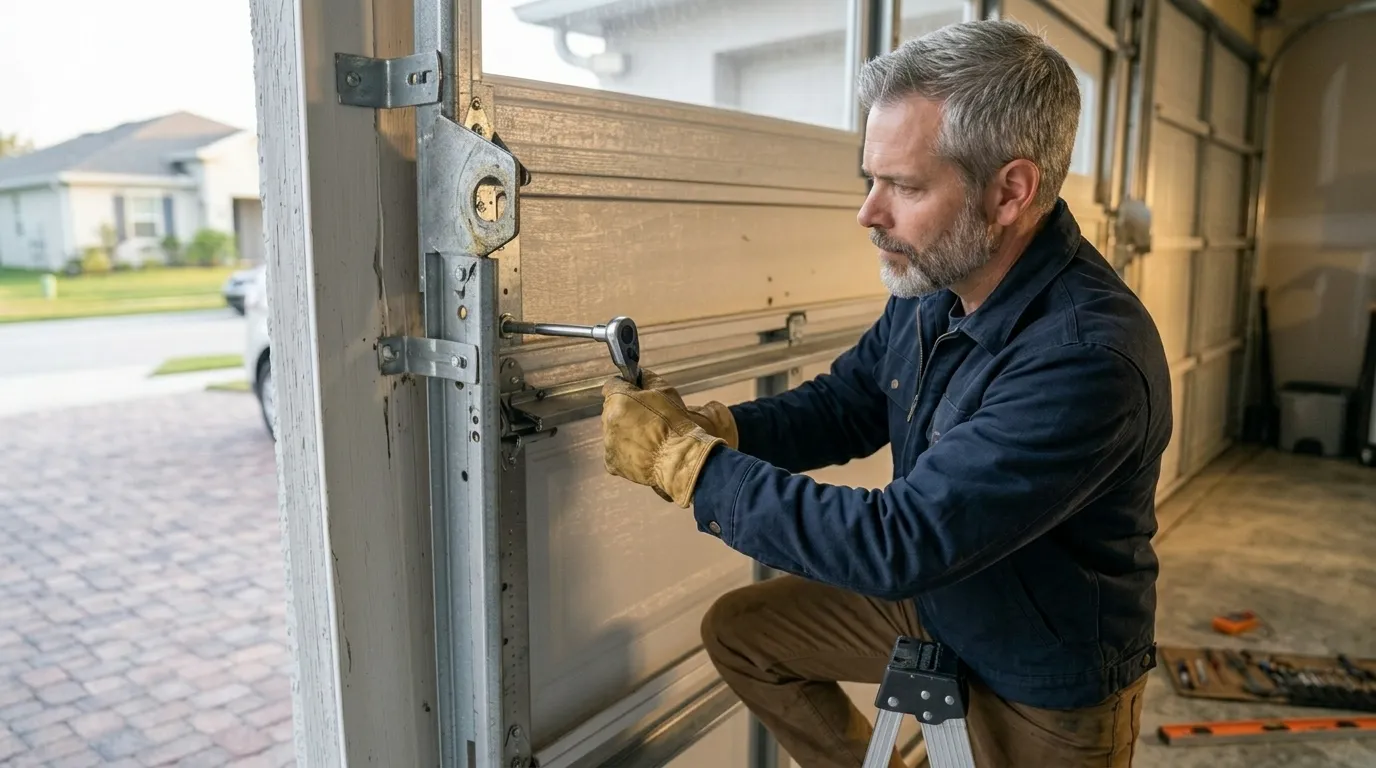
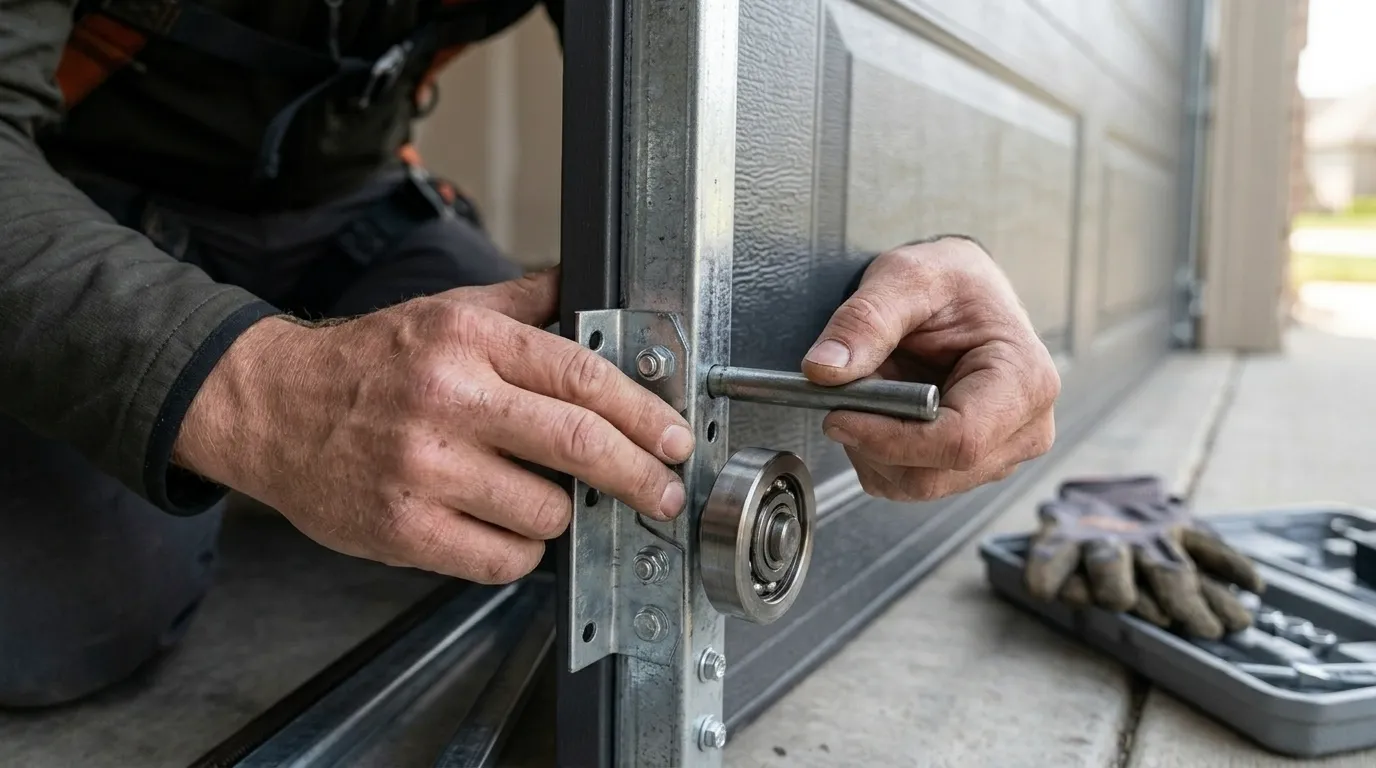
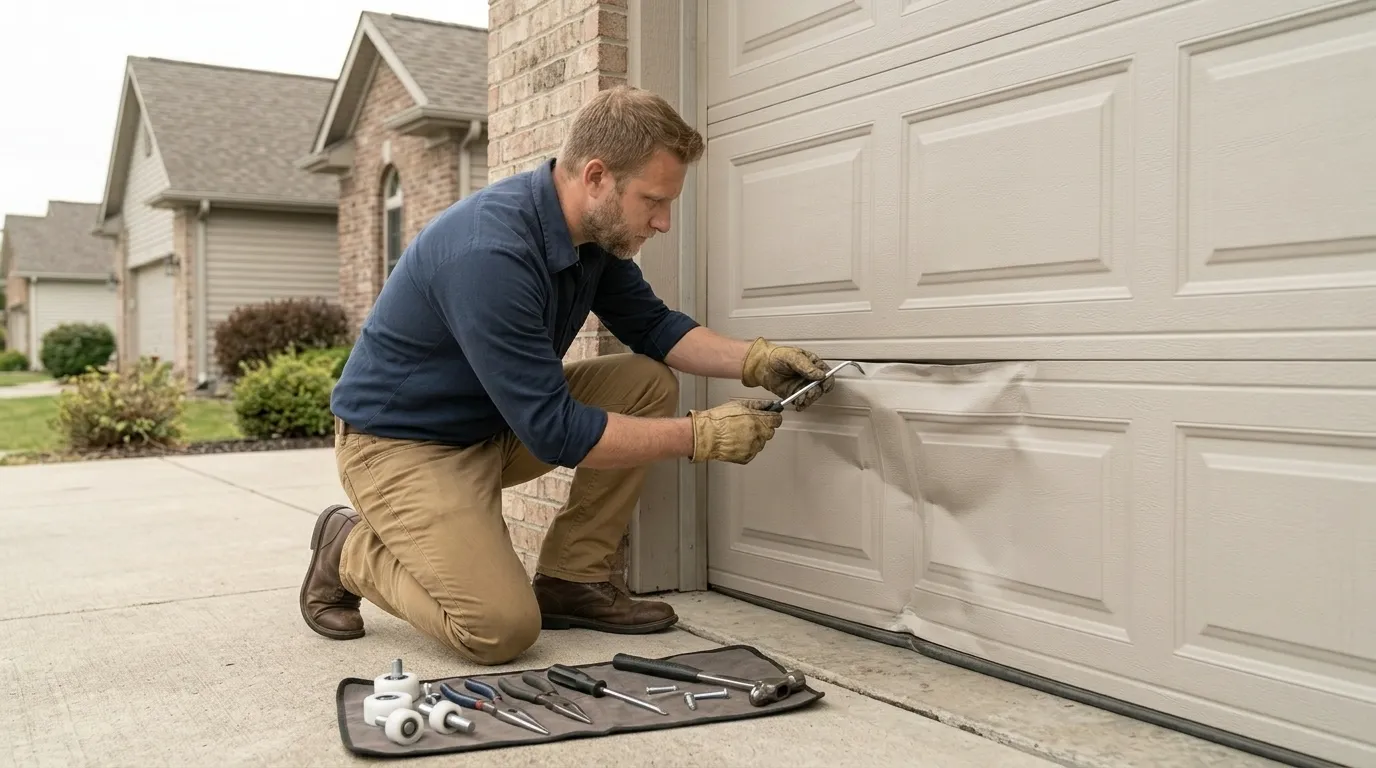
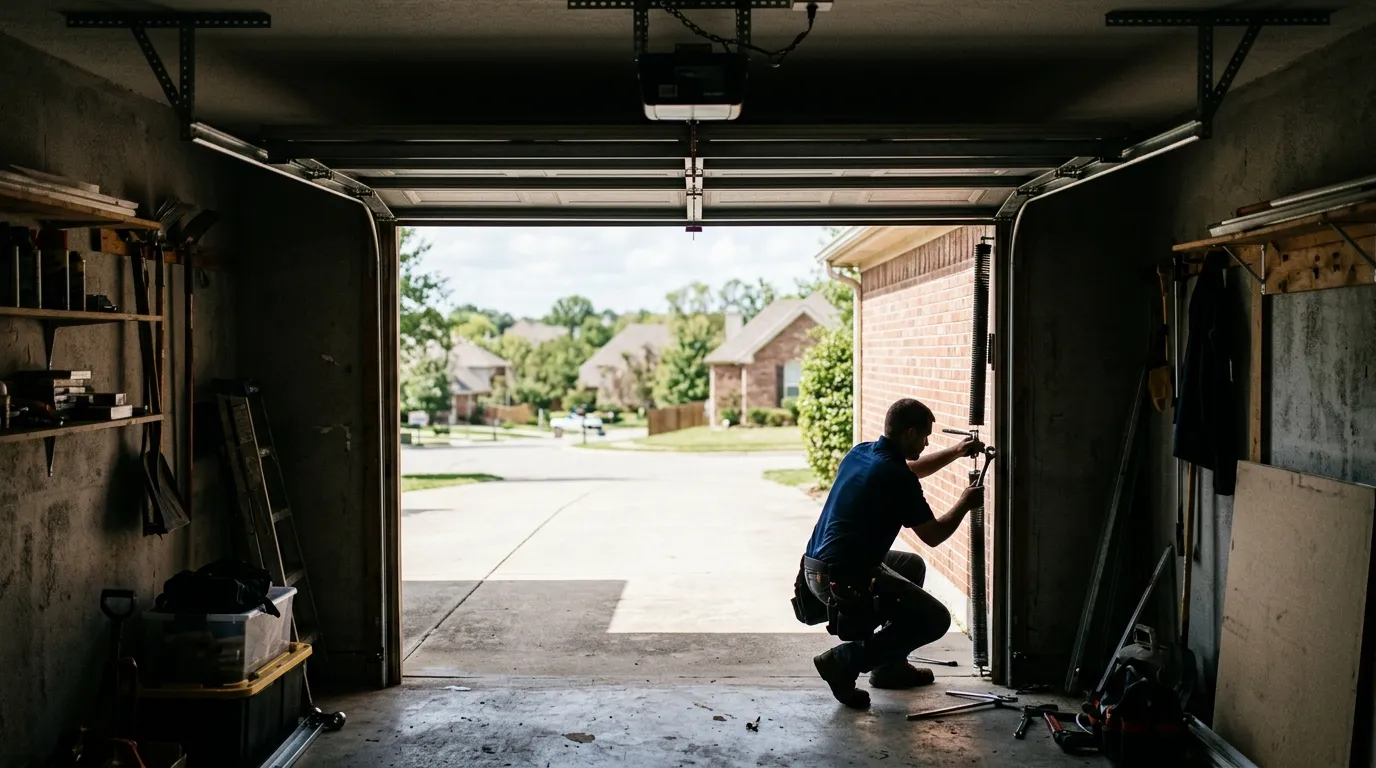
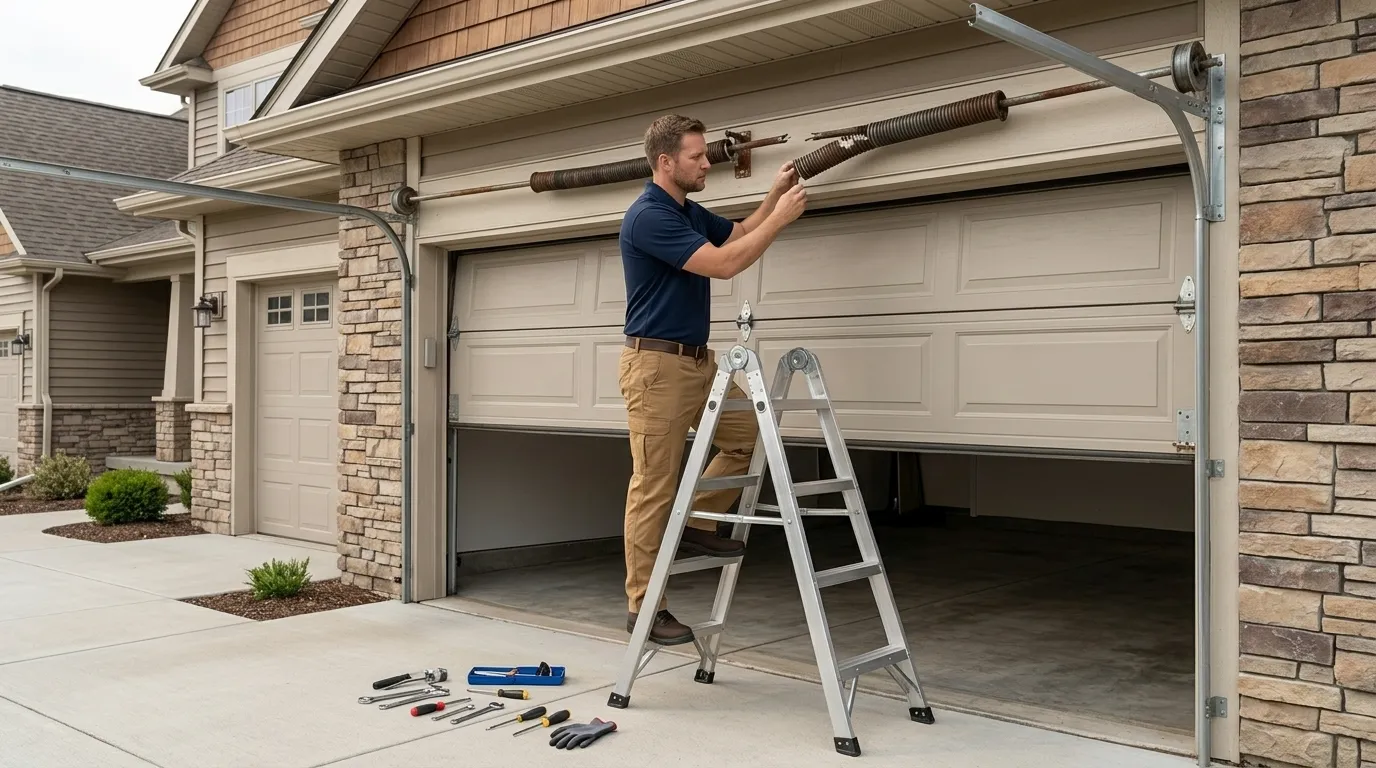
Older housing stock means older hardware, and Derby's late-'50s builds tend to carry a specific set of problems. Extension springs mounted above the horizontal track, rather than a torsion bar over the opening, are common on doors from this era - and those springs wear differently, snapping suddenly instead of sagging first. Tracks were often set for narrower openings, so a straightforward opener swap sometimes turns into a bracket and track adjustment job once we're actually under the door. We also see galvanized hardware that's held up fine for decades but has never been lubricated or inspected, which in a COLD-severe climate band means metal that contracts hard in winter and can bind or crack. None of this means the door needs to be replaced. A lot of these original doors are solidly built and worth keeping - we'd rather replace a spring set and adjust the track than sell a homeowner a new door they don't need. That said, if the panel itself is rusted through or the track is bent beyond alignment, repair stops making financial sense and we'll say so.
Getting Here
We run out of Denver, about 6 miles from Derby - not a long haul, but we're not based in Derby itself, so we don't keep a truck stationed here or promise a fixed arrival window. Derby sits close to several other area communities we also cover, including Glendale and North Washington at similar distances, and Welby and Twin Lakes just a bit further out. That proximity helps us stay familiar with the mix of housing ages across this cluster of neighborhoods, even though each one has its own build pattern. We schedule the drive out once we've got a sense of what the job needs, which usually means a quick call about the door's age, symptoms, and whether it's original hardware or something replaced along the way.
Older vs Newer Streets
Not every street in Derby dates to the same stretch of the late 1950s, and it shows once you start comparing doors block to block. The oldest sections still have their original steel doors on extension-spring hardware, sometimes with the paint worn through to bare metal at the bottom panel where snow and salt collect. Newer infill or rebuilt homes on the same streets are more likely to have sectional doors with torsion springs and a modern opener, closer to what you'd find in one of the area's 1980s-90s pockets. When we get a call, the address alone tells us something, but it's not the whole story - a house can have been re-roofed and re-doored without the rest of the block following. We ask about the door's age directly rather than guessing from the street, because in a neighborhood this mixed, guessing wrong means showing up with the wrong parts.
How it works
From “it’s stuck” to “it’s fixed”
01
Tell us what’s wrong
Describe the symptom - won’t open, loud bang, opener runs but the door won’t move.
02
On-site diagnosis
A technician tests the door under power and by hand and finds what actually failed.
03
Clear, up-front plan
You get the fix that’s needed and what drives the cost - before any work starts.
04
Repaired & tested
The repair is done, the door is set true and tested, and the work area left clean.
Serving Denver, CO - tell us what your door’s doing and we’ll take it from there.
No. We're based in Denver, about 6 miles away, and drive out for jobs rather than keeping a location or truck stationed in Derby. We cover the area as part of our regular service radius.
Why does my garage door still have old-style springs?
If your house dates to the late 1950s, which is typical for Derby, it was likely built before torsion-bar setups became standard. Many original doors here still run on extension springs mounted above the track, which is normal for the era but wears differently than modern hardware.
Is it worth repairing a door this old, or should I replace it?
Depends on the panel and track condition, not just the age. A lot of 1950s-era doors are structurally solid and just need spring or hardware work. If the panel's rusted through or the track is bent, replacement usually costs less over time than repeated repairs.
Does the cold affect older garage door hardware here?
Yes. The area sits in a cold-severe climate band, and older galvanized hardware that hasn't been serviced in years tends to bind or crack in hard winter contraction. Regular lubrication and inspection matter more on original 1950s-era hardware than on newer doors.
Ready to get your garage door sorted?
Tell us what it’s doing and where you are in Denver - we’ll take it from there.