Garage Door Service for Cherry Hills Village Homes
Garage door repair and install for Cherry Hills Village, CO, 9 miles from Denver, where the housing dates mostly to 1979 and torsion hardware runs on original openers.
Cherry Hills Village's housing stock centers on 1979, which puts most of the neighborhood's garage doors and openers a good decade ahead of what you'd find on the older side of the broader service area, where the median build year runs to 1981 across a stock stretching back to 1947. With roughly 2,227 households here, this is a smaller, more consistent build era than the sprawling 31-area mix we cover out of Denver - fewer generations of doors stacked on top of each other, more original hardware still doing the work it was installed to do. A late-1970s build means steel sectional doors on extension or early torsion springs, openers that predate modern safety-reversal sensors, and tracks sized for the panel weights common at the time. It also means original wiring runs that were never meant to carry a smart opener's load. None of that is a problem until a spring lets go or an opener board finally quits, and then the age of the system determines what you're actually fixing.
How That Shows Up in the Door
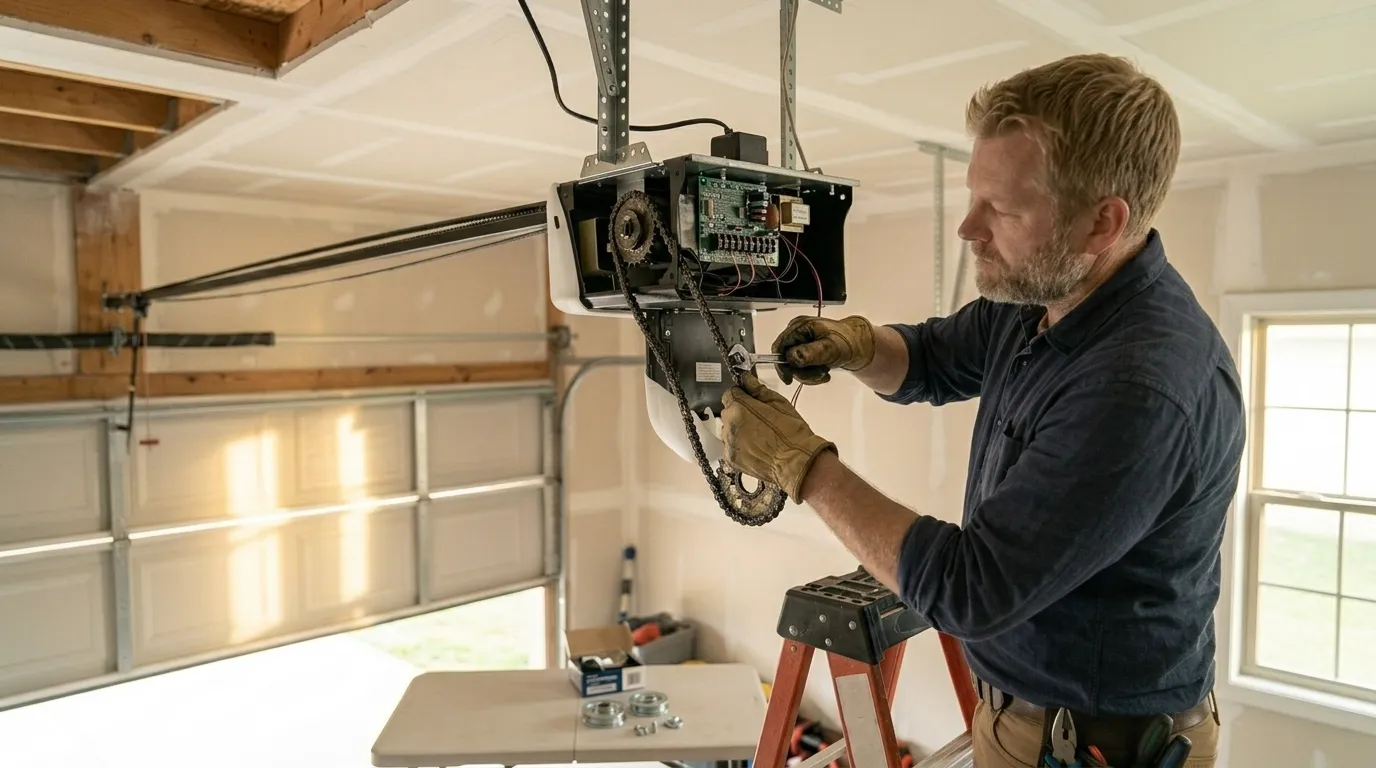
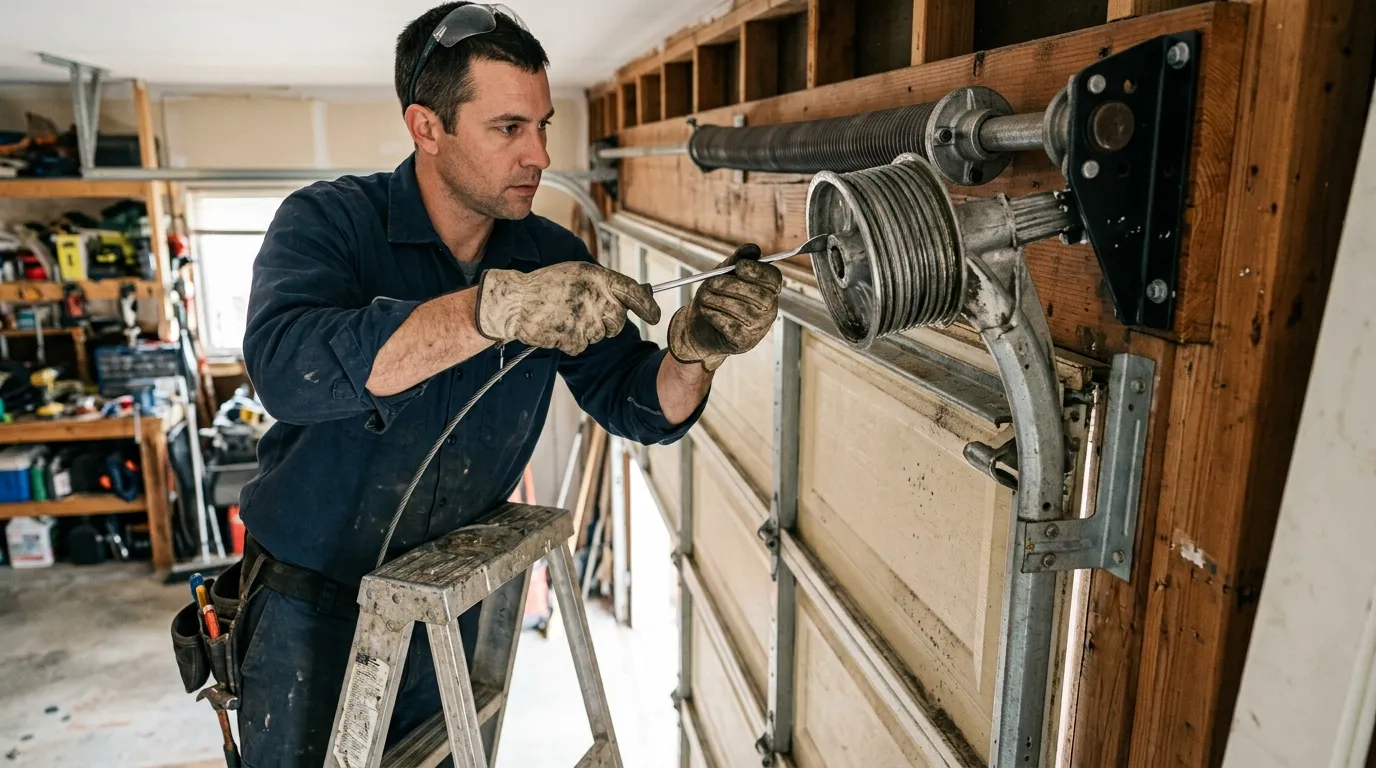
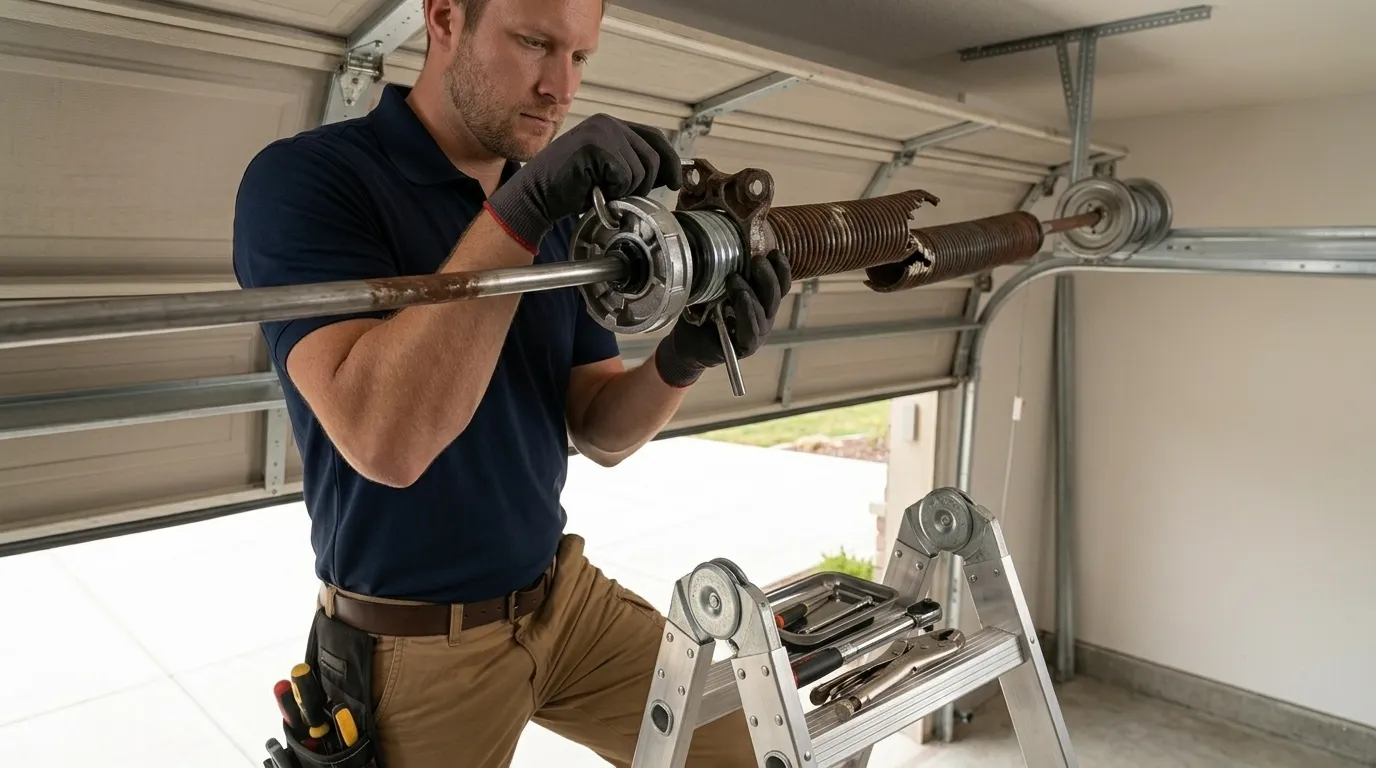
A door built around 1979 wears differently than one built in 1995 or 2005. Torsion springs from that era are usually sized for lighter, single-layer steel panels - if a previous owner swapped in a heavier insulated door without upsizing the spring, you get premature spring failure and a door that feels like it's fighting the opener on every cycle. Rollers on original track from this period are often steel-on-steel with no nylon sleeve, which means more noise and more wear at the hinges over time. The climate here doesn't help: this is a cold, severe-winter climate band, and steel components that have been through four decades of hard freezes and thaw cycles show it in pitted bearings and stiff, slow-closing doors on the first cold mornings of the season. We don't assume every 1979-era door needs full replacement - plenty just need a properly matched spring and a track alignment. But when the opener itself is original, parts for it are frequently no longer made, and repair stops being the cheaper option.
Getting Here
Cherry Hills Village sits about 9 miles from our Denver base, and we route jobs here alongside stops in Glendale, Cherry Creek, and Englewood, all inside a similar 5-to-11 mile ring. We don't keep a truck or depot in Cherry Hills Village itself - every job here is a dispatch from Denver, scheduled the same way as the rest of that ring. That's worth knowing if you're comparing us to an outfit that's physically closer: what you're getting instead is a crew that sees a lot of the same 1970s-through-1990s hardware repeated across these neighboring areas, because most of them were built in the same stretch of years. The honest limitation here is timing - we're not the fastest same-day option for every emergency simply because of that 9-mile run, so if a call comes in during a peak stretch, we'll tell you straight what slot we can actually hit rather than promise something we can't.
Older vs Newer Streets
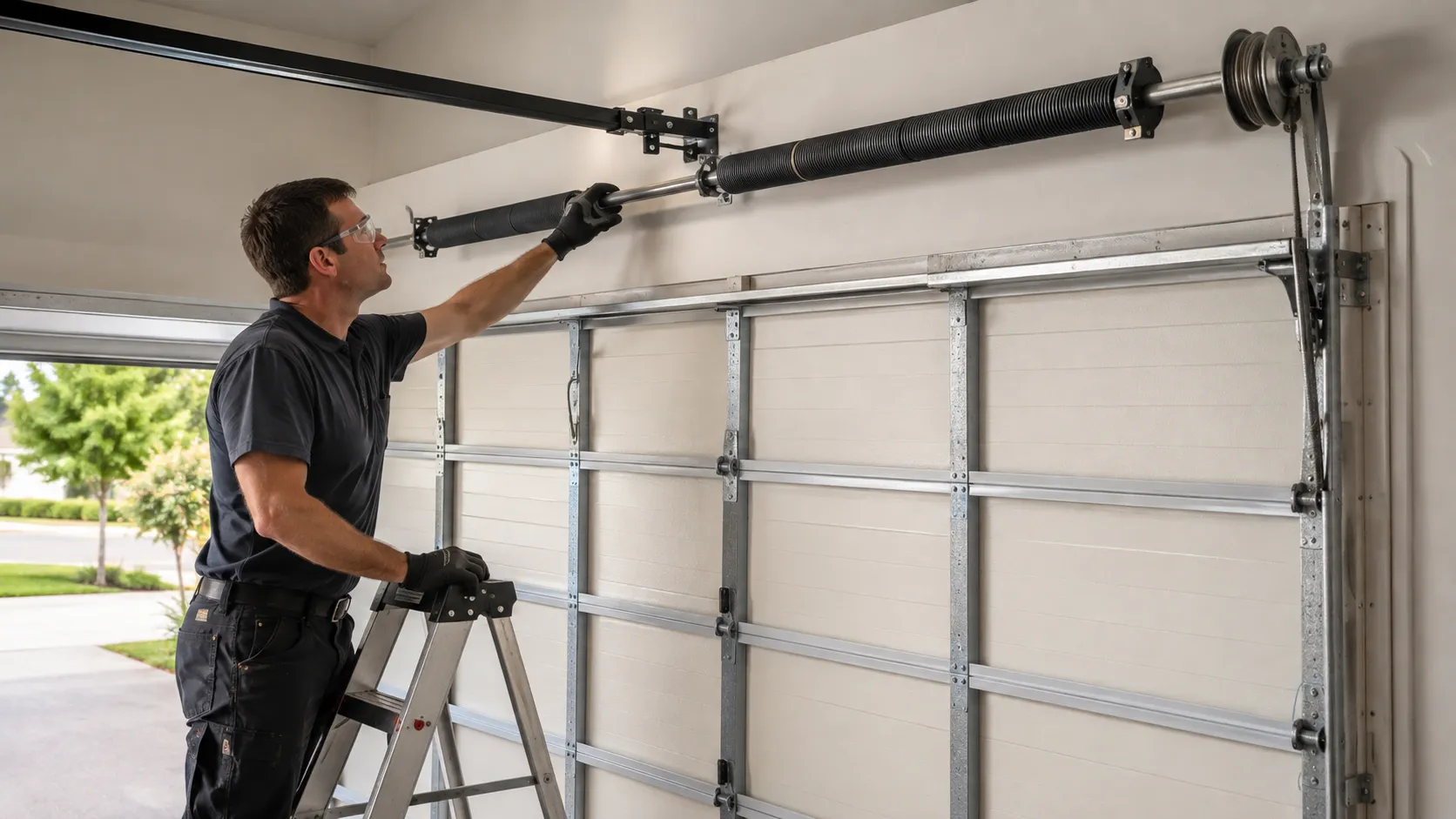
Even within a build era centered on 1979, Cherry Hills Village isn't uniform. Streets developed earlier in that window tend to carry the original extension-spring setups mounted alongside the track rather than overhead torsion bars, while later infill built closer to the 1980s shift toward torsion systems as the standard. If you're not sure which you have, look at where the spring sits: over the door on a horizontal shaft is torsion, alongside the tracks is extension. That distinction matters for parts, because the two systems don't share hardware and a repair tech needs to know which one is on your house before a truck even loads the right spring. Newer replacement doors installed on these older openers are common too - a homeowner upgrades the door for insulation or looks but leaves a decades-old opener running it, which is its own mismatch worth having looked at, especially with the median household income here well above the wider area's $101,450 figure, making full-system upgrades a realistic option rather than a stretch.
How it works
From “it’s stuck” to “it’s fixed”
01
Tell us what’s wrong
Describe the symptom - won’t open, loud bang, opener runs but the door won’t move.
02
On-site diagnosis
A technician tests the door under power and by hand and finds what actually failed.
03
Clear, up-front plan
You get the fix that’s needed and what drives the cost - before any work starts.
04
Repaired & tested
The repair is done, the door is set true and tested, and the work area left clean.
Serving Denver, CO - tell us what your door’s doing and we’ll take it from there.
How old are most garage doors in Cherry Hills Village
Most of the housing here dates to around 1979, so the garage doors and openers on the original build are pushing four and a half decades old. Many have been replaced at least once, but original torsion or extension spring setups and older openers are still common enough that we plan repairs around that era's hardware first.
Do you have a location in Cherry Hills Village
No. We work out of Denver and drive out to Cherry Hills Village, about 9 miles away, along with several neighboring areas in that same distance range. There's no local depot, so scheduling is coordinated from our Denver base rather than a nearby storefront.
Why does my door feel heavier or slower in winter
This area sits in a cold, severe-winter climate band, and steel torsion springs and bearings stiffen and wear faster after repeated hard freezes, especially on older 1970s-era hardware that's already had decades of that cycle. A slow or heavy door on a cold morning is often a spring or bearing issue rather than the opener.
Is it worth replacing an original opener from that era
Often yes. Openers from the late 1970s predate modern safety-reversal sensors and their parts are frequently no longer made, so a repair can mean sourcing scarce components for a short-term fix. We'll tell you when a repair still makes sense and when a full opener swap is the more durable, and ultimately cheaper, choice.
Ready to get your garage door sorted?
Tell us what it’s doing and where you are in Denver - we’ll take it from there.