Garage door repair and replacement for Cherry Creek, CO homes built around 1982, 11 miles from our Denver base. Springs, openers, and panels for this income tier's doors.
Cherry Creek's houses went up around 1982, almost identical to the 1981 median across our whole service area, but that single-year difference hides a bigger point: this pocket built out fast, in a tighter window, on a smaller footprint than most of the towns we cover. There are only about 4,129 households here, a fraction of the 219,760 across the wider area, which means the housing stock reads more uniform street to street. Garages from this era typically carry steel sectional doors on extension or early torsion setups, factory chain-drive openers, and single-layer panels that were standard for the period.
What sets Cherry Creek apart isn't the age of the doors, it's what went into them. Median household income here runs near $147,618, well above the $101,450 median for the service area overall. Builders working to that budget in the early '80s more often specified insulated doors and heavier gauge steel than the base-grade doors going up in lower-income tracts the same decade. The bones are 1980s, but the spec was a notch up.
How That Shows Up in the Door
Because the build year barely differs from the area median, you don't get the split you'd see in a much older or much newer suburb - no wave of original one-piece doors, no all-new insulated stock either. Most doors here are original or first-replacement steel sectionals, now 30-plus years old, on torsion hardware that's been through one or two spring cycles already.
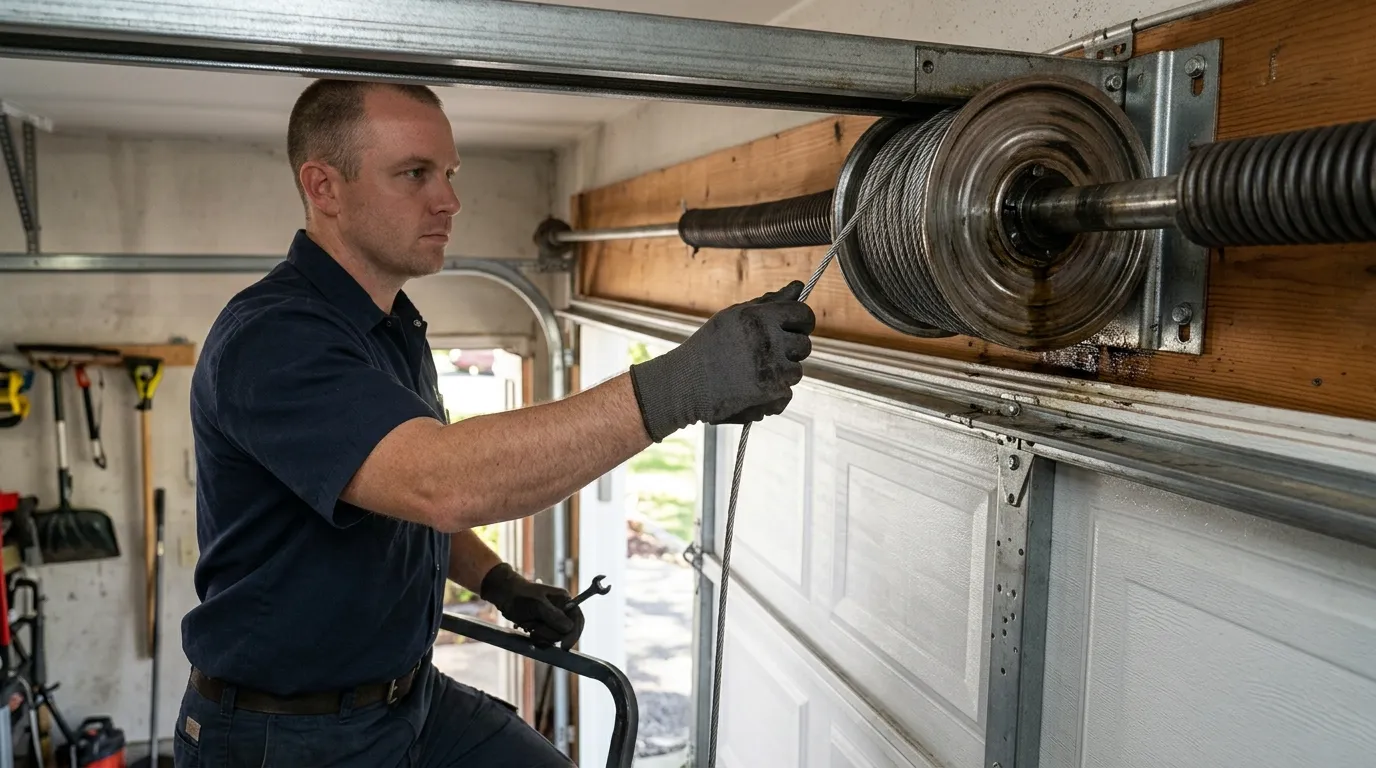
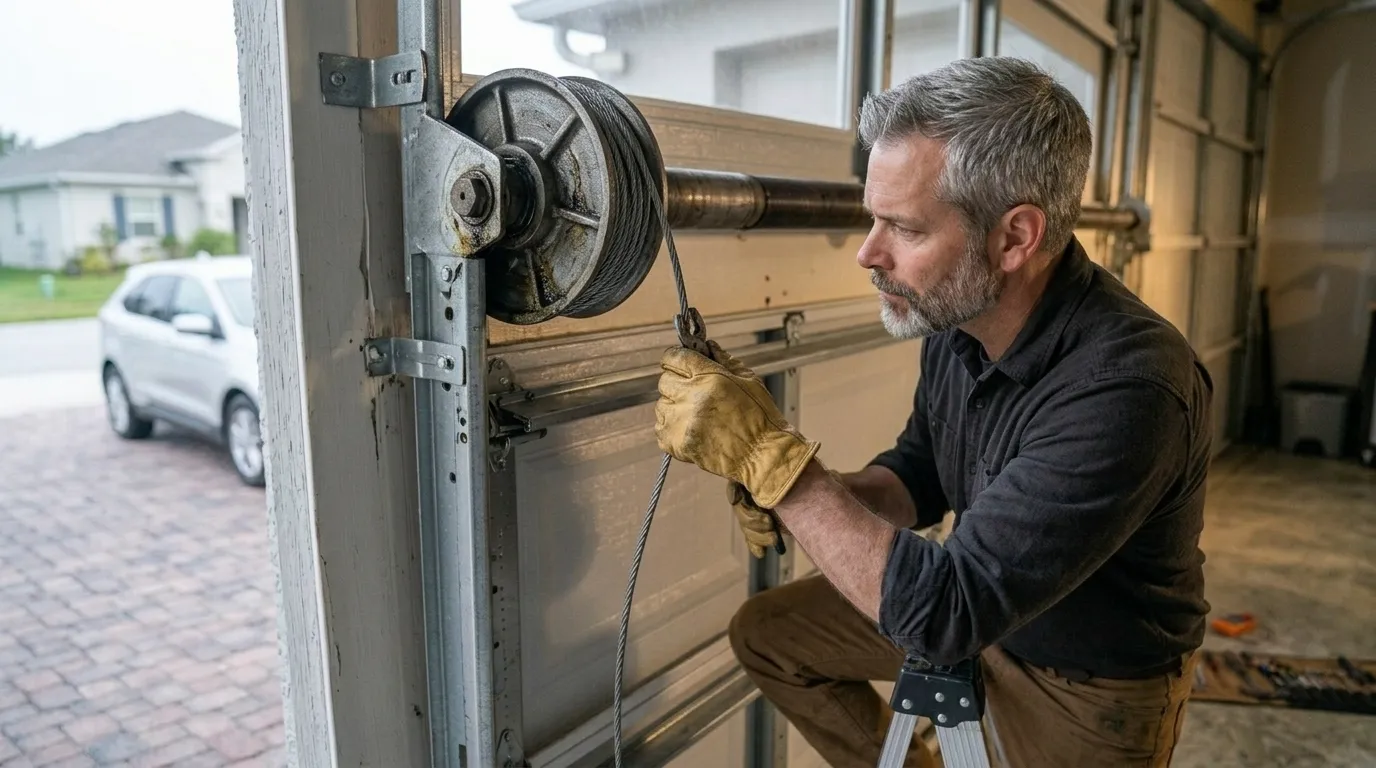
The insulation upgrade common to this income bracket means slightly heavier doors, which puts more load on springs and cables than a base-grade door of the same size. When a spring goes on one of these, it goes hard - the door won't budge, or it drops fast on one side. Openers from this window are usually chain-drive, and by now most have had at least one logic board or gear-and-sprocket kit replaced. Cold-band winters add their own wear: hardened grease and stiff rollers make an aging torsion spring fail sooner than it would in a mild climate, which matters on doors already carrying extra insulation weight.
Getting Here
We run out of Denver, about 11 miles from Cherry Creek. That's closer than several stops on our route - Superior and Lafayette are both farther out - but it's not a same-block callout, so we don't claim a depot or a fixed response window for this pocket specifically. If you're near Glendale, at 5 miles, or Cherry Hills Village, at 9 miles, you're on the same general run.
We don't stage a truck here; every job starts as a drive from Denver. That's worth knowing if you're calling about something that can wait a day versus a door that's stuck open in freezing weather. Tell us which it is when you call and we'll plan the trip accordingly.
Older vs Newer Streets
Cherry Creek doesn't split cleanly into old and new the way some of the towns on our list do - the housing stock sits in a narrow band around 1982, so you're not choosing between a 1950s one-piece door and a 2005 insulated model on the same block. The variation here is more about spec than age: which builder put in the heavier insulated panel versus the standard steel sectional, and which torsion spring has already been swapped once.
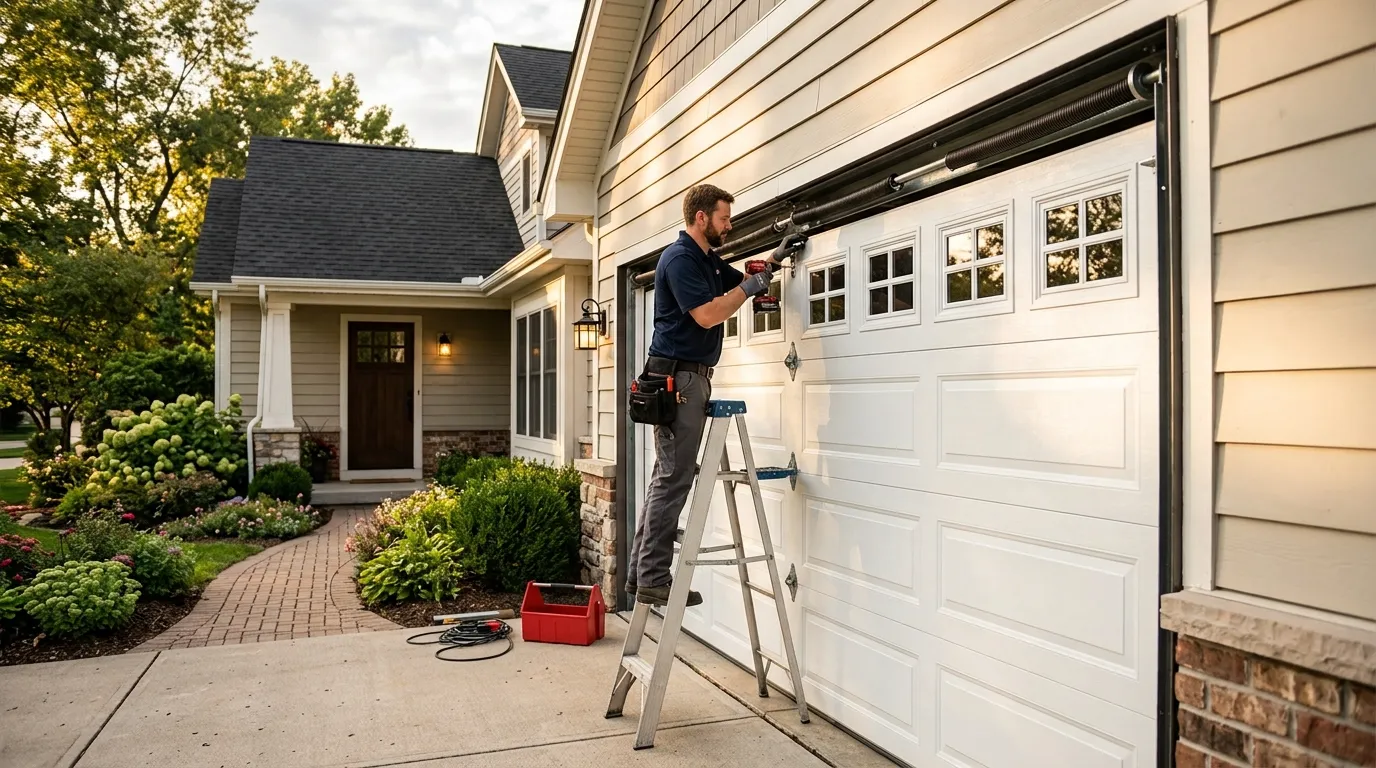
If your door still has its original hardware, expect galvanized torsion springs rated for a heavier insulated panel, which is a different spring weight than what you'd find on a base-grade door the same size. That's the detail that trips up a generic parts swap - grabbing a standard-weight spring for a door that was speced heavier from the start just means it fails again in a year or two.
How it works
From “it’s stuck” to “it’s fixed”
01
Tell us what’s wrong
Describe the symptom - won’t open, loud bang, opener runs but the door won’t move.
02
On-site diagnosis
A technician tests the door under power and by hand and finds what actually failed.
03
Clear, up-front plan
You get the fix that’s needed and what drives the cost - before any work starts.
04
Repaired & tested
The repair is done, the door is set true and tested, and the work area left clean.
Serving Denver, CO - tell us what your door’s doing and we’ll take it from there.
No. We run out of Denver, about 11 miles away. We don't keep a truck staged in Cherry Creek, so every job starts as a drive over, which we factor into scheduling rather than promising a fixed local response time.
Are Cherry Creek garage doors different from other parts of the service area?
Not by age - the median build year here, 1982, is close to the 1981 median across the whole area. The difference is spec: higher household income in this pocket meant more insulated, heavier-gauge doors went in originally, which changes the spring weight a repair needs to match.
What usually fails first on a door from this era?
Torsion springs and chain-drive opener gears. Doors built here in the early '80s are now past the typical spring lifespan, and cold winters speed up wear on hardened grease and rollers. If your door feels heavier than it should when moving by hand, that's often the spring losing tension, not the opener.
Is it worth replacing an original 1980s door instead of repairing it?
Depends on the panel condition, not just the age. If the steel is still sound and it's just springs, cables, or an opener gear, repair is usually the better spend. If the panels are dented, delaminating, or the door was a base-grade model to start, replacement often makes more sense long-term.
Ready to get your garage door sorted?
Tell us what it’s doing and where you are in Denver - we’ll take it from there.