Berkley homes date to about 1977, older than the Denver-area median. We cover the springs, tracks and openers that come with that older stock, 8 miles out from our Denver base.
Berkley's houses mostly went up around 1977, which puts this neighborhood ahead of the wider Denver service area's median build year of 1981. That gap of a few years might not sound like much, but it means a higher share of Berkley garages still carry original openers and track hardware from the late '70s than you'll find in the newer pockets closer to the edges of the 31-area territory we work. Across the full service area, housing spans 1947 to 2006, but Berkley sits on the older side of that range, not the newer.
With about 4,050 households in Berkley, this is a smaller, denser slice of the territory than some of the outlying areas we cover. The building stock is consistent enough that the same handful of door and opener generations keep showing up on service calls here: chain-drive openers without modern safety sensors, and single-piece or early sectional doors that were never designed for today's insulation retrofits. That consistency is useful - it means we can usually guess what we're walking into before we open the truck.
How That Shows Up in the Door
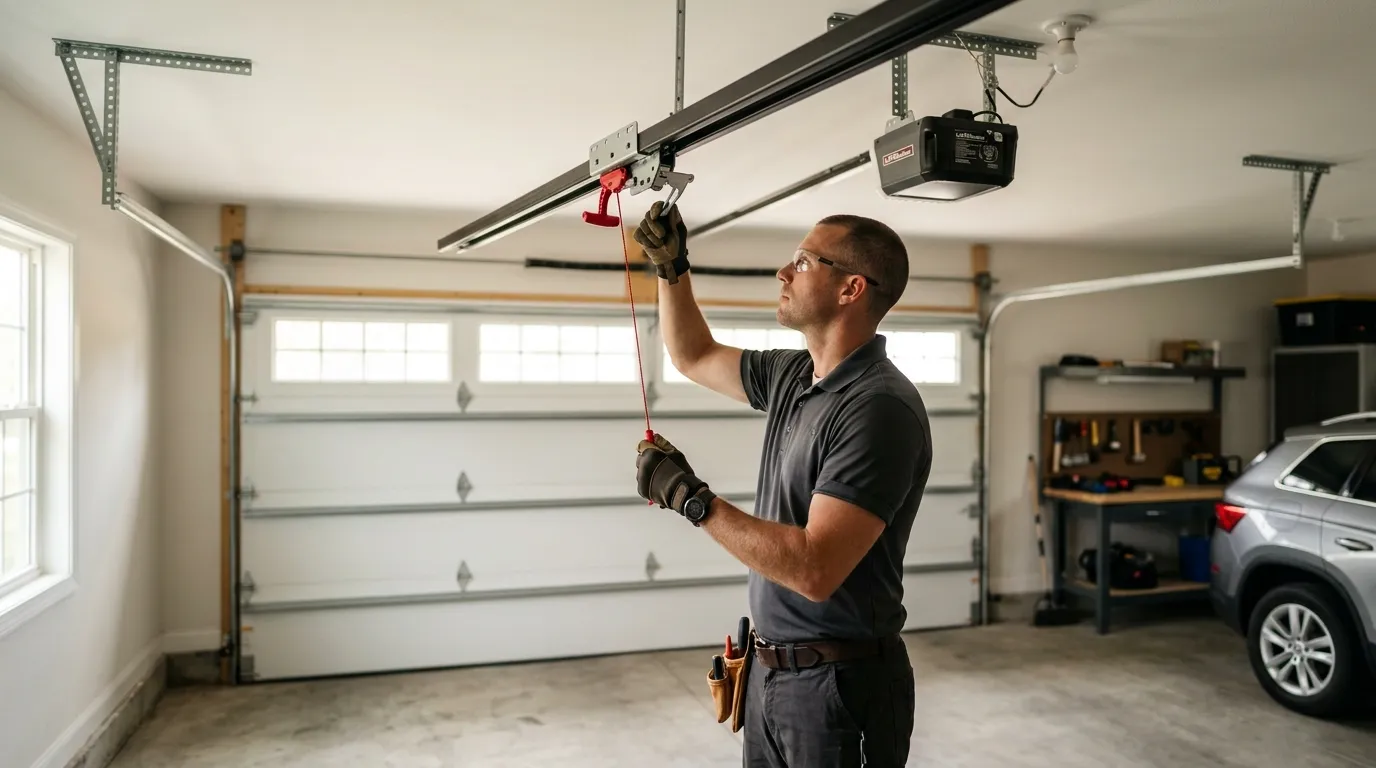
An older opener from the Berkley era typically means no rolling-code security, weaker motors rated for lighter doors, and mounting brackets that don't match current hardware without an adapter kit. If a homeowner here upgrades to a heavier insulated door - common when people finally address the cold - the original opener often can't lift it safely. That's not a sales pitch, it's physics: torque ratings from 1977 don't scale to a door twice the weight.
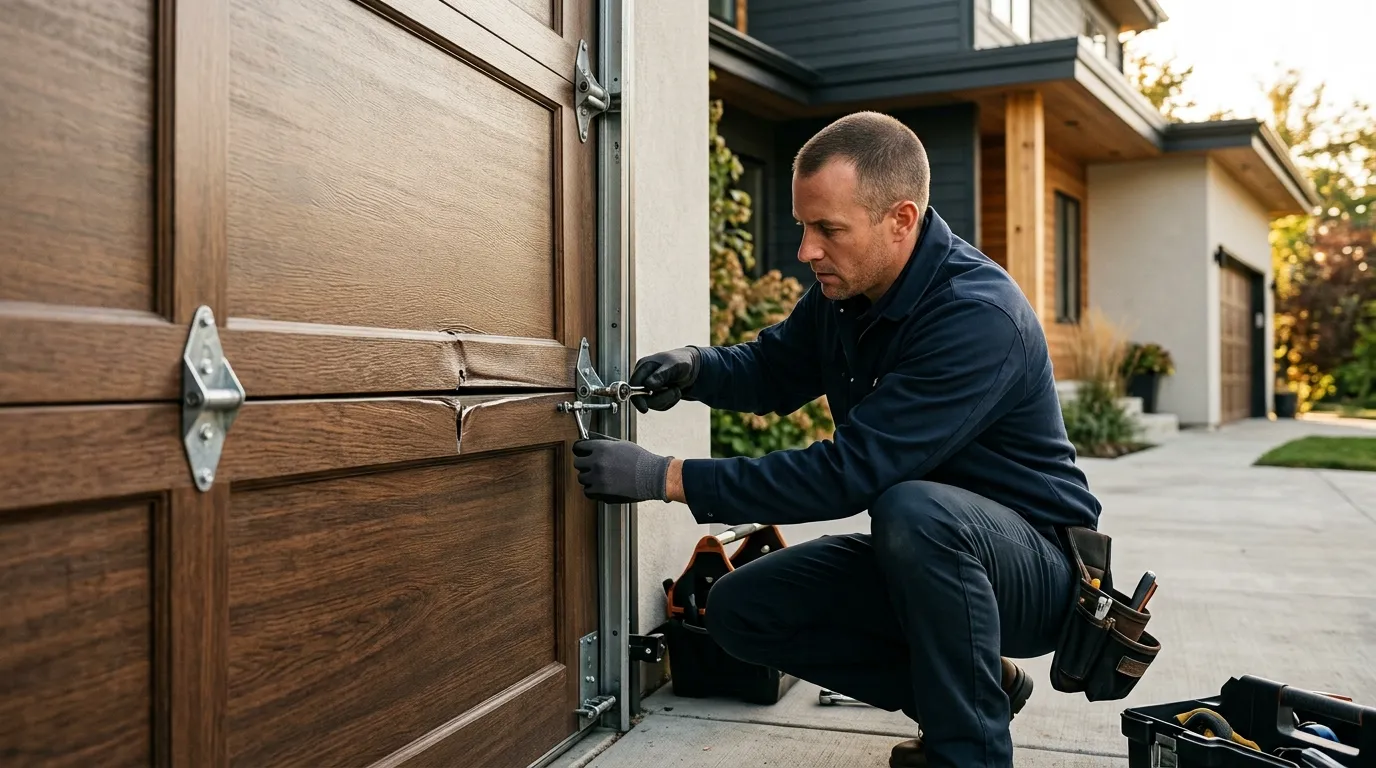
The service area sits in a severe cold climate band, and in a neighborhood built before modern weatherproofing standards, that cold finds every gap in an old door seal, every stiff spring that was never rated for daily use in single-digit mornings. Springs on original 1970s hardware are past design life almost everywhere in Berkley by now. We don't push replacement on every call - if a spring is sound and the door balances correctly, a new opener alone can solve the problem. But when the spring, track, and drum are all original, patching one part while the rest fails within a year isn't a good use of anyone's money.
Getting Here
Berkley is about 8 miles from our Denver base, a manageable run whether the call is a stuck door before work or a broken spring on a Saturday. We don't keep a separate depot in Berkley - the truck comes from Denver, same as it does for the other areas we cover, from Glendale and Derby closer in to Superior and Lafayette farther out. Distance alone doesn't dictate scheduling, but it's worth knowing we're traveling to reach you rather than parked around the corner.
Berkley's median household income sits at $76,232, noticeably below the $101,450 median across the full service area. That gap matters when we talk about repair versus replacement: we try to fix what's fixable rather than defaulting to a full door swap, because a full replacement is a bigger ask on a Berkley budget than it might be in some of the higher-income pockets we also serve.
Older vs Newer Streets
Not every block in Berkley dates to the same year, but the pattern holds: streets built closer to 1977 tend to have the original torsion or extension spring setups, older steel panel doors with minimal insulation, and openers pushing past their expected service life. Streets that saw teardown-and-rebuild activity more recently look more like the newer stock found elsewhere in the broader area, with insulated doors and openers that already meet current safety-sensor requirements.
We can't tell you which exact block you're on without seeing the door, and we won't guess at a house's age just from a street name - that's the kind of detail we won't invent. What we can say is that when a Berkley homeowner calls about a door that won't reverse, or a spring that let go on a cold morning, the odds favor original hardware unless the home's been through a recent renovation. That's the working assumption we bring to the truck, and it's usually right here more often than not.
How it works
From “it’s stuck” to “it’s fixed”
01
Tell us what’s wrong
Describe the symptom - won’t open, loud bang, opener runs but the door won’t move.
02
On-site diagnosis
A technician tests the door under power and by hand and finds what actually failed.
03
Clear, up-front plan
You get the fix that’s needed and what drives the cost - before any work starts.
04
Repaired & tested
The repair is done, the door is set true and tested, and the work area left clean.
Serving Denver, CO - tell us what your door’s doing and we’ll take it from there.
No. We run out of Denver and drive to Berkley, about 8 miles away, for every call. There's no separate branch here, so scheduling depends on the truck's route that day rather than a local storefront.
Why does my opener from the 1970s need replacing instead of just the door?
Older openers were rated for lighter, less-insulated doors. If you upgrade to a heavier insulated door, common in Berkley's climate, the original motor often can't lift it safely. We check torque ratings before recommending a swap rather than replacing on assumption.
Is my spring likely original if my house was built in the 1970s?
It's possible, though springs get replaced individually over the years. Given Berkley's median build year of around 1977, a spring that's never been serviced is well past its expected cycle count and worth a look, especially heading into cold weather.
Does the cold climate here actually affect garage doors?
Yes. The whole service area sits in a severe cold band, and older seals and springs stiffen or fail faster in single-digit mornings. Homes with original 1970s-era doors and no weatherstripping upgrades tend to show it first.
Ready to get your garage door sorted?
Tell us what it’s doing and where you are in Denver - we’ll take it from there.