Opener Installs for Glendale's 1983-Era Garage Doors
Glendale's houses run newer than the Denver median - 1983 build year on average. See what that means for opener installs and what the job actually takes here.
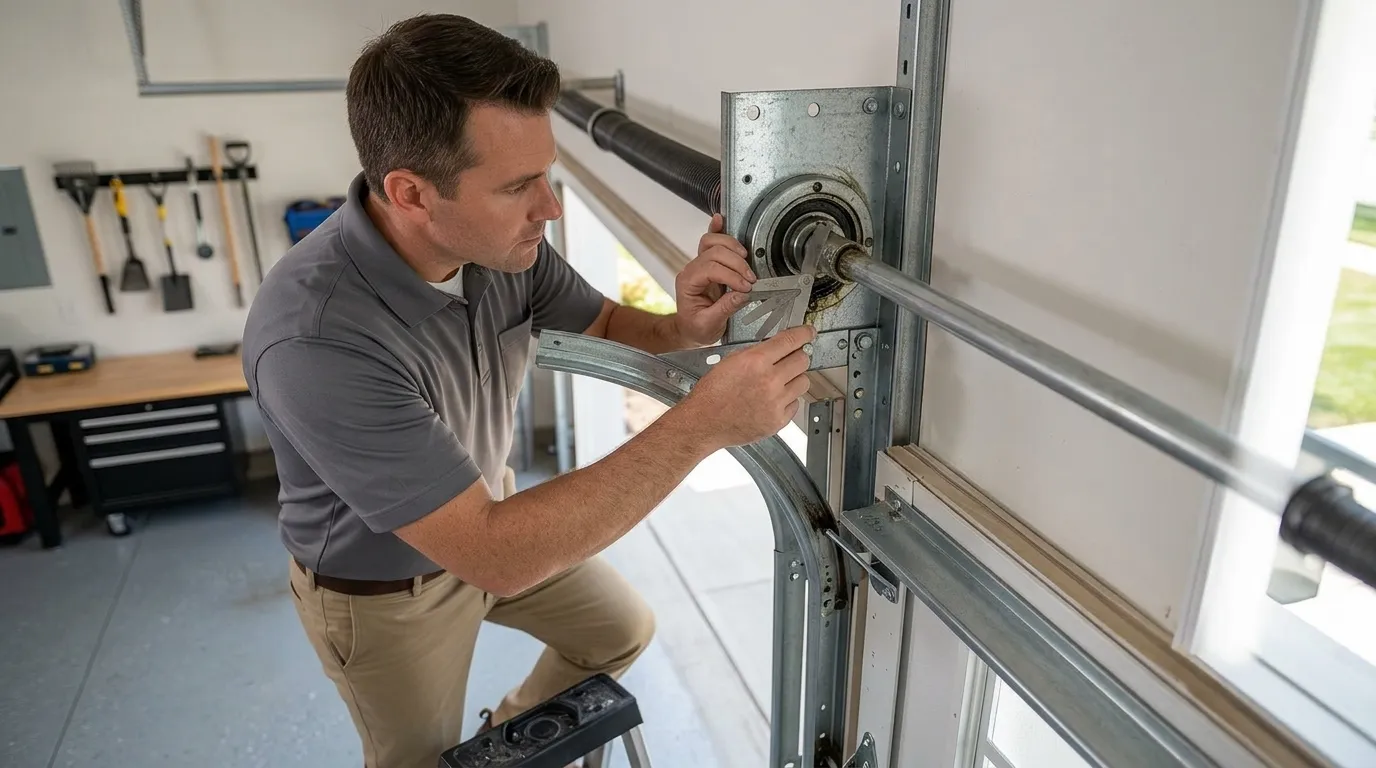
Denver's housing stock across the service area spans 1947 to 2006, with a median build year of 1981. Glendale sits a couple years past that median at 1983, which puts almost every door here on a track and header built to a slightly newer standard than what you'd find on the older side of the metro. That gap of two years doesn't sound like much until you're standing in the garage looking at the header bracket. A 1983 door is usually still on its original jamb-mounted bracket, not yet updated to the reinforced header plates that became common through the late 80s and 90s stretch of the area's stock. What you pay for an opener install here tracks with what that bracket and track need before the opener goes up - reinforcement work adds to the job, a clean header doesn't. Glendale's median household income runs $68,952, well under the $101,450 median across the broader service area, and most jobs we quote here are straightforward chain-drive units rather than the belt-drive upgrades that get more traction in higher-income parts of the area. We don't carry a Glendale price list separate from what we quote on site - every header and track is different enough that a phone quote isn't honest.
Why This Fails Locally
A 1983 door built to cold-climate code was engineered assuming a certain amount of thermal movement in the track and a certain kind of drive chain that could take sustained cold without seizing. Forty years on, the metal has usually done more contracting and expanding cycles than the door was ever tested for, and that shows up first at the opener bracket, not the spring. The bracket that held a lighter, older-style opener motor in 1983 often can't take the added torque of a heavier belt-drive unit without new backing. That's the failure we see across this stretch of build years - not the door itself giving out, but the mounting point underneath the opener giving out first. Cold snaps make it worse: metal contracts, the bracket's screws back out half a turn, and the next cold morning the door won't fully seat. It's a small thing that reads as a big opener failure until you look at what's actually loose.
What the Repair Takes
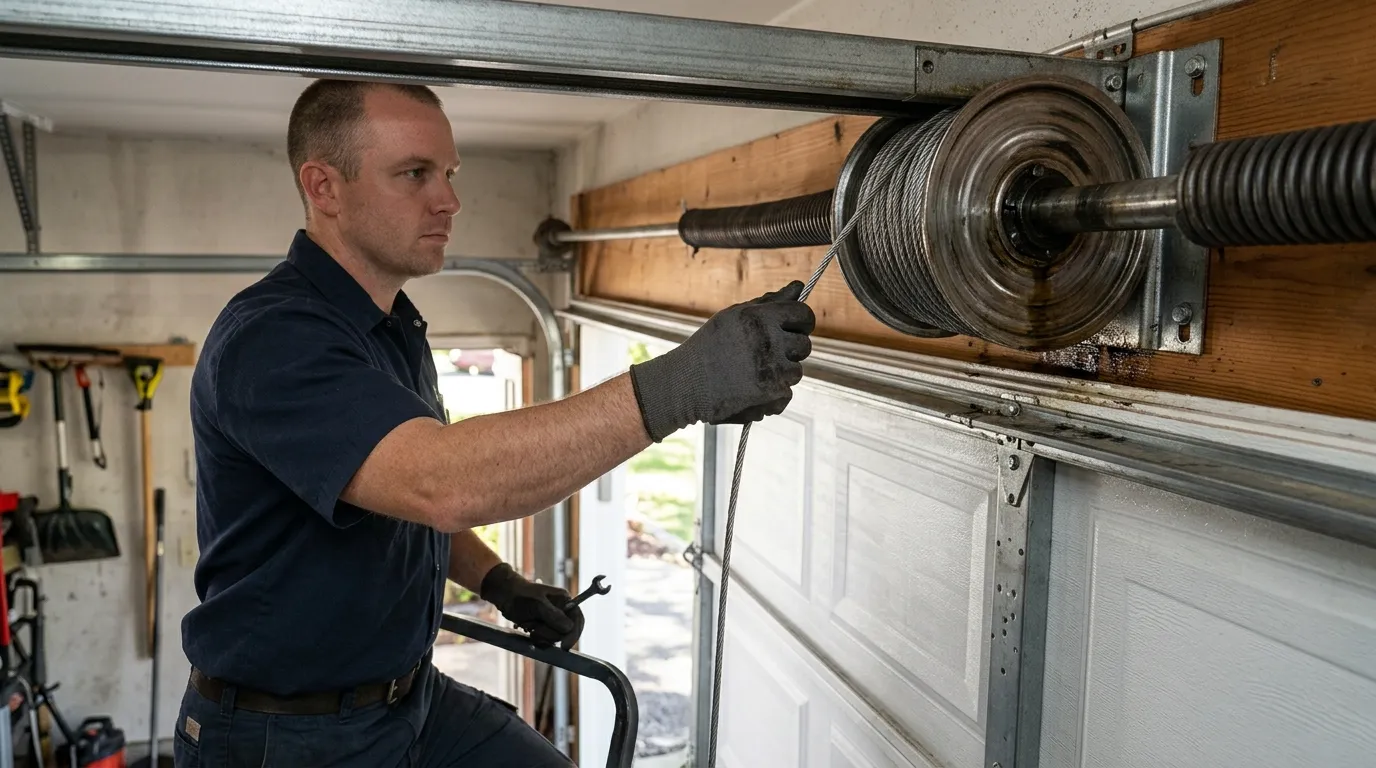
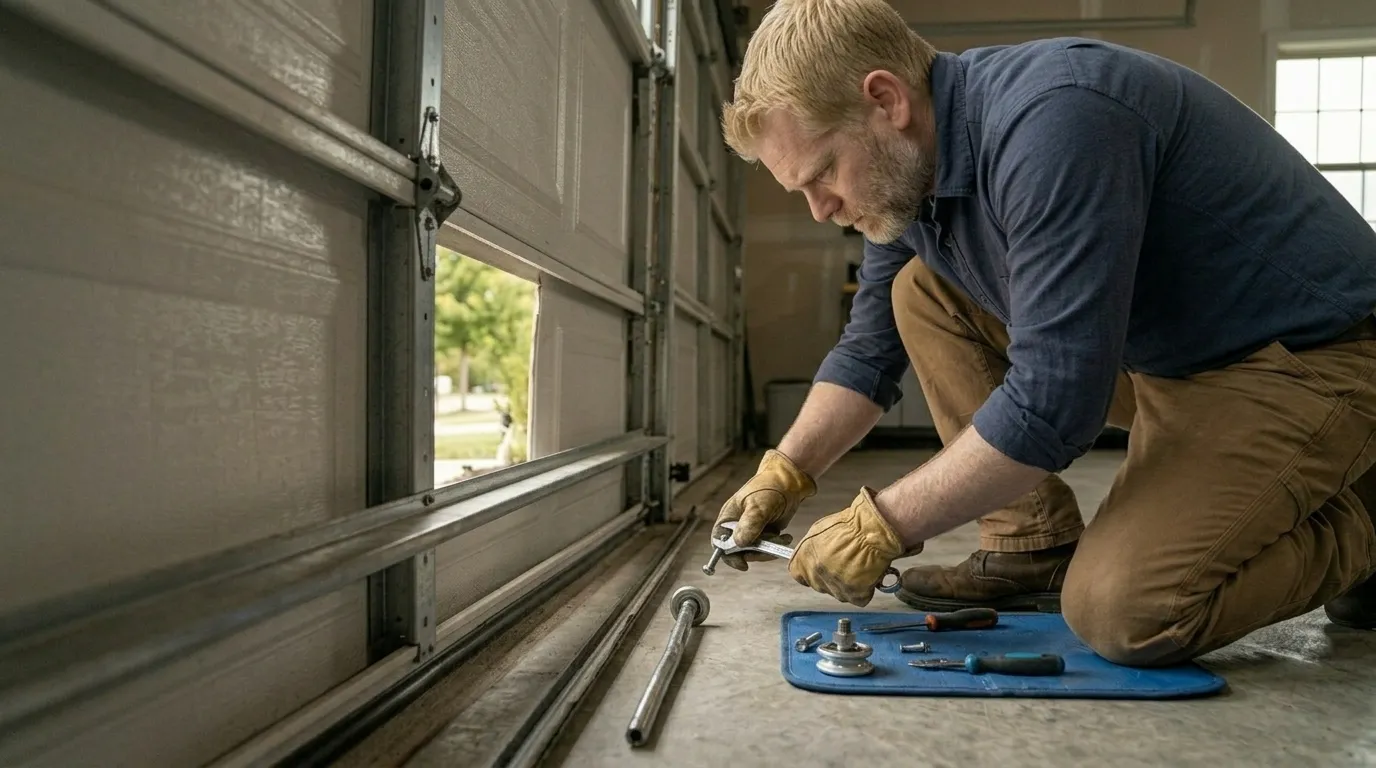
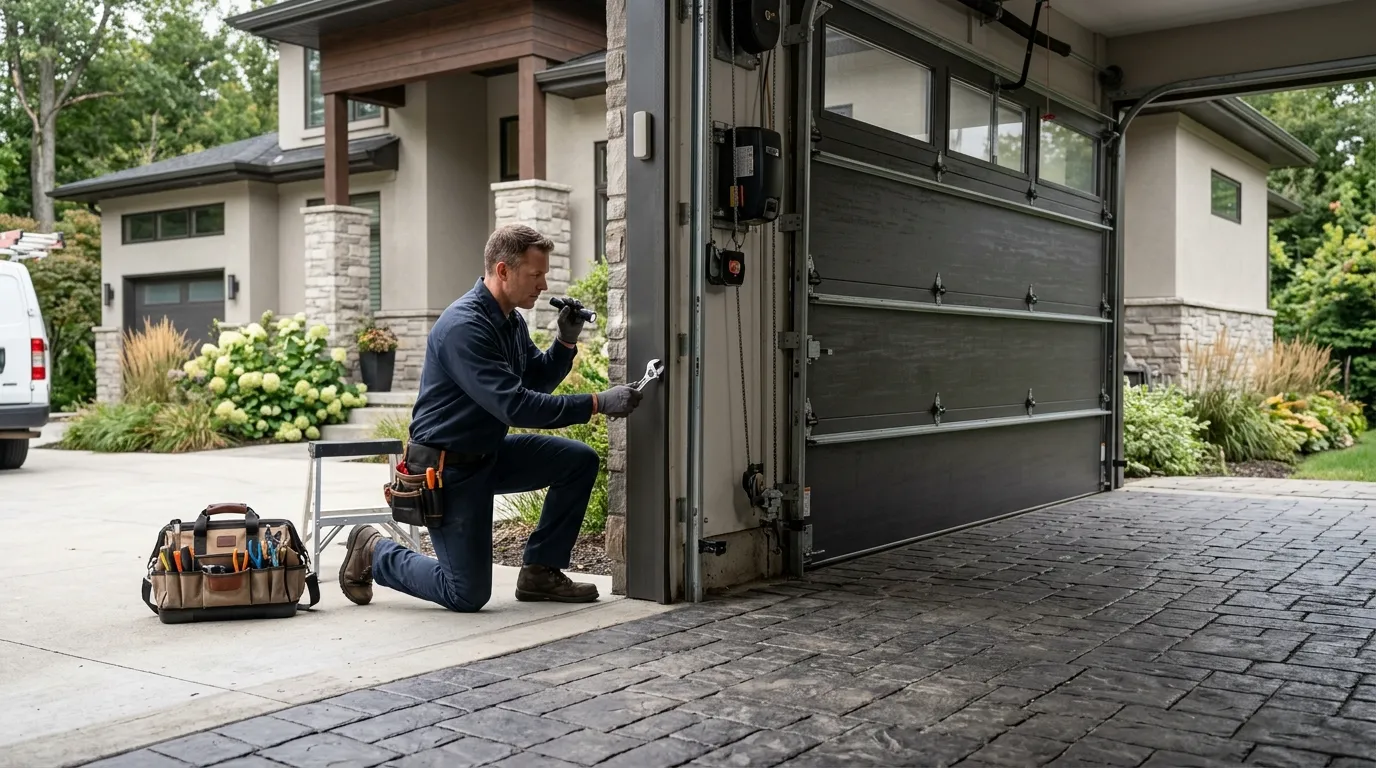
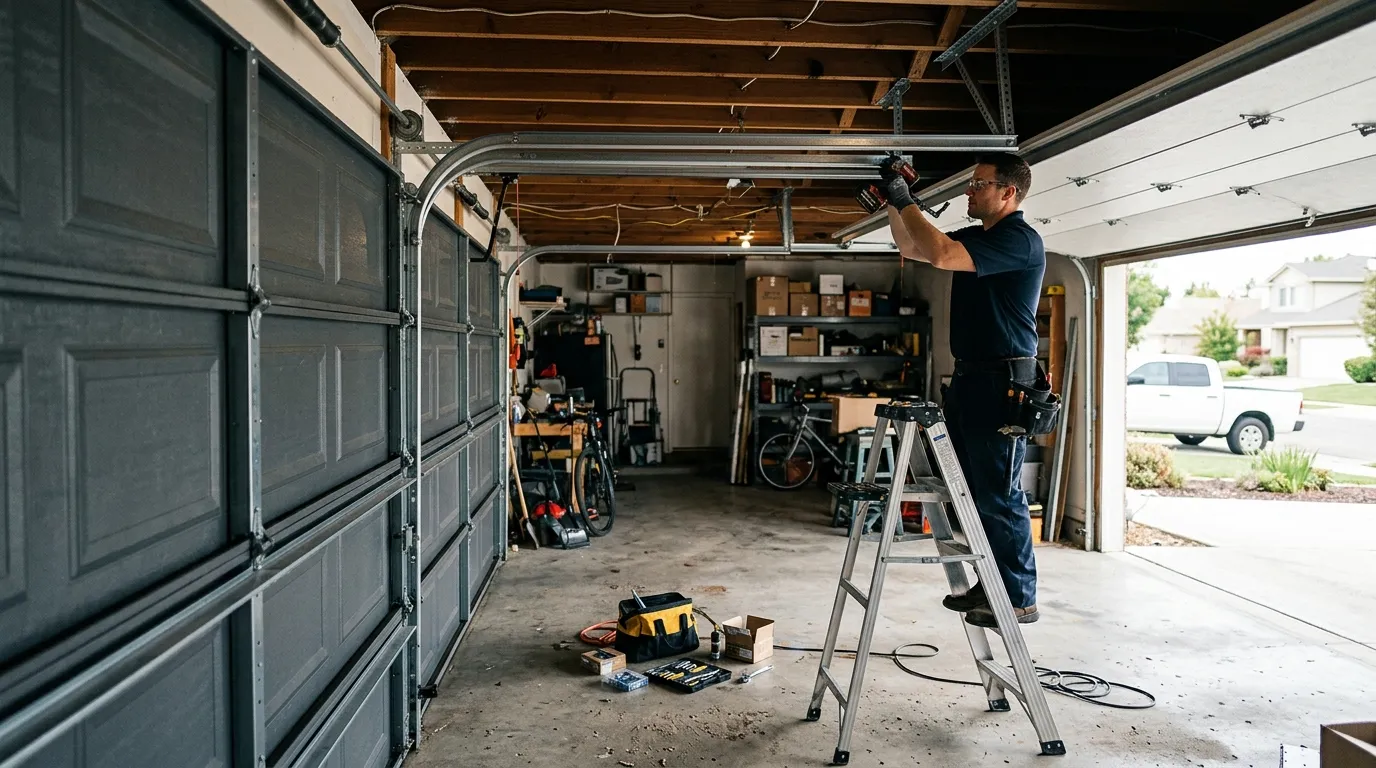
On a typical 1983-era Glendale door, the job starts with pulling the old opener and checking the header bracket before anything new goes up - that's not optional here, it's the actual point of failure more often than the motor itself. If the header's sound, a chain-drive unit mounts in an afternoon. If it needs reinforcing, plan on that adding real time, because we're not going to hang a new opener on a bracket that's already shown forty years of cold-cycle fatigue. We travel from Denver to reach Glendale - it's a five-mile run, not a local branch, so we schedule the visit rather than promise a same-hour drop-in. Parts availability matters too: a straightforward chain-drive replacement is usually in the truck, but a specific header bracket kit sometimes has to be ordered, and that's the one honest limitation worth saying up front - we won't guess at a same-day timeline on a part we haven't confirmed in stock.
Where This Job Goes Sideways
The job goes sideways when someone installs a heavier opener on the original 1983 bracket without checking it first. It looks fine for a few months, then the door starts drifting off-square as it opens, or the opener strains audibly near the top of the cycle. That's the header giving up slack it never had to give in the original design. Glendale is a small, tight service area - 2,678 households by the household count for this suburb - and a lot of them sit inside that same narrow build-year band, so this isn't a one-house problem, it's a pattern across the area's housing. The other place this goes wrong is skipping the travel-distance math: because Denver is only five miles out, some owners assume same-day is automatic. We'll tell you straight if a part needs ordering before we commit to a date, rather than promise a timeline we can't back.
How it works
From “it’s stuck” to “it’s fixed”
01
Tell us what’s wrong
Describe the symptom - won’t open, loud bang, opener runs but the door won’t move.
02
On-site diagnosis
A technician tests the door under power and by hand and finds what actually failed.
03
Clear, up-front plan
You get the fix that’s needed and what drives the cost - before any work starts.
04
Repaired & tested
The repair is done, the door is set true and tested, and the work area left clean.
Serving Denver, CO - tell us what your door’s doing and we’ll take it from there.
Does my Glendale house need a special opener because it's from 1983
Not a special opener, but the mounting point matters more than the motor. A 1983 header bracket often needs reinforcing before a heavier belt-drive unit goes up. We check that on the visit rather than quote blind, because the bracket condition varies house to house even within the same build year.
How far out is Denver from Glendale for a job like this
About five miles. We schedule the visit rather than promise instant arrival, since we're traveling in rather than working out of a Glendale branch.
Is a chain-drive opener enough for a house this age
For most 1983-era Glendale doors, yes. Chain-drive is the common call here, and it matches what the original bracket was built to hold without extra reinforcing work.
Ready to get your garage door sorted?
Tell us what it’s doing and where you are in Denver - we’ll take it from there.