Garage Door Repair for Glendale's Early-1980s Doors
Glendale homes date mostly to the early 1980s, meaning steel sectional doors on torsion hardware now pushing 40 years old. We drive out from Denver to fix them.
Glendale's houses cluster around 1983, which puts most garage doors here in the second or third generation since the house was built - meaning whatever's hanging on the track now is probably not original, but it's likely a like-for-like steel replacement from the 1990s or 2000s rather than anything newer. That matters for pricing because parts availability tracks the door's design era, not its install date. A basic steel sectional door in the width common to these houses (16x7 for a two-car opening) with standard torsion springs is a straightforward job. Where cost climbs is when the opener bracket or track was custom-fit to an older jamb and the replacement hardware doesn't just bolt on. Glendale's median household income sits at $68,952, noticeably below the wider Denver-area service area figure of $101,450 - which is worth naming plainly here, because it's part of why we quote the repair itself rather than pushing a full door replacement when the drums, cables, or a single spring will do. We don't publish flat rates on this page because torsion spring size, door weight, and track condition all move the number, and guessing at a price without seeing the door does nobody any favors.
Why This Fails Locally
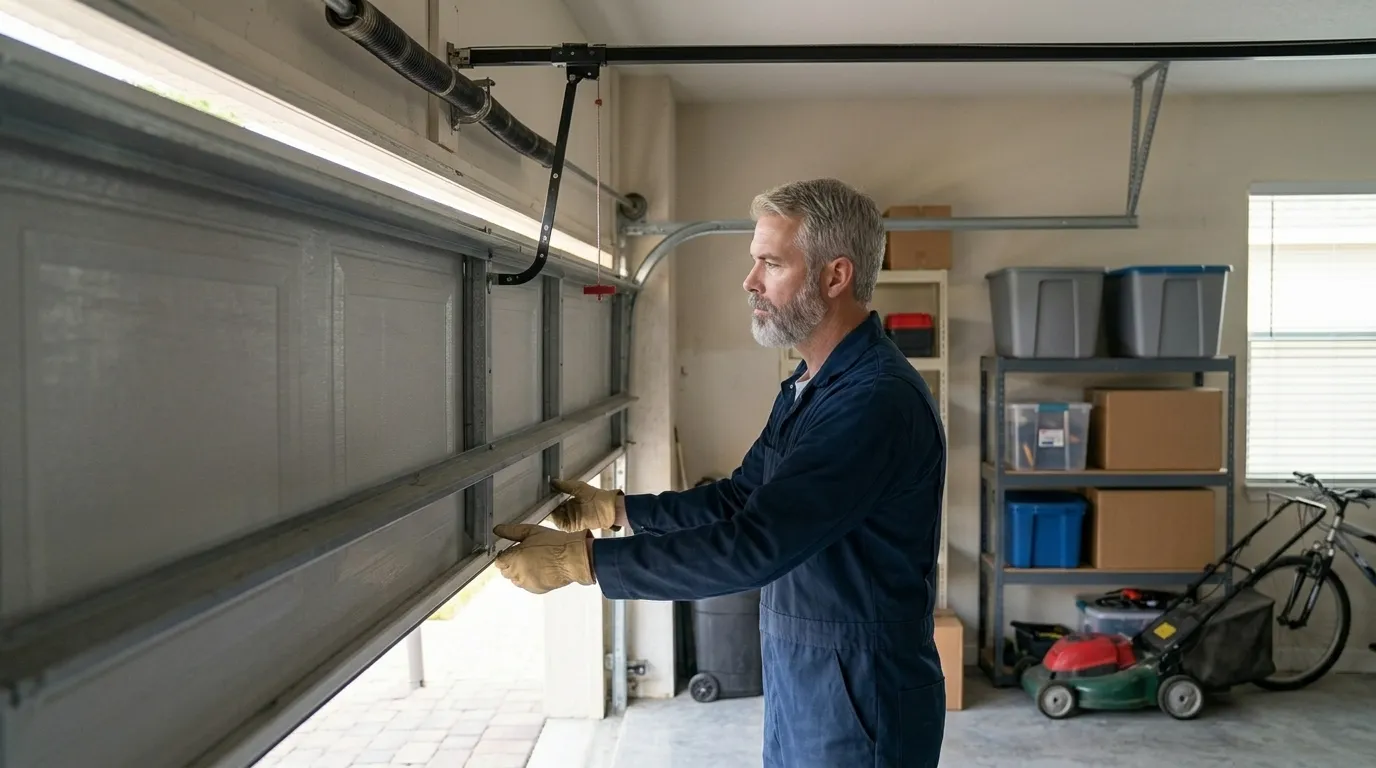
The failure pattern in Glendale traces straight back to the building stock. Denver's broader service area spans construction from 1947 to 2006, but Glendale itself centers tightly on 1983 - meaning the torsion springs, drums, and rollers on these doors are almost never the doors' original hardware, they're a mid-life swap that's now itself aging out. Add the climate: this is a cold, severe-winter band, and cold steel contracts. On a 1983-era door, the metal fatigue shows up first at the spring, because a torsion spring that's flexed through 35-plus winters loses tension unevenly, not all at once. You'll notice the door struggling to lift evenly, or the opener straining on one side before the cable finally lets go. Rollers on doors this age are often the original steel wheel-and-track combination, which is louder and rougher than the nylon rollers common on newer installs, and that roughness accelerates wear on the track itself. None of this is unique to any one house - it's the age of the neighborhood's housing stock working the same way across nearly all of it.
What the Repair Takes
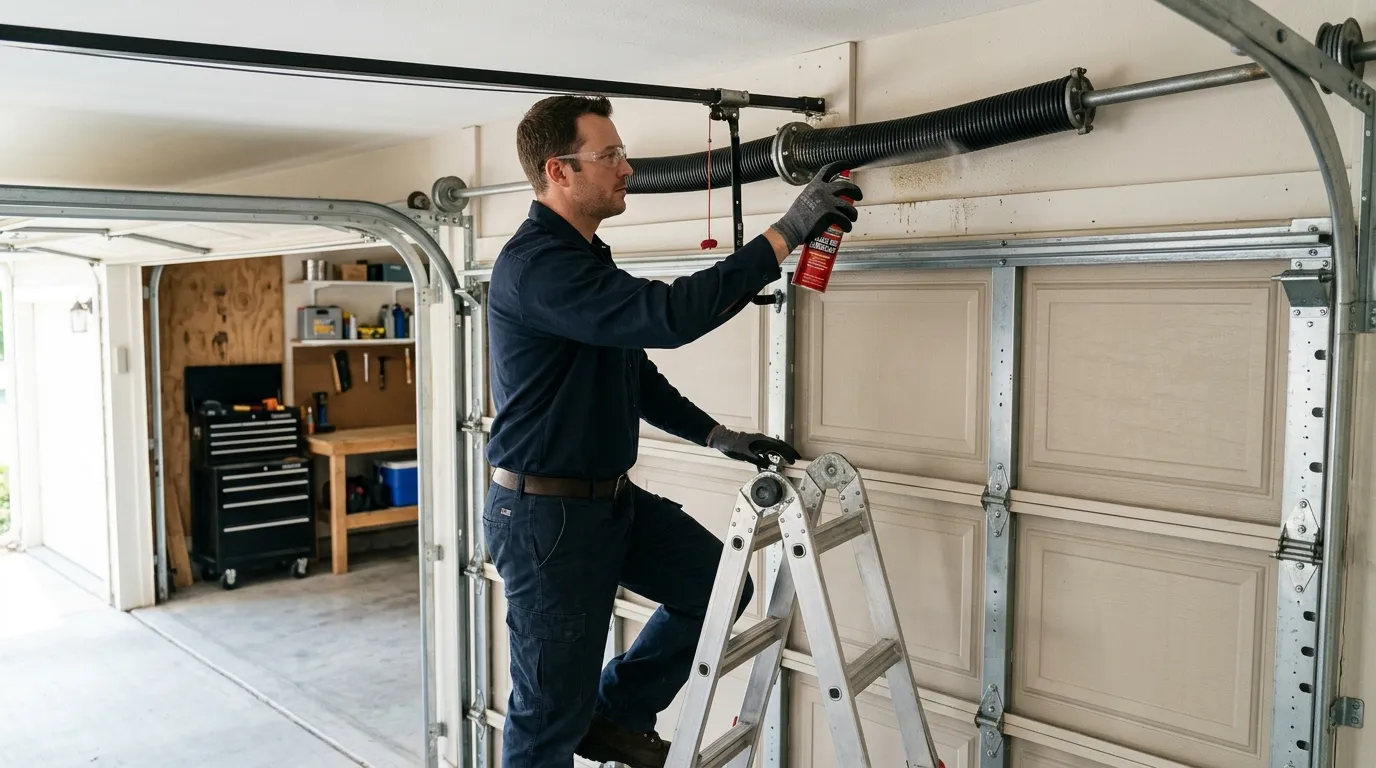
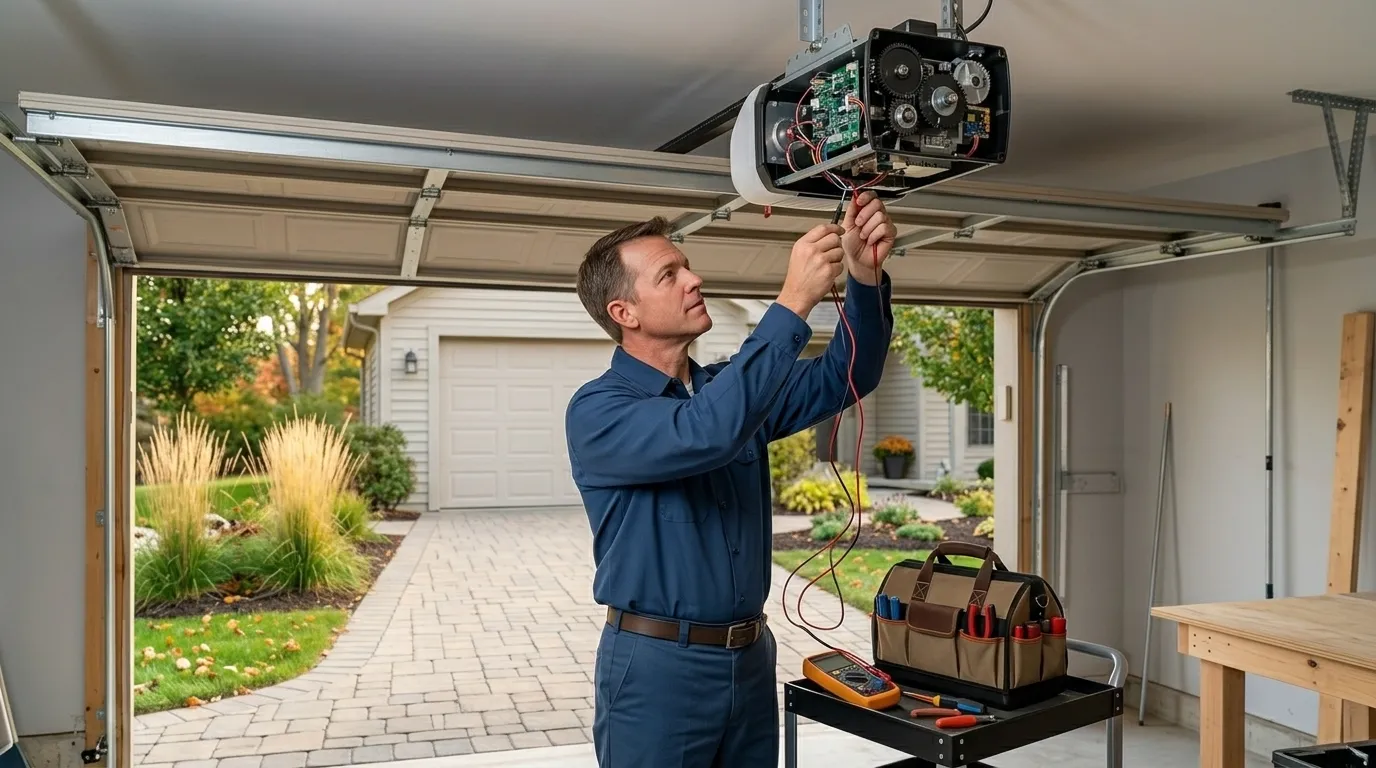
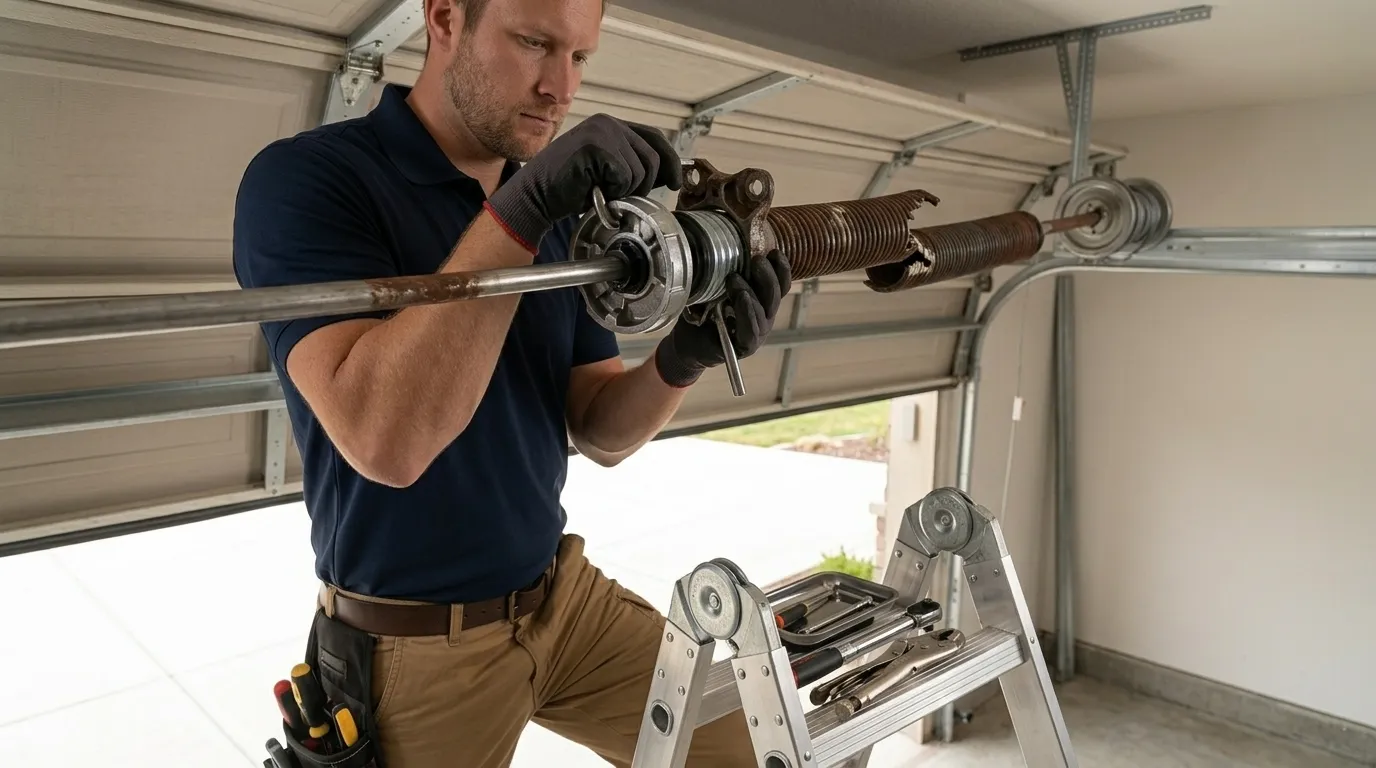
Most calls to a door of this era are a torsion spring, a cable, or a set of rollers - not the whole door. We size the spring to the door's actual weight and drum diameter rather than assuming a stock size, because doors from the early 1980s sometimes carry a spring gauge that's been swapped once already and doesn't match what a parts catalog would tell you to expect. If the door is a double at 16x7, that's two springs working together, and we replace them as a pair even if only one has broken - an uneven pair on a door this size is how the next call gets made within a year. Track alignment gets checked at the same time, since cold-weather contraction on steel track can shift it just enough to bind a roller without anyone noticing until the cable takes the extra strain. One honest limit here: if the opener itself is original to a 1983 install, we're not sourcing parts for a chain-drive unit that old - replacement is the only real option, and we'll say so rather than chase a part that isn't stocked anywhere anymore.
Where This Job Goes Sideways
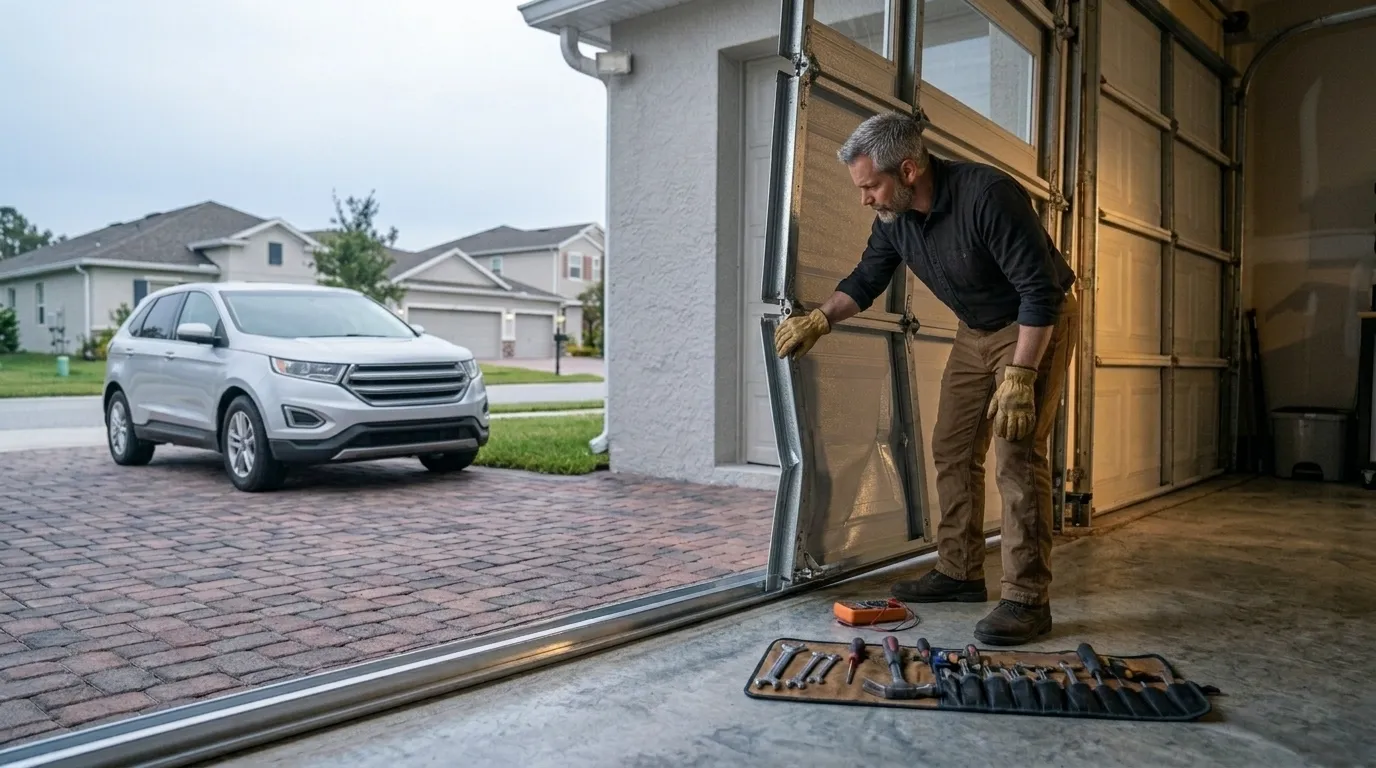
The job goes sideways when someone tries to save the spring instead of the pair, or when a roller gets swapped without checking whether the track itself has drifted out of parallel - both of which are common shortcuts on doors from Glendale's era because the hardware looks fine at a glance even when it's not. It also goes sideways on the drive out: we work from Denver, roughly five miles to Glendale, and we don't stage parts locally, so a spring size that turns out wrong on first measurement means a second trip rather than an on-the-spot fix. We'd rather measure twice at the door than promise a same-visit close and miss it. The other place this stalls is when a homeowner wants the opener repaired rather than replaced on a unit that's original to the house - that's a job we won't quote, because parts for a chain-drive opener from 1983 aren't something any supplier stocks, and pretending otherwise wastes everyone's time.
How it works
From “it’s stuck” to “it’s fixed”
01
Tell us what’s wrong
Describe the symptom - won’t open, loud bang, opener runs but the door won’t move.
02
On-site diagnosis
A technician tests the door under power and by hand and finds what actually failed.
03
Clear, up-front plan
You get the fix that’s needed and what drives the cost - before any work starts.
04
Repaired & tested
The repair is done, the door is set true and tested, and the work area left clean.
Serving Denver, CO - tell us what your door’s doing and we’ll take it from there.
Are Glendale garage doors usually original to the house?
Rarely. Glendale's homes date mostly to 1983, and most doors we see have already been replaced once, often in the 1990s or 2000s. What's original more often is the opener or the track alignment, which is usually where the real trouble starts.
Why does my door struggle more in winter?
This area sits in a cold, severe-winter climate band, and torsion springs lose tension unevenly as steel ages and contracts in cold weather. On a door pushing several decades old, that shows up as a door that lifts crooked or an opener straining before a cable finally gives.
Do you keep a truck stocked near Glendale?
No. We run out of Denver, about five miles away, and don't stage parts locally in Glendale. If a spring or part turns out to be a nonstandard size once we're on site, that can mean a second trip rather than a same-visit fix.
Is it worth repairing an opener from the early 1980s?
Usually not. Parts for chain-drive openers original to houses from that era aren't stocked by any supplier we've found. We'll tell you plainly when a repair isn't realistic instead of quoting a part we can't actually get.
Ready to get your garage door sorted?
Tell us what it’s doing and where you are in Denver - we’ll take it from there.