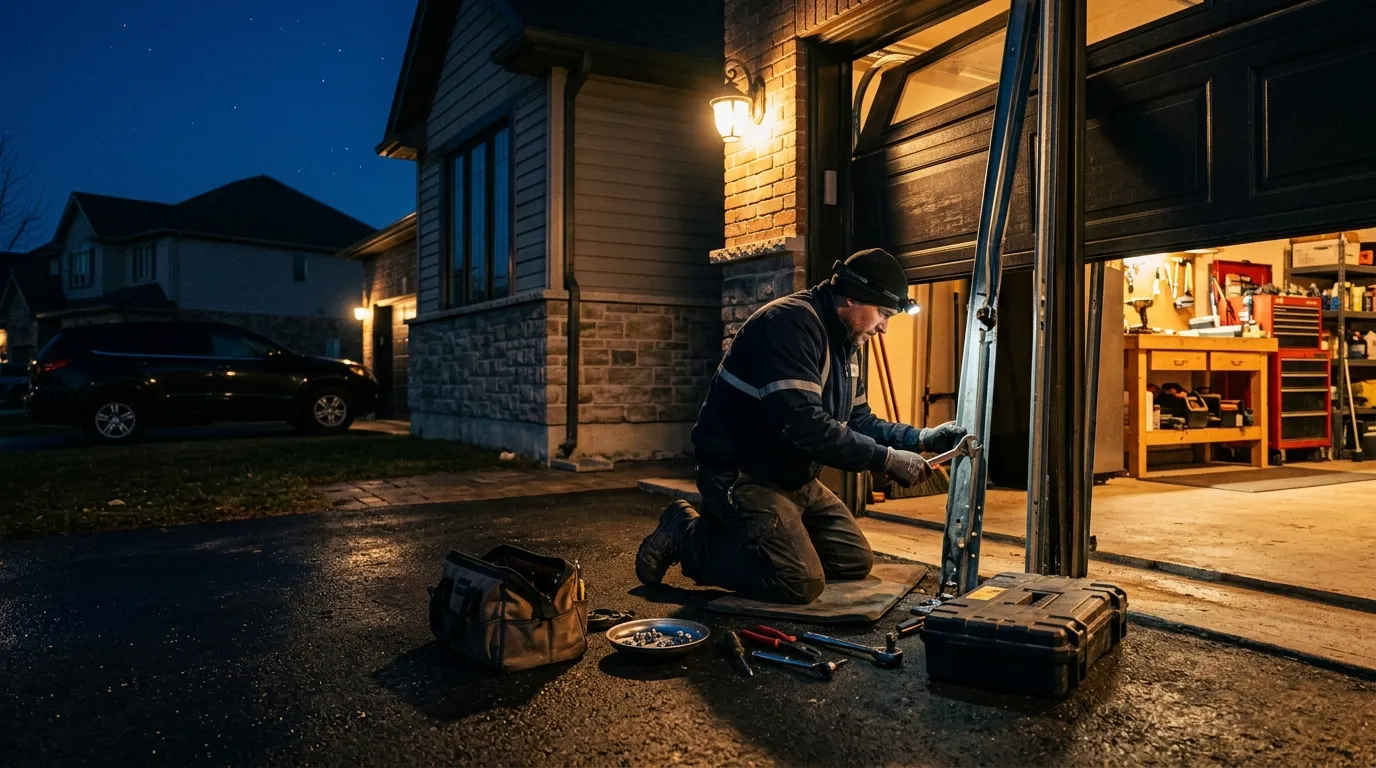
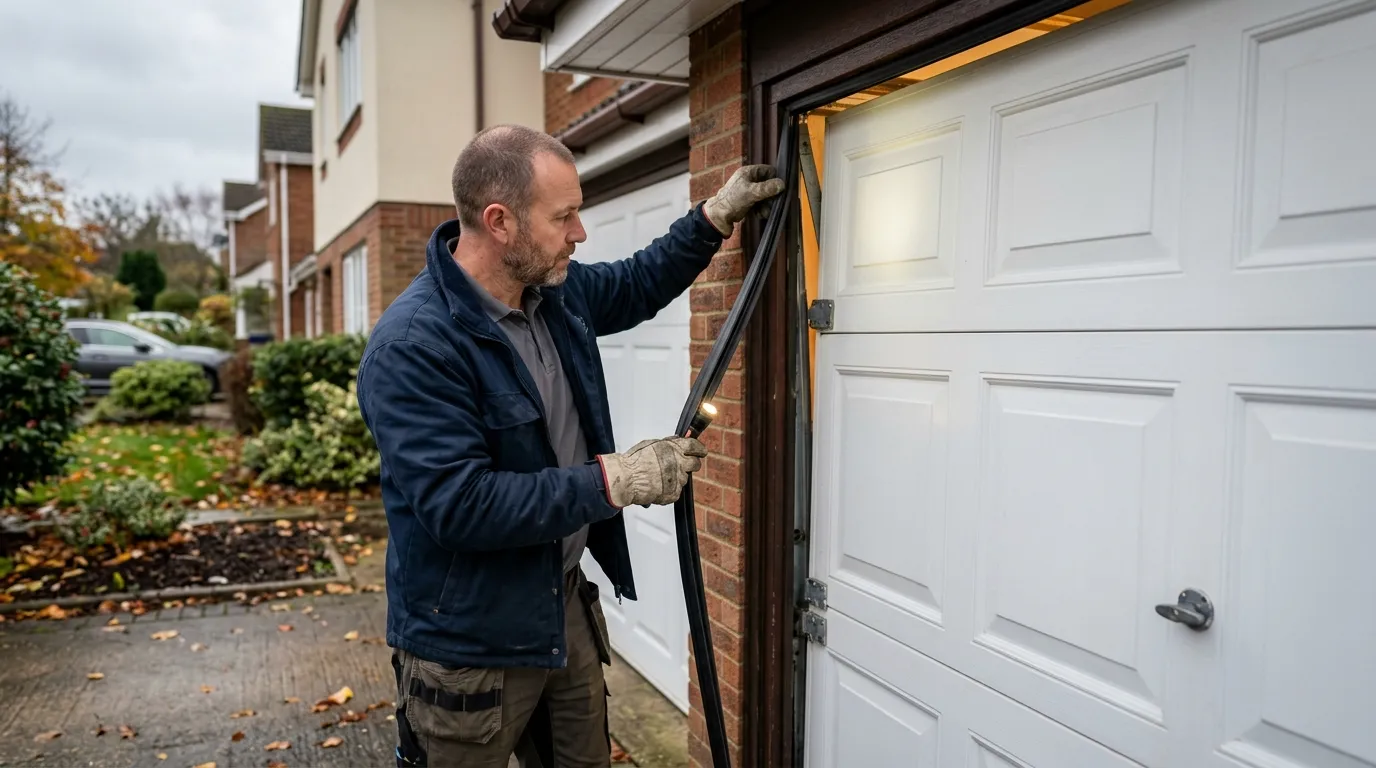
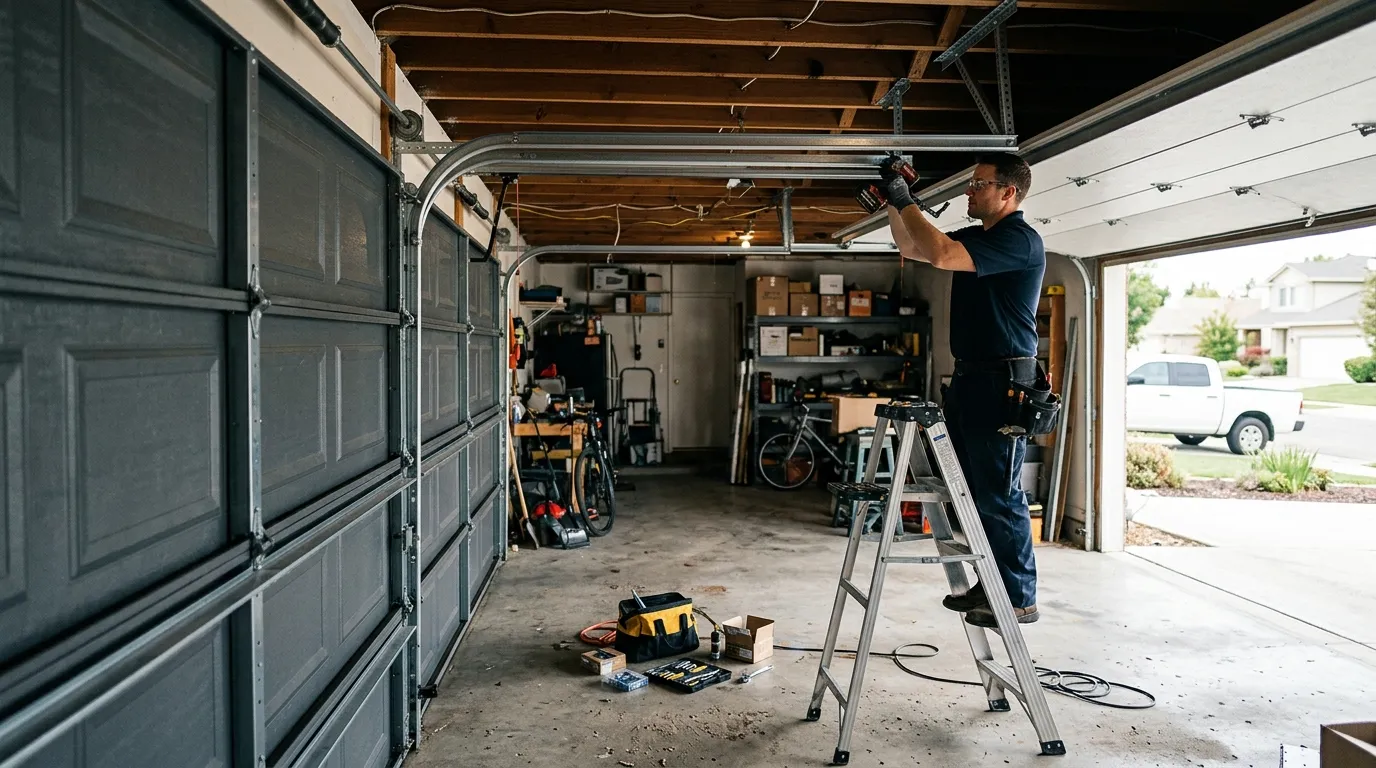
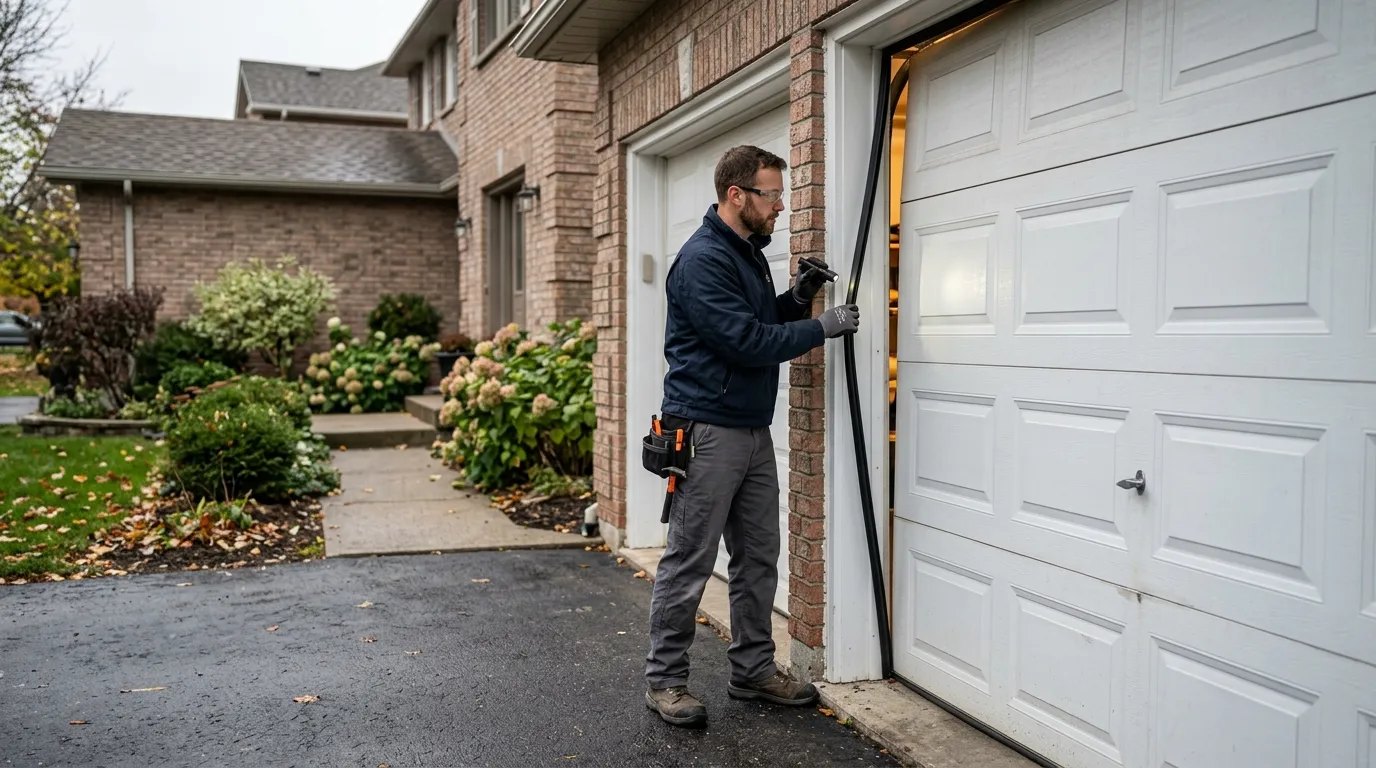
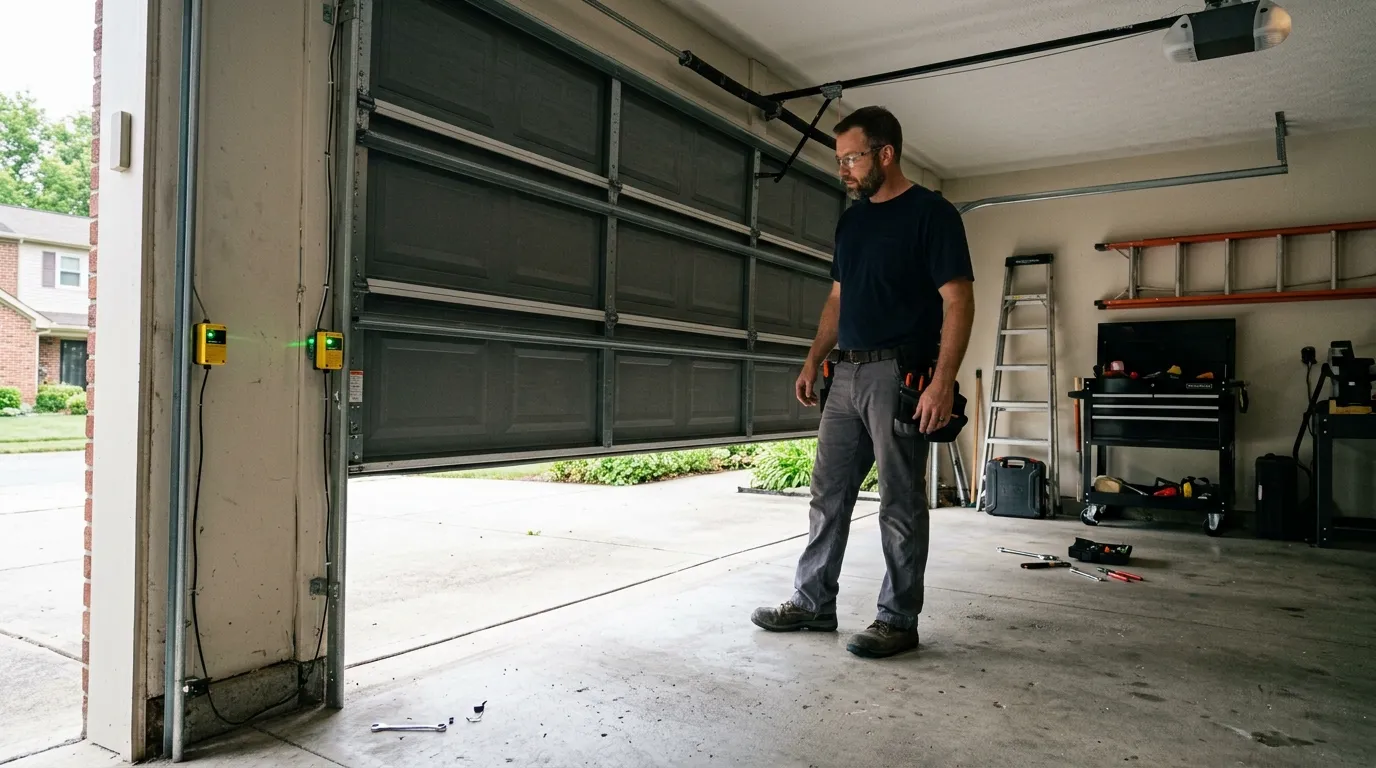
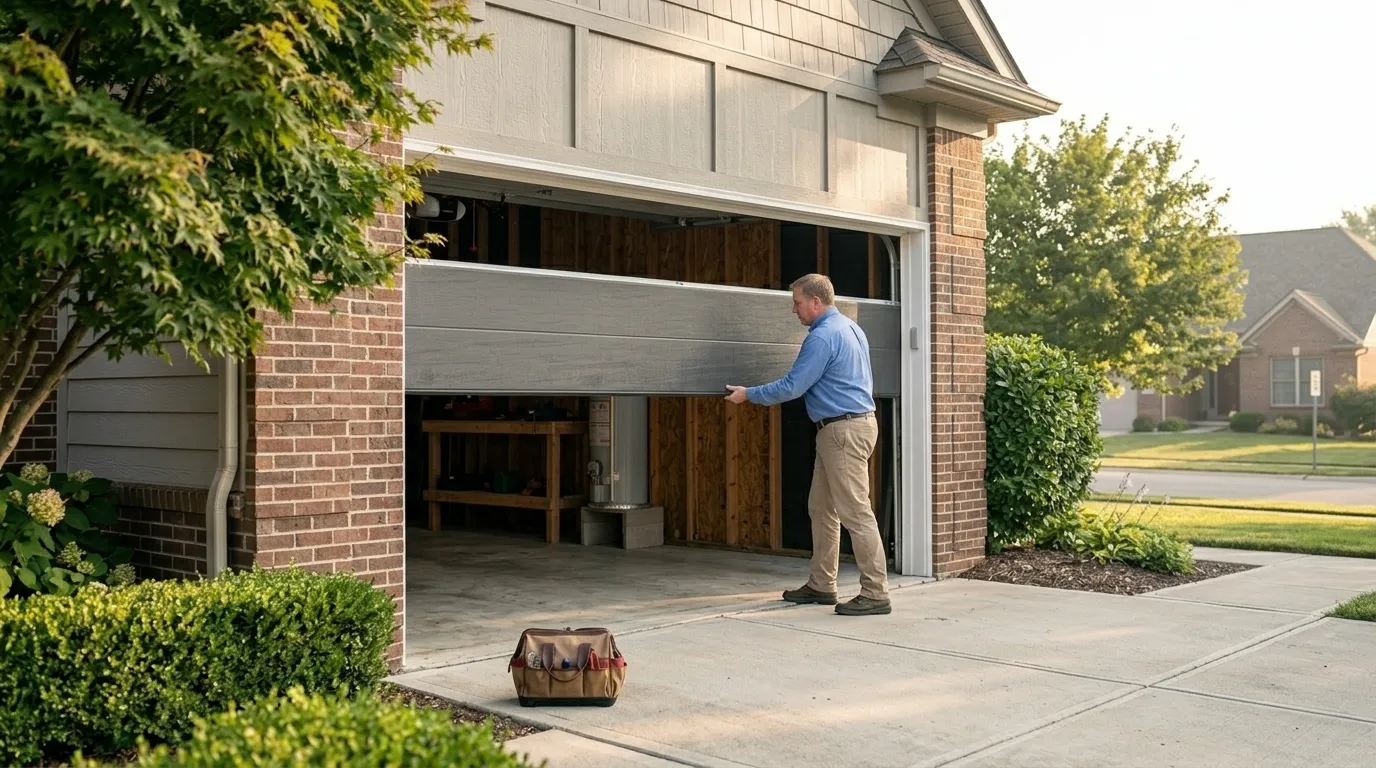
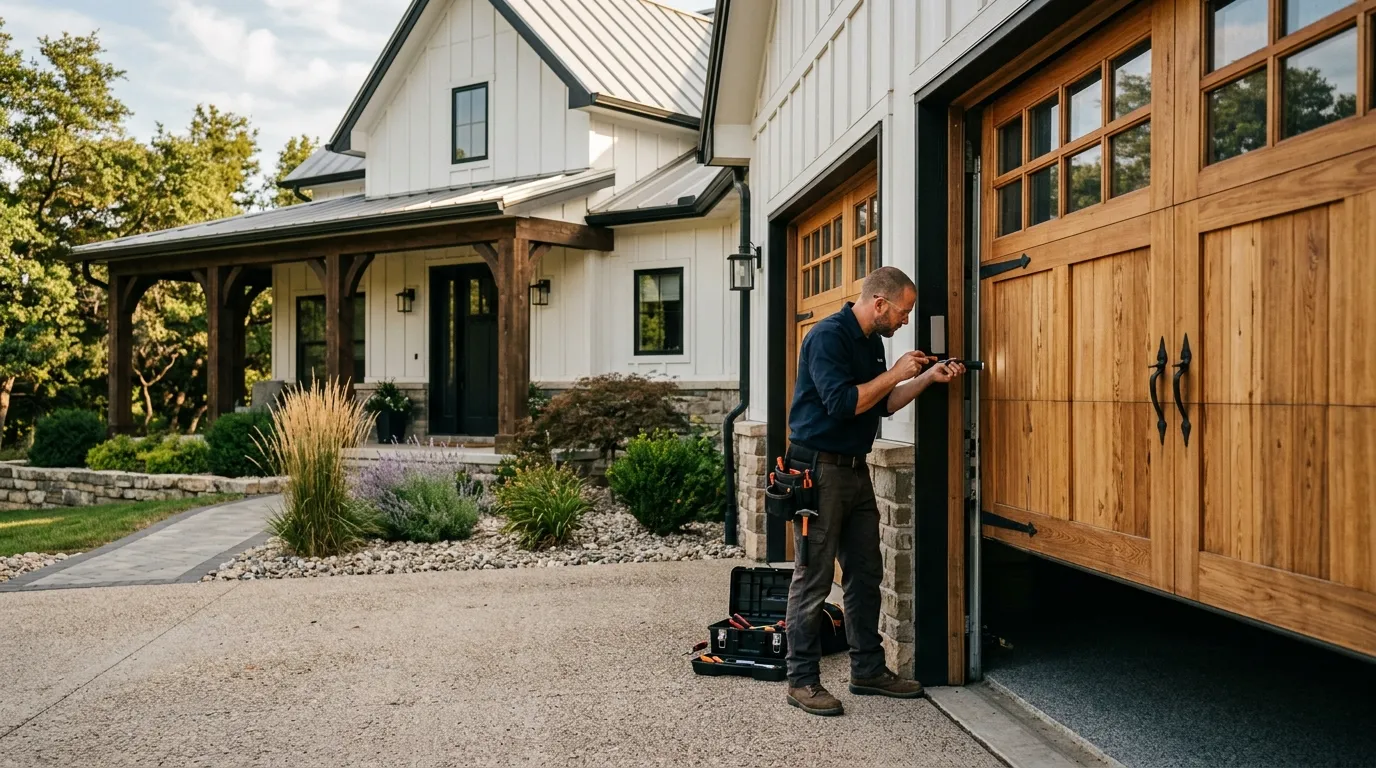
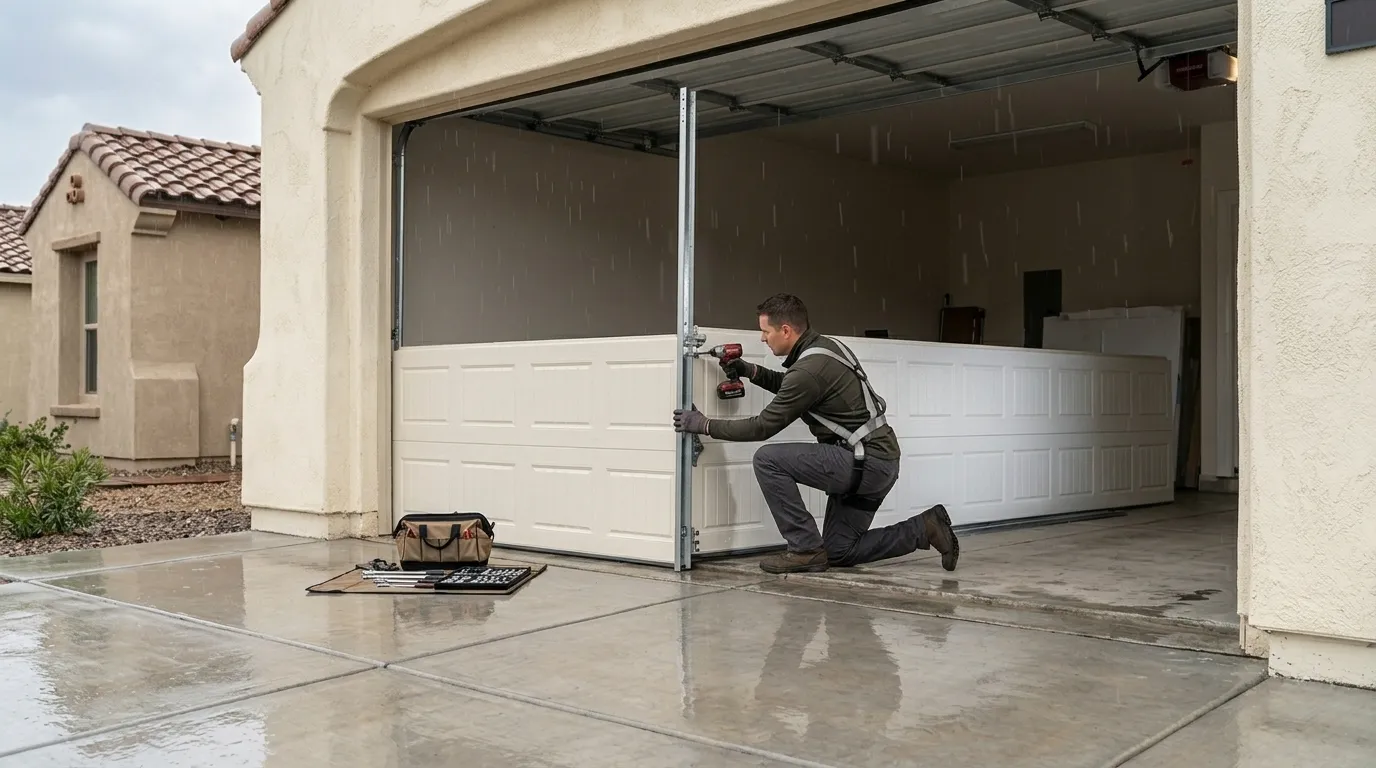
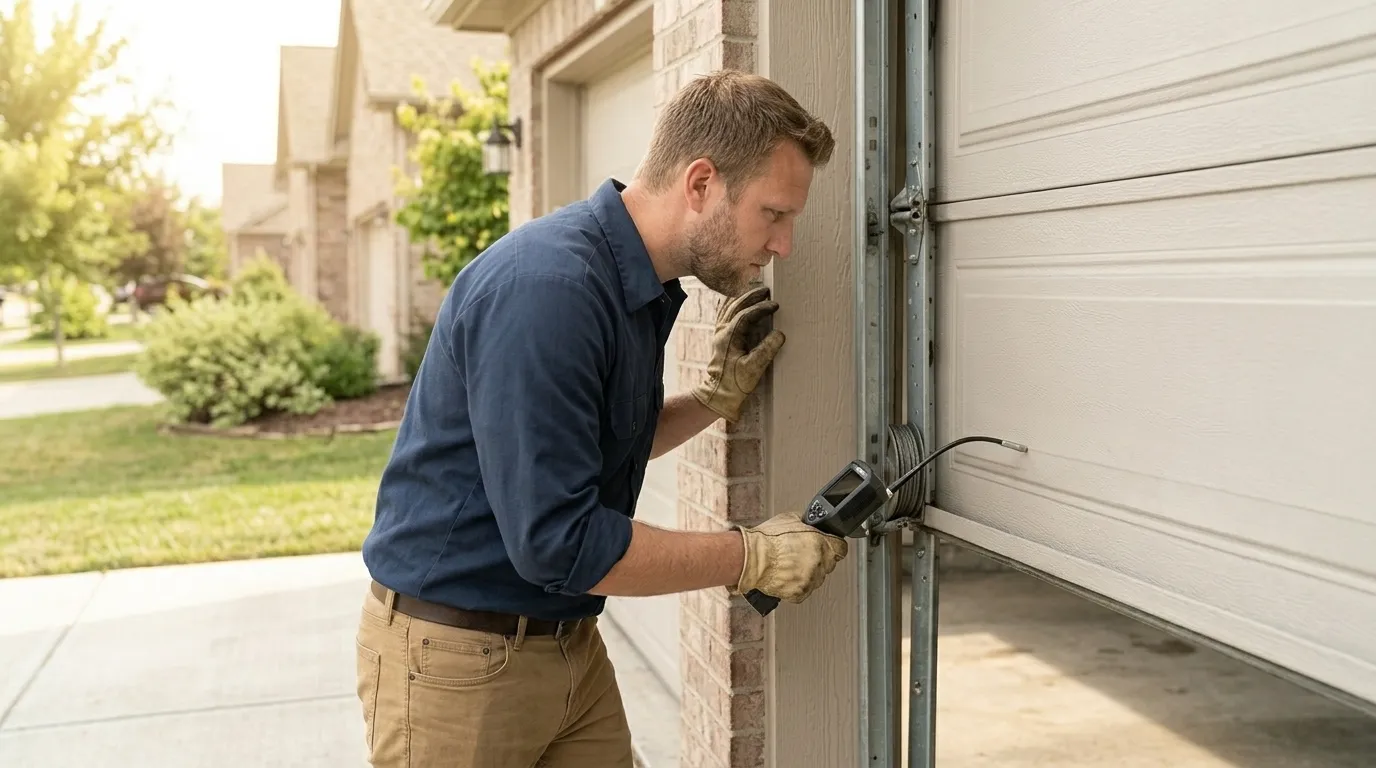
Panel damage is common in Denver's 1947-2006 housing stock through cold winters. Go Denver Garage Door replaces cracked or rusted panels across the metro.
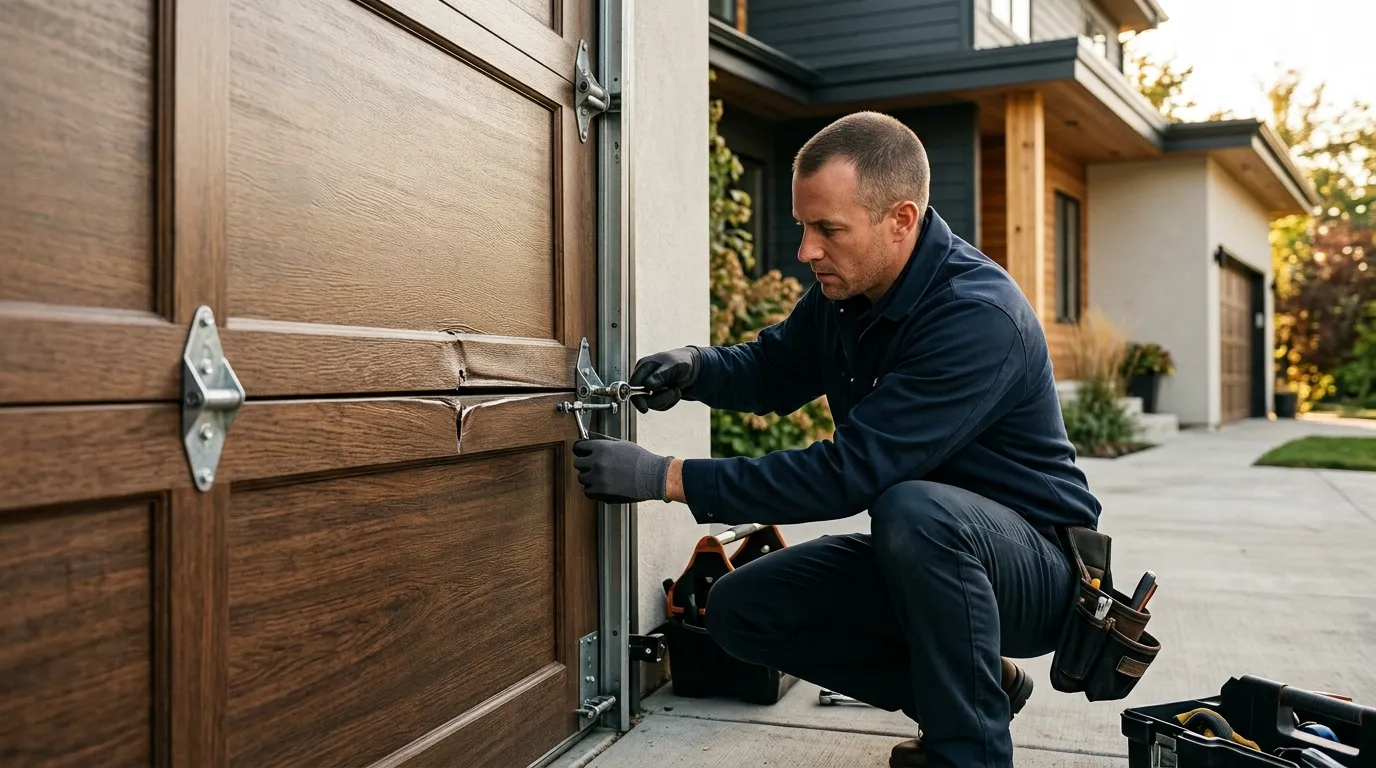
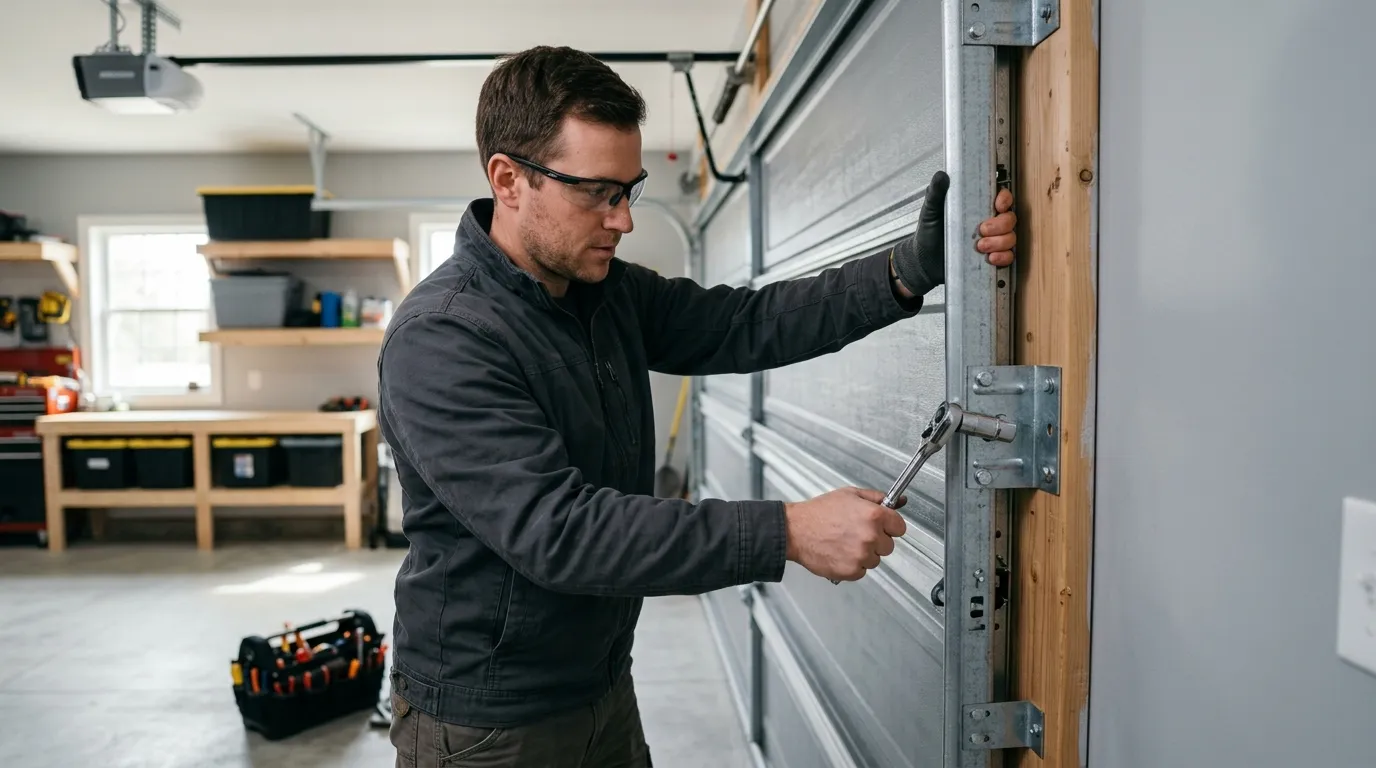
A panel swap starts with finding a match. Steel sectional doors are built in runs, and if your door is more than a few years old, the exact ribbing pattern or color may be out of production. We pull the section, check the hinges and rollers that bolted to it, and set the replacement panel with new fasteners so the seam lines up flush with the rest of the door. On insulated doors we also match the foam core thickness, not just the skin, or the new section will flex differently than the rest of the panels and throw off the balance.
Here's the honest limit: if the door is old enough that the manufacturer has discontinued the panel profile entirely, patching in one section can leave a visible mismatch even with a close color match, because paint fades and steel gauges change over the years. In that case we'll tell you straight that a full door replacement makes more sense than chasing a part that won't quite fit. We don't push a panel swap just to avoid quoting a bigger job.
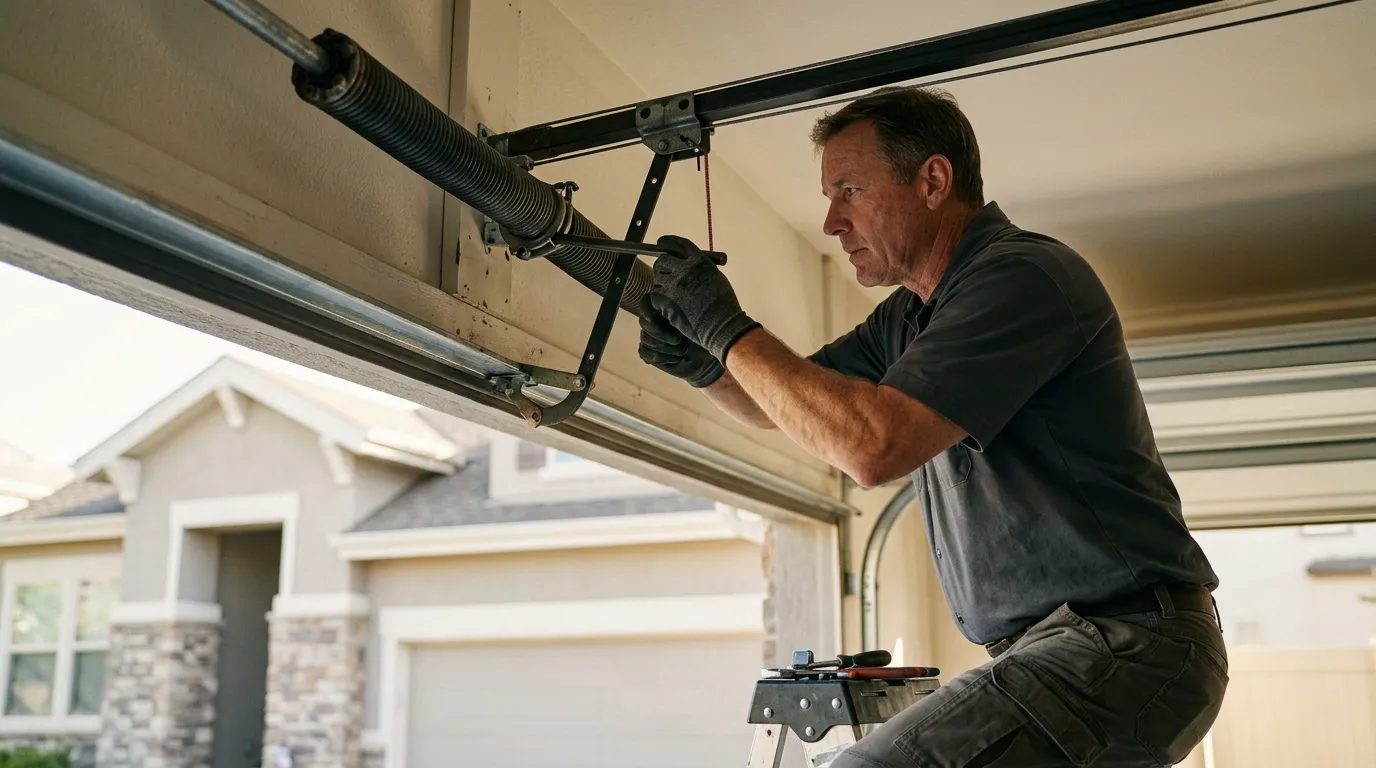
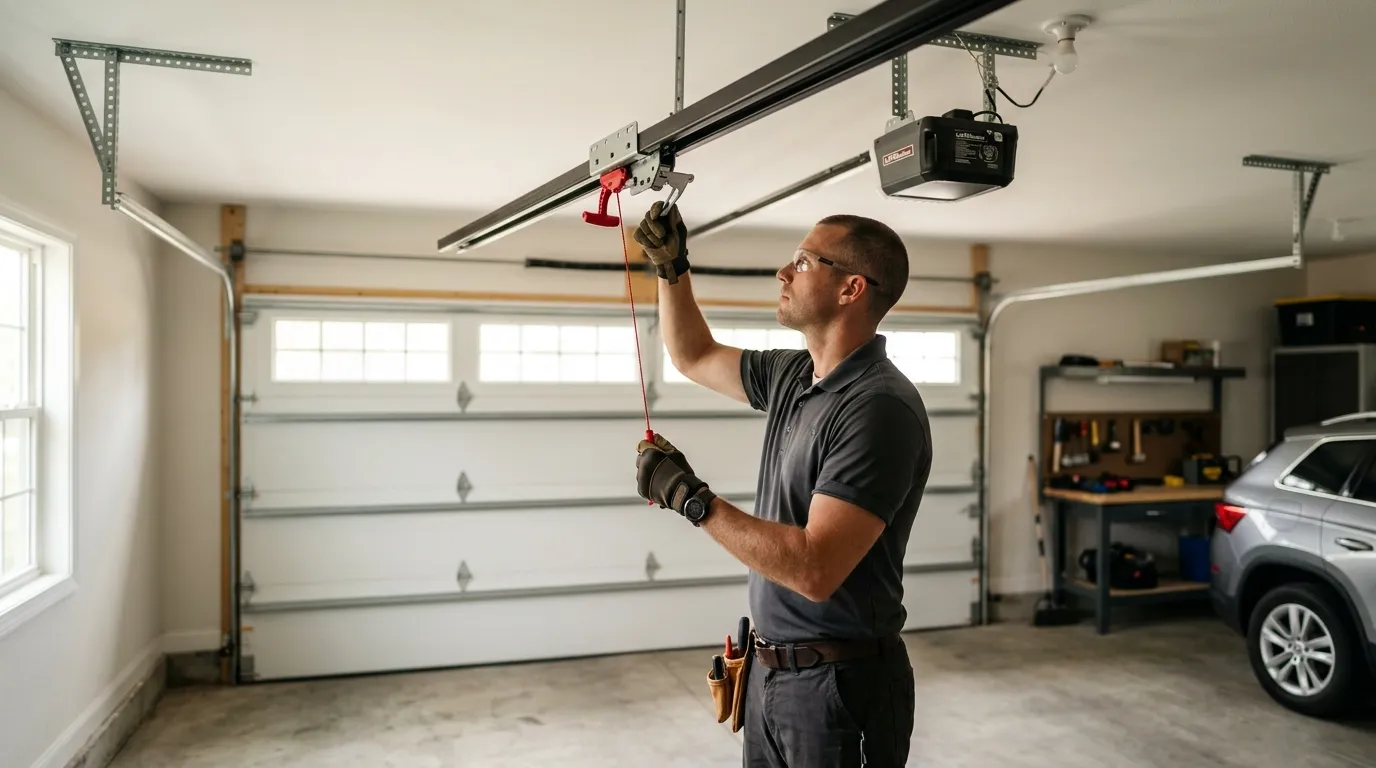
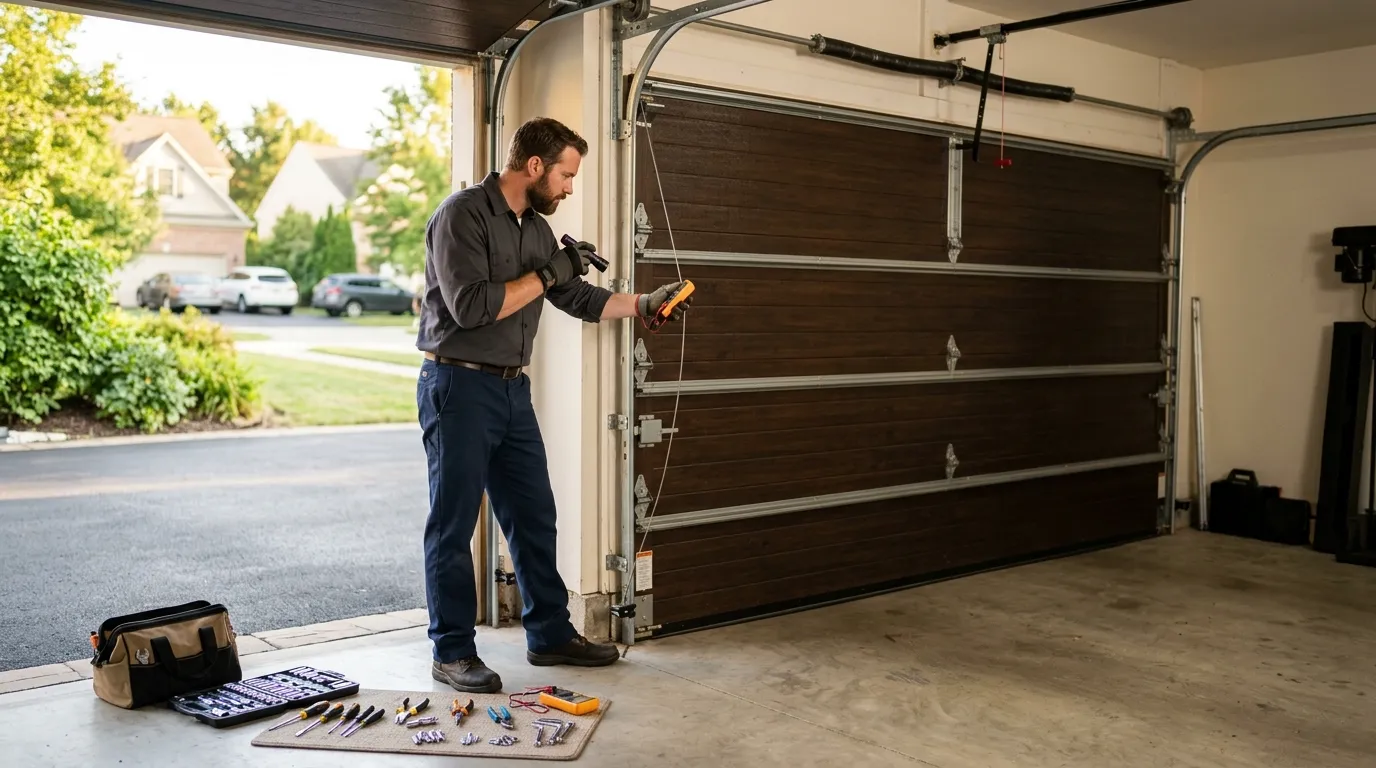
Once the new section is in, we recheck track alignment and spring tension, since a bent or missing panel often throws the whole door slightly out of square before you ever notice.
Why This Fails Locally
Most of the metro's housing stock went up between 1947 and 2006, with the typical home dating to 1981, and a lot of that construction across the area's named neighborhoods sits in the 1980s and 90s range. Steel panels from that era were not built with the coatings or gauges common today, so thirty-plus years of freeze-thaw cycling has already thinned them out in places you can't see until a dent turns into a crack.
Denver sits in a cold-severe climate band, and that matters more for panels than people expect. Steel contracts hard in a deep cold snap and expands again on the next 50-degree afternoon, and that swing works on the seams and the rivets holding each section together. Do that every winter for decades and the metal fatigues at the fold lines first, which is exactly where a panel splits when something finally hits it.
We see the same failure pattern across the service area's older stock: a bottom section that's been through enough seasonal cycling that it's brittle rather than dented, so a impact that would have just scuffed a newer panel instead cracks it clean through.
How Long You Are Without the Door
A single-panel replacement on a common size is usually the fastest job we do, because the part isn't tied to anything else in the door and the labor is mostly removal and refit. Where it stretches out is sourcing: if your door's panel profile is still in production, we can usually get you scheduled quickly. If it's an older run, that section has to be special-ordered, and the wait is set by the supplier, not by us.
Double doors take a bit longer per panel simply because there's more door to realign afterward, and if more than one section is damaged, we're checking the whole track run for wear before we call the job done, since a bent panel sometimes bent the roller carriage riding in the track with it.
We won't quote a firm turnaround without seeing the door and knowing which panel size and style you've got, but we can tell you on the first visit whether the part is a quick-order item or a wait, so you know what you're looking at before you commit to the repair instead of finding out halfway through.
What You Are Seeing
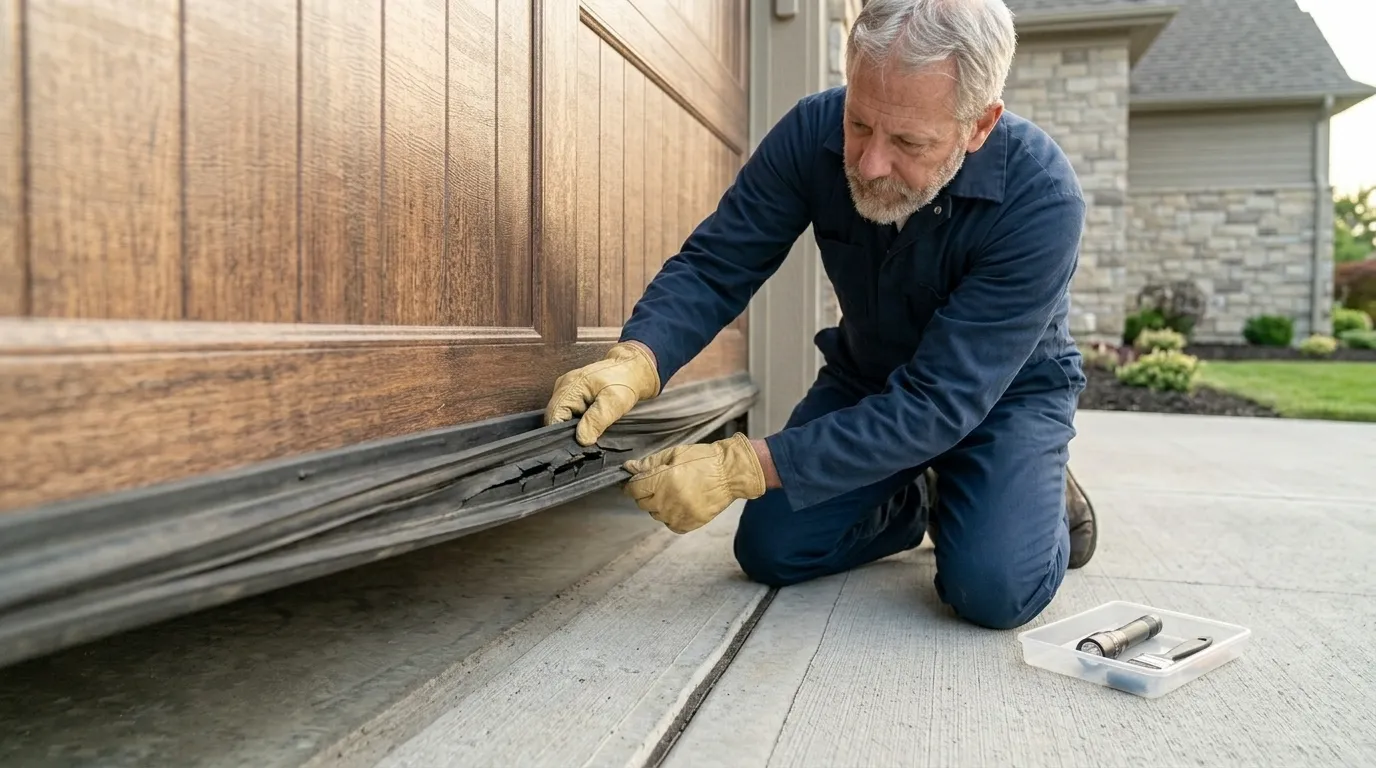
The most common call is a dent or crack low on the door, usually the bottom or second panel, from a bumper tap or a dropped ladder. On steel doors that's often cosmetic until winter, when the same spot goes brittle from repeated cold cycling and a light knock that used to just scuff the paint now punches through.
Rust at the bottom seam is the other frequent one, especially on older sections where the factory coating has worn thin over decades of snowmelt sitting against the panel edge. Once rust starts eating from the inside of a hollow steel panel, it spreads faster than it looks from outside, and a section that seems mostly fine can be structurally weak underneath the paint.
Less common but still something we see: a warped panel, usually on a door that's had one side exposed to direct sun and the other shaded, so the steel expands unevenly and the panel bows just enough to bind against the track. That one usually isn't a dent job at all, it's a straight swap, because a warped panel won't press back flat and stay there.
How it works
From “it’s stuck” to “it’s fixed”
01
Tell us what’s wrong
Describe the symptom - won’t open, loud bang, opener runs but the door won’t move.
02
On-site diagnosis
A technician tests the door under power and by hand and finds what actually failed.
03
Clear, up-front plan
You get the fix that’s needed and what drives the cost - before any work starts.
04
Repaired & tested
The repair is done, the door is set true and tested, and the work area left clean.
Serving Denver, CO - tell us what your door’s doing and we’ll take it from there.
Can you match the color of my existing panels exactly?
We'll do our best to match it, but paint fades with sun exposure over the years and manufacturers change their color formulas, so an older door may show a slight difference between the new section and the rest. If the door is old enough that the panel profile itself is discontinued, we'll tell you that up front instead of promising a seamless match.
Is it cheaper to replace one panel or the whole door?
A single panel is almost always the lower-cost option if the rest of the door is sound and the part is still available. Once multiple sections are damaged, or the panel style is discontinued and has to be special-ordered at a premium, a full door replacement often ends up close in price and gives you a door that matches top to bottom.
Why did my panel crack when it was only dented before?
Steel panels in this climate go through a wide temperature swing every winter, and that cycling fatigues the metal at the fold lines over years. A dent that sat fine for a season can turn brittle at that spot, so a knock that used to just scuff the paint eventually goes all the way through.
Do you serve areas outside Denver proper?
Yes, we work across the wider metro service area, including neighborhoods and nearby communities within roughly a 20-mile radius. Each area has its own housing mix and quirks, so if you're outside Denver itself, check the page for your specific town for details closer to your street.
Ready to get your garage door sorted?
Tell us what it’s doing and where you are in Denver - we’ll take it from there.