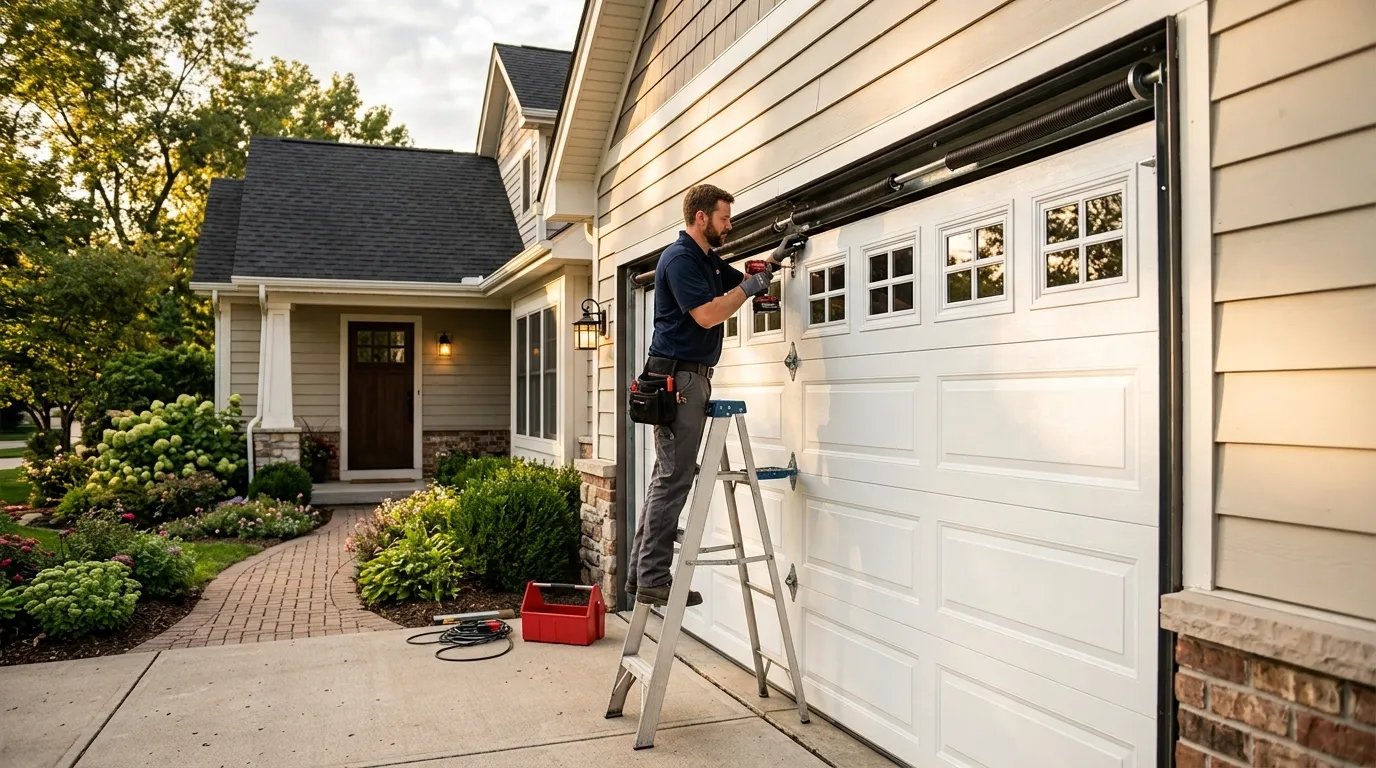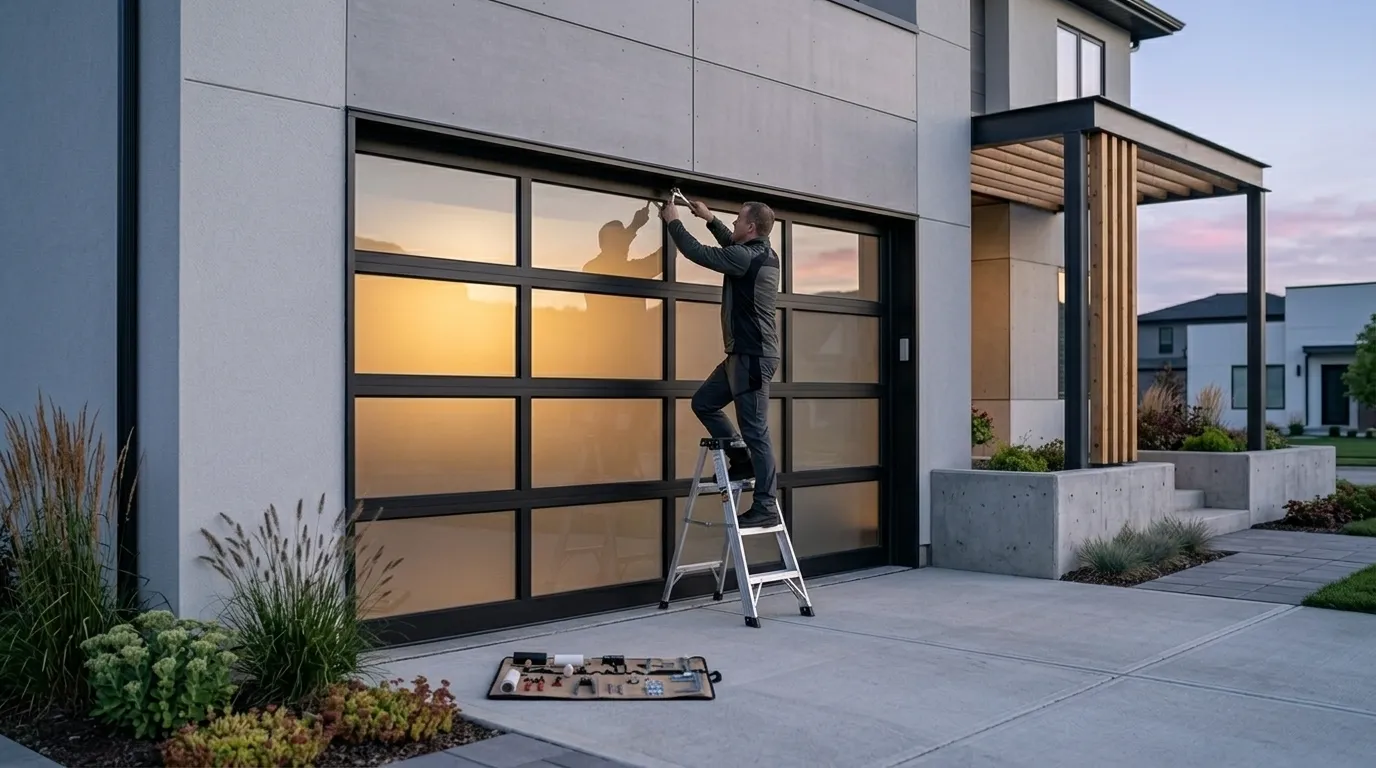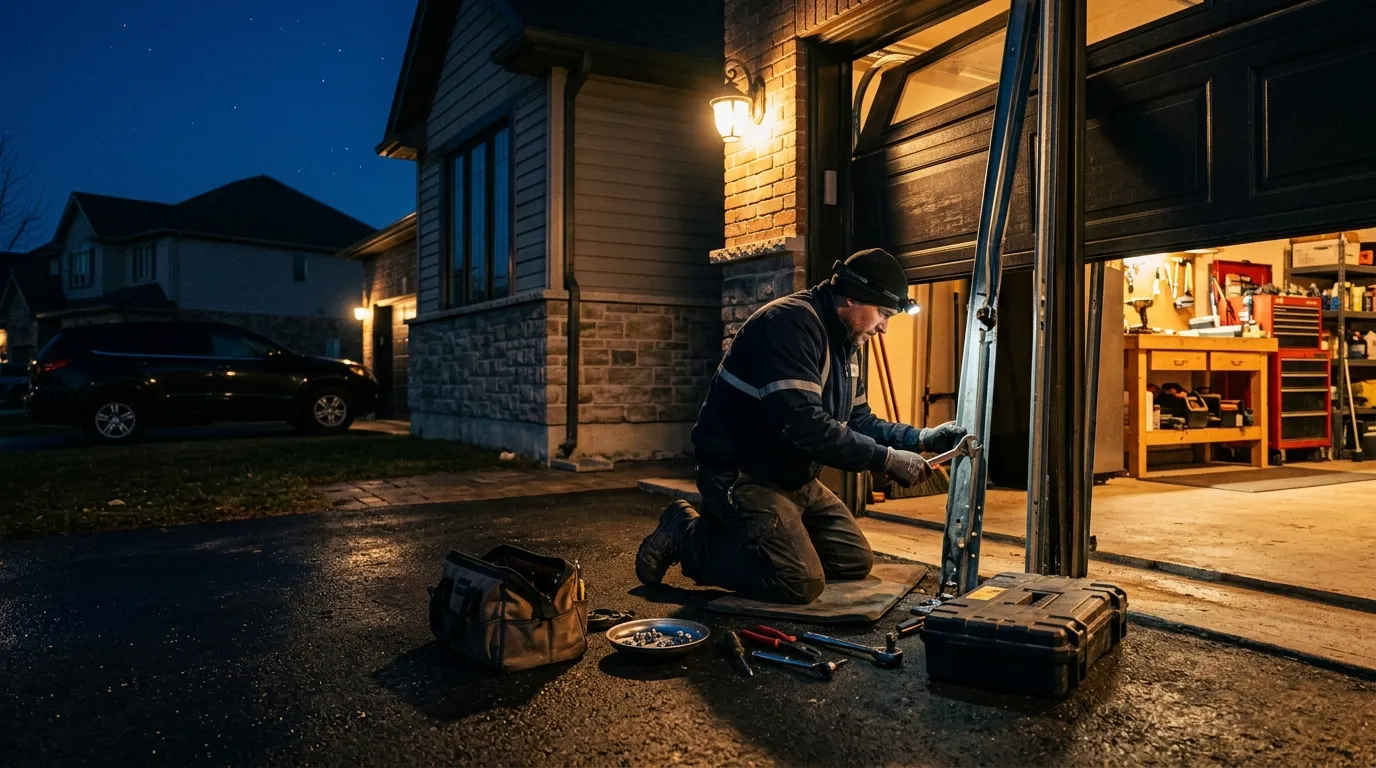
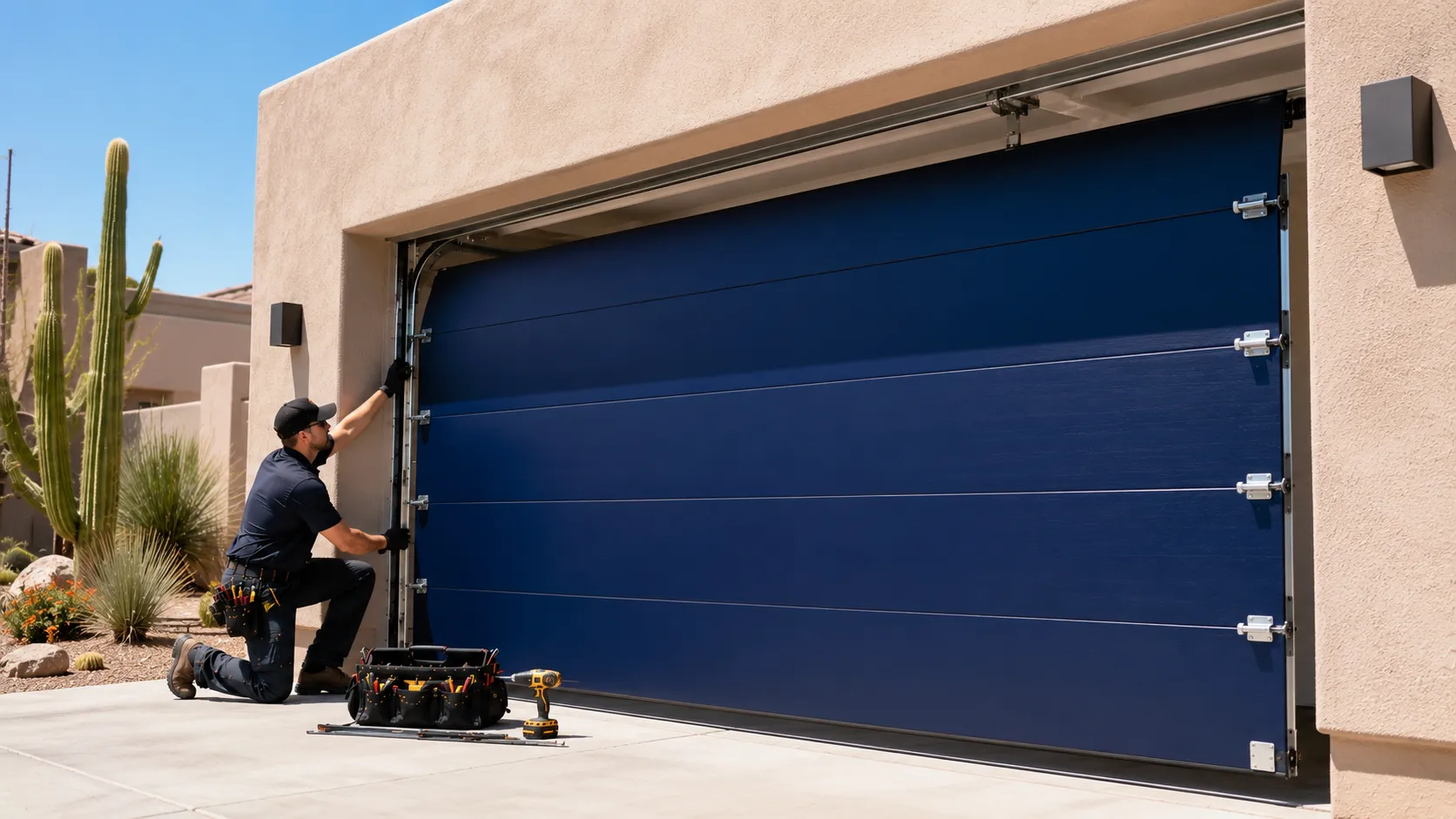
What You Are Seeing
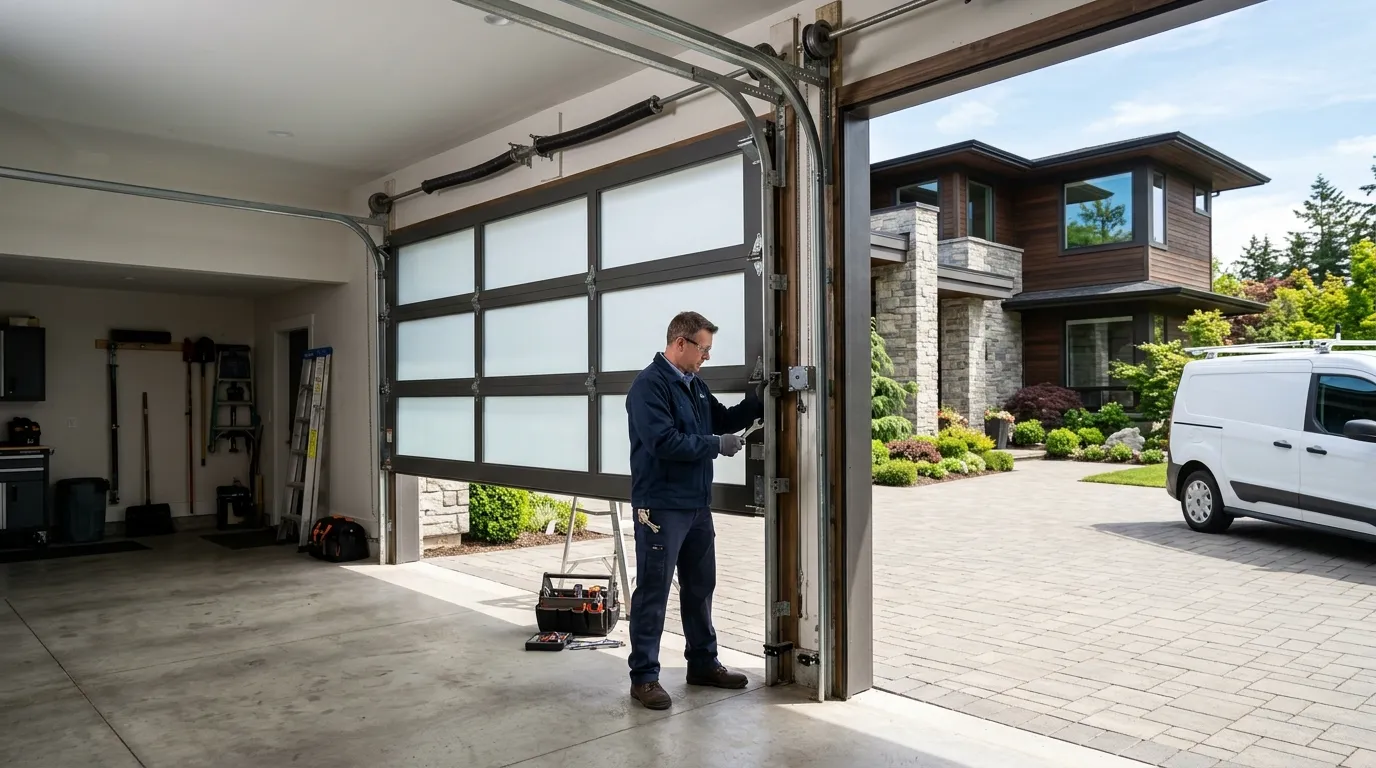
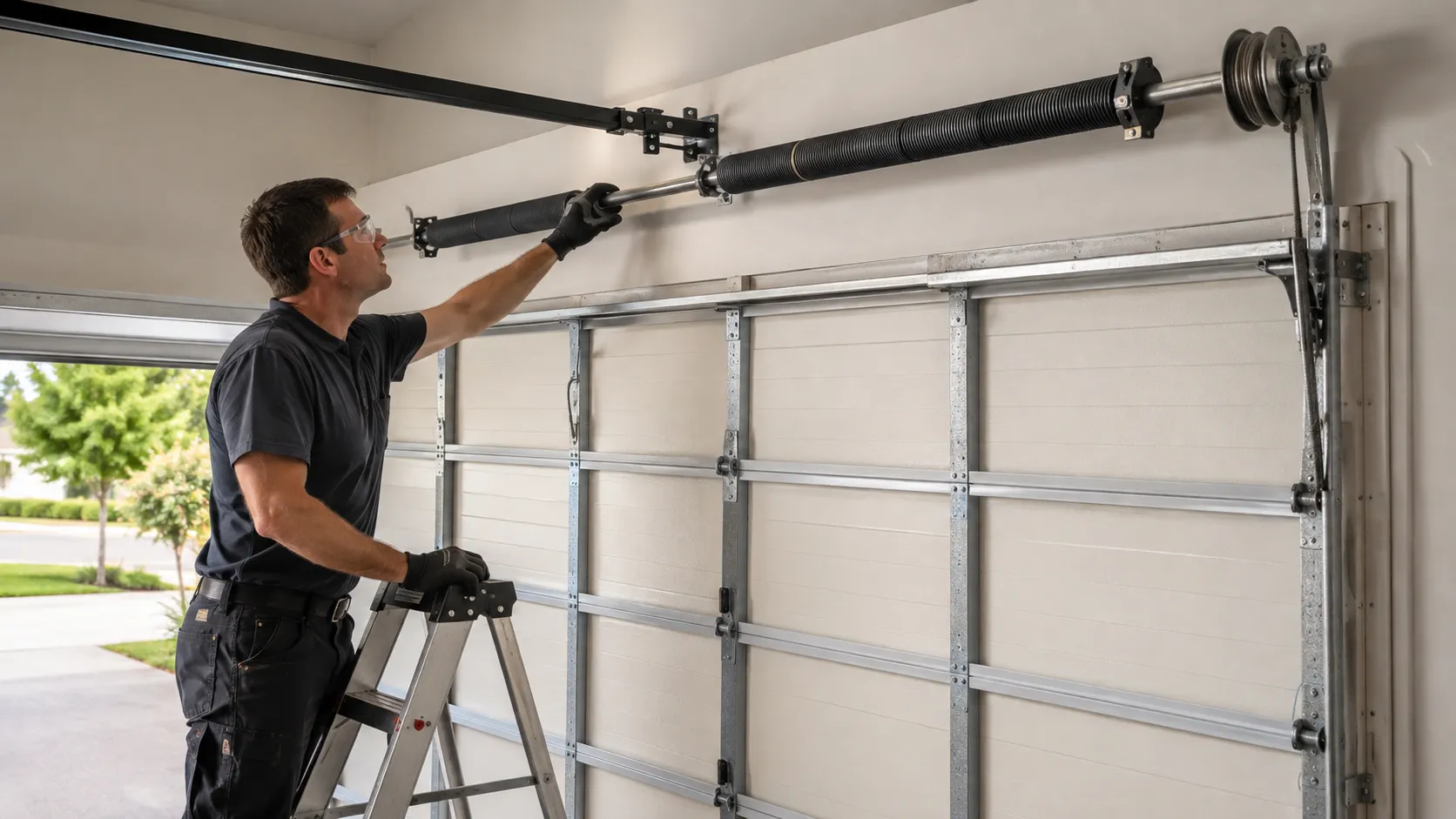
If your door is original to the house, it's likely a factory-insulated steel sectional door on torsion hardware, built to a code baseline that already assumed photo-eye reversal sensors - federal rule since 1993, so anything built around 2004 should have had them from day one. What fails on doors this age usually isn't the panel; it's the opener logic board, the torsion spring losing tension after 8,000-10,000 cycles, or worn rollers that were plastic from the factory and were never meant to last the life of the door. Cold-climate stress matters here too - Commerce City sits in the same severe cold band as the rest of the metro, and a spring that's lost 10% of its tension will bind harder on a subzero morning than it does in July. That's a different failure pattern than the warped wood panels or bent one-piece track you'd see on a house from the 1950s or 60s.
Booking a Visit
We run out of Denver, about 10 miles from Commerce City, so we schedule the visit rather than showing up same-day on a walk-up basis. When you call, have the door's rough opening width and whether it's a single or double bay - that changes which torsion spring and track kit we bring, and it saves a second trip. We'll ask what year the house was built if you know it; on a 2004-era home that usually points us toward a standard 7-foot torsion setup rather than the low-headroom hardware you'd need on an older, shorter garage. We don't keep a local branch in Commerce City, so the visit is planned, not a rolling truck responding to a same-hour page.
Where This Job Goes Sideways
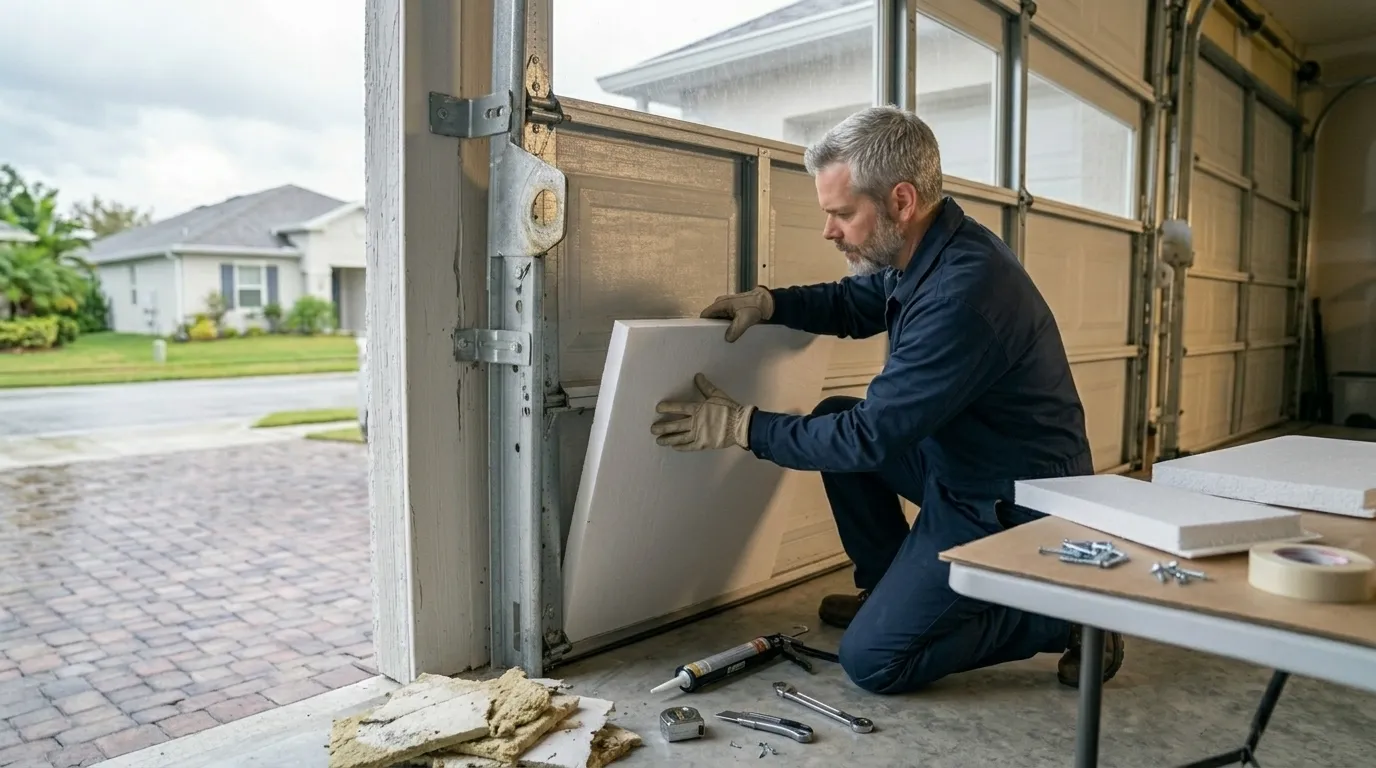
The trouble spot on a house this age is almost always the torsion spring and the drum it's wound on. If a previous owner or a discount install replaced a broken spring with the wrong wire gauge for the door's actual weight, the door will run rough - slow on the way up, or dropping fast on the way down - for years before it fails outright. We won't quote a like-for-like spring swap sight-unseen on a house we haven't measured, because a mismatch means we're back out in six months. Beyond springs, insulated steel doors from the early 2000s sometimes have foam-core panels bonding away from the steel skin at the edges after two decades of freeze-thaw cycles in this cold band - that's a full panel or door replacement, not a patch.