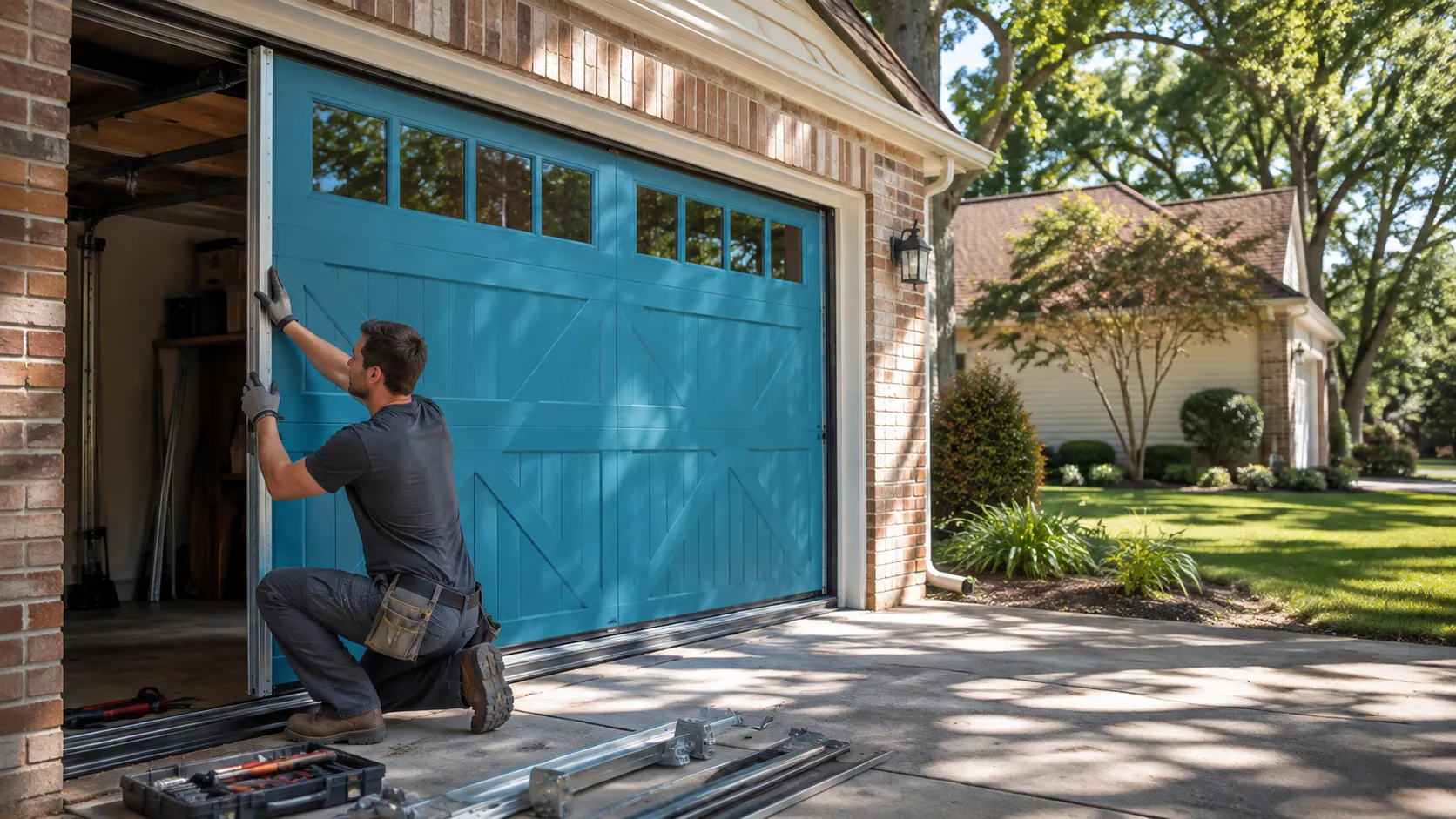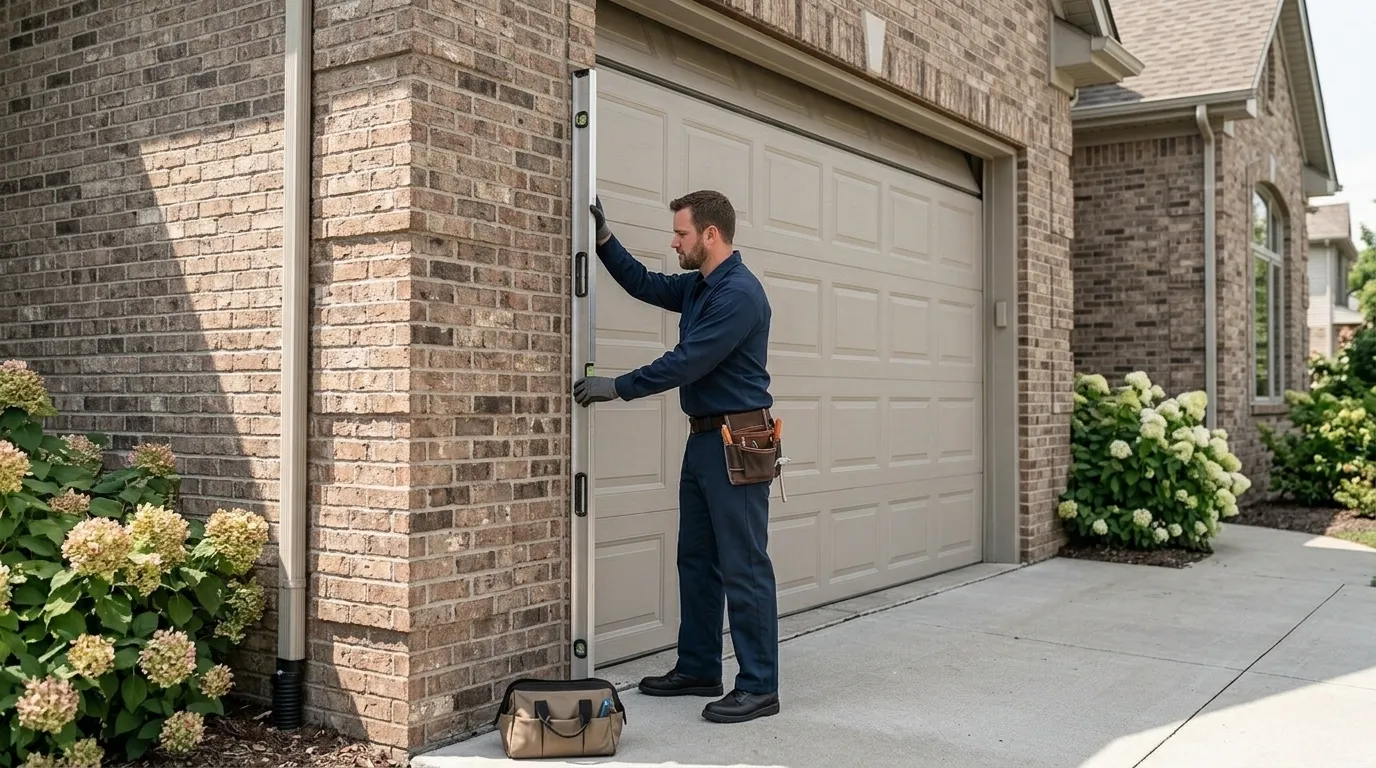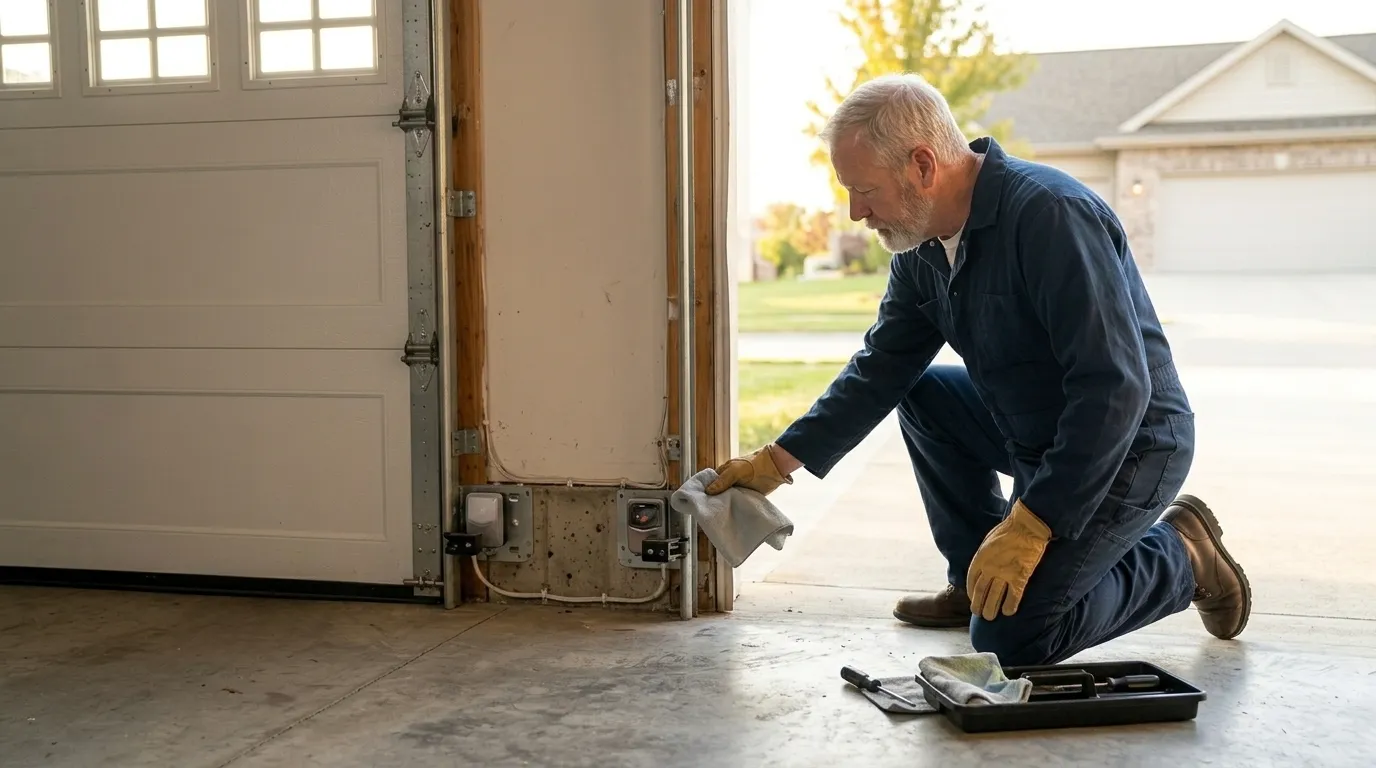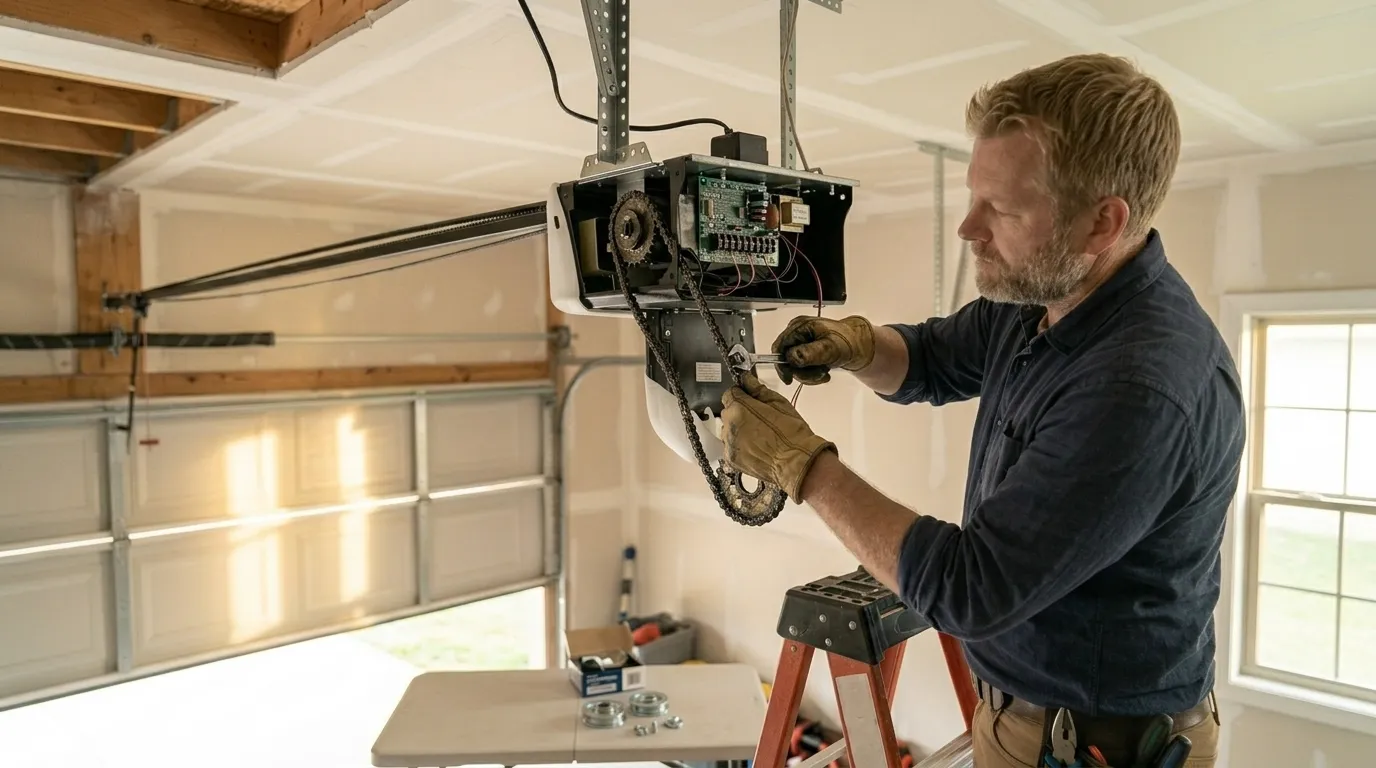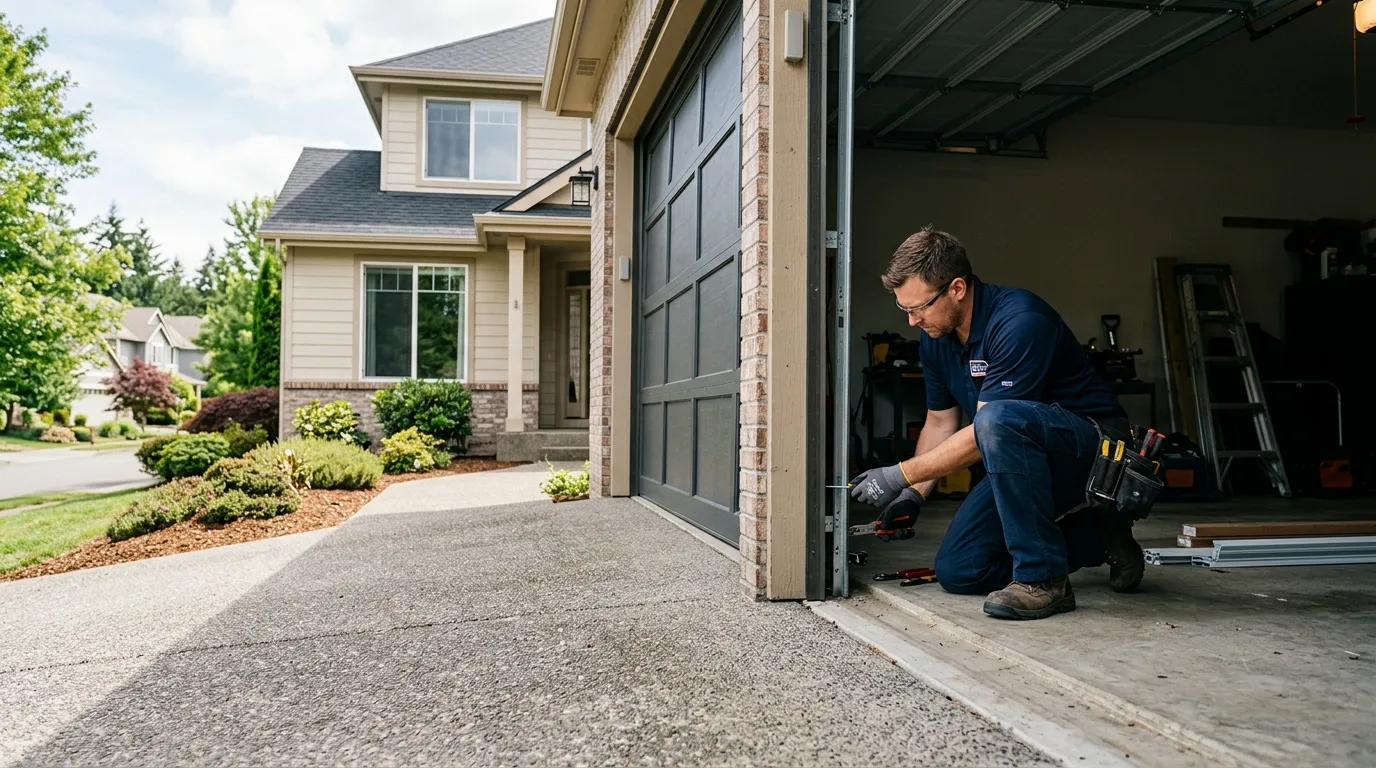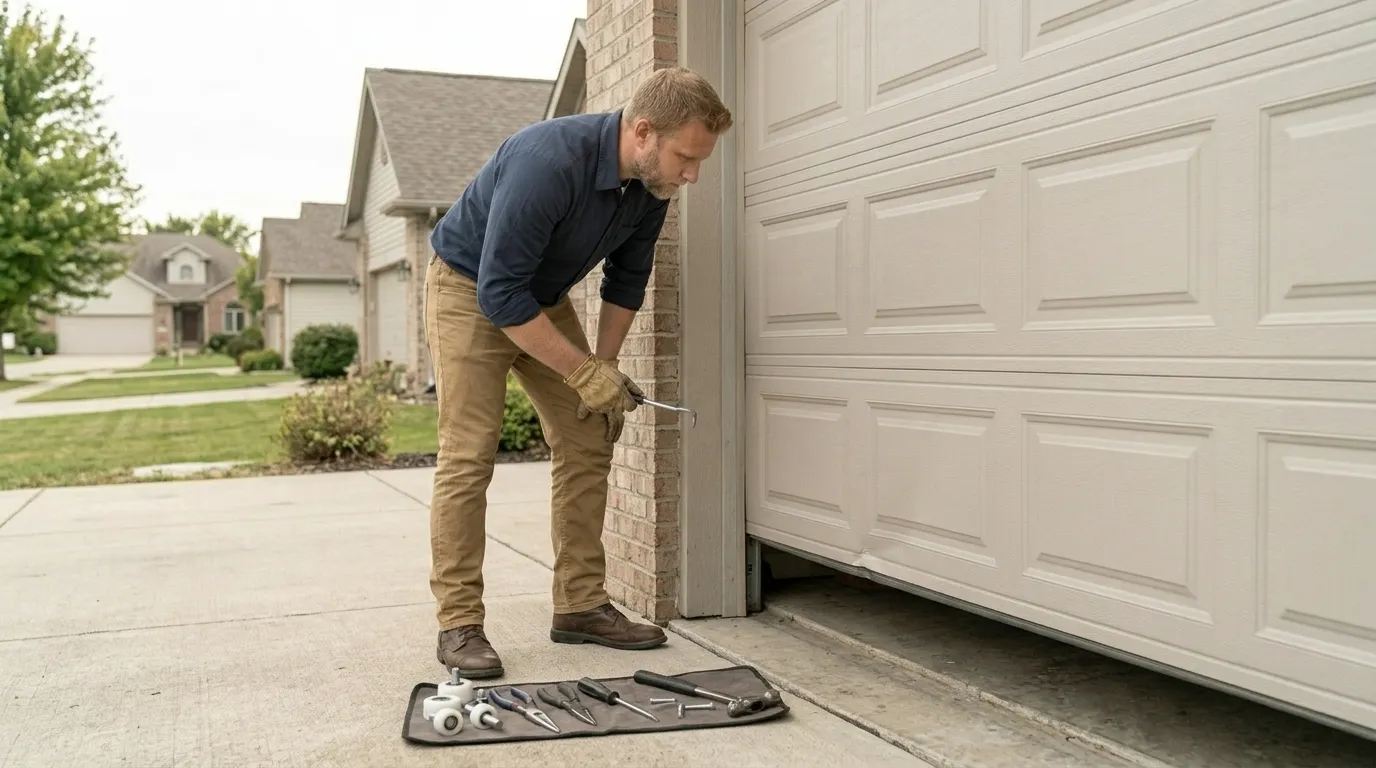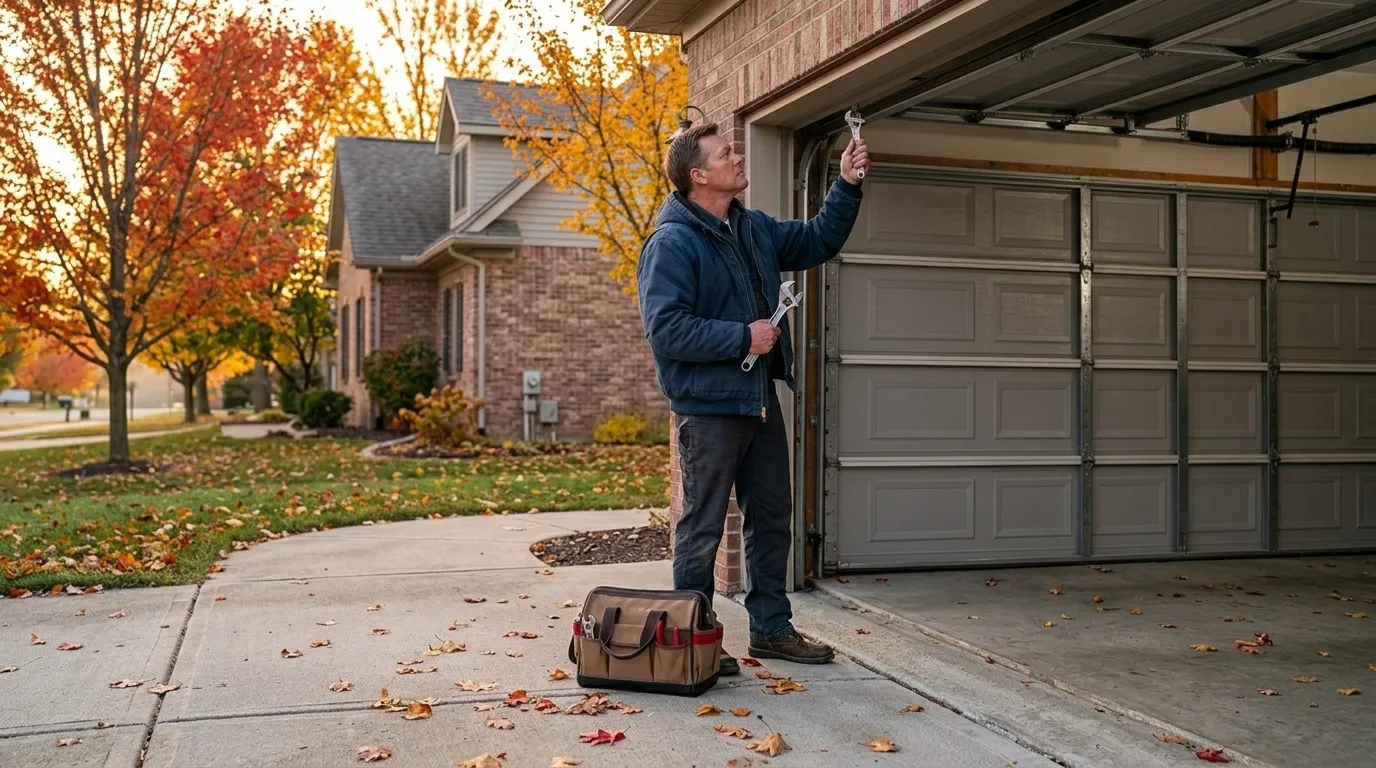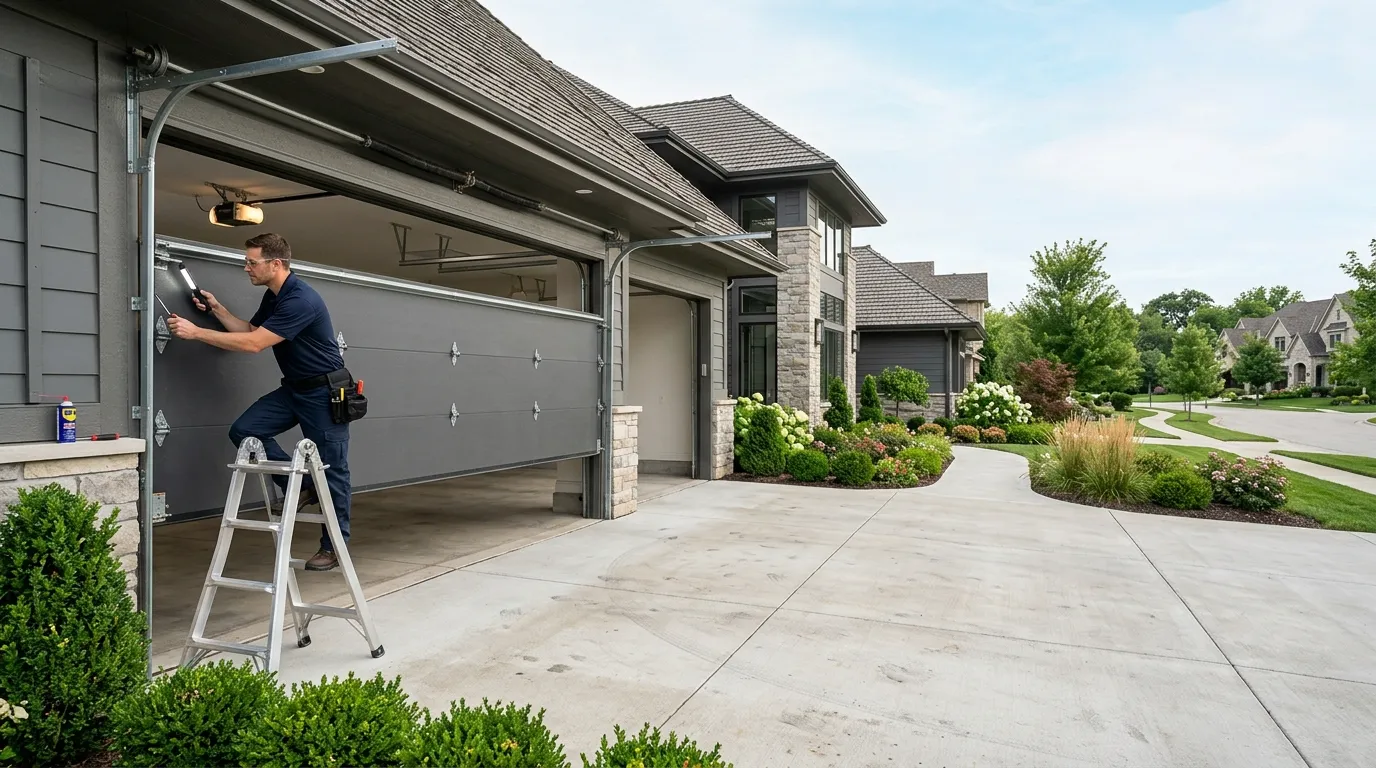
What You Are Seeing
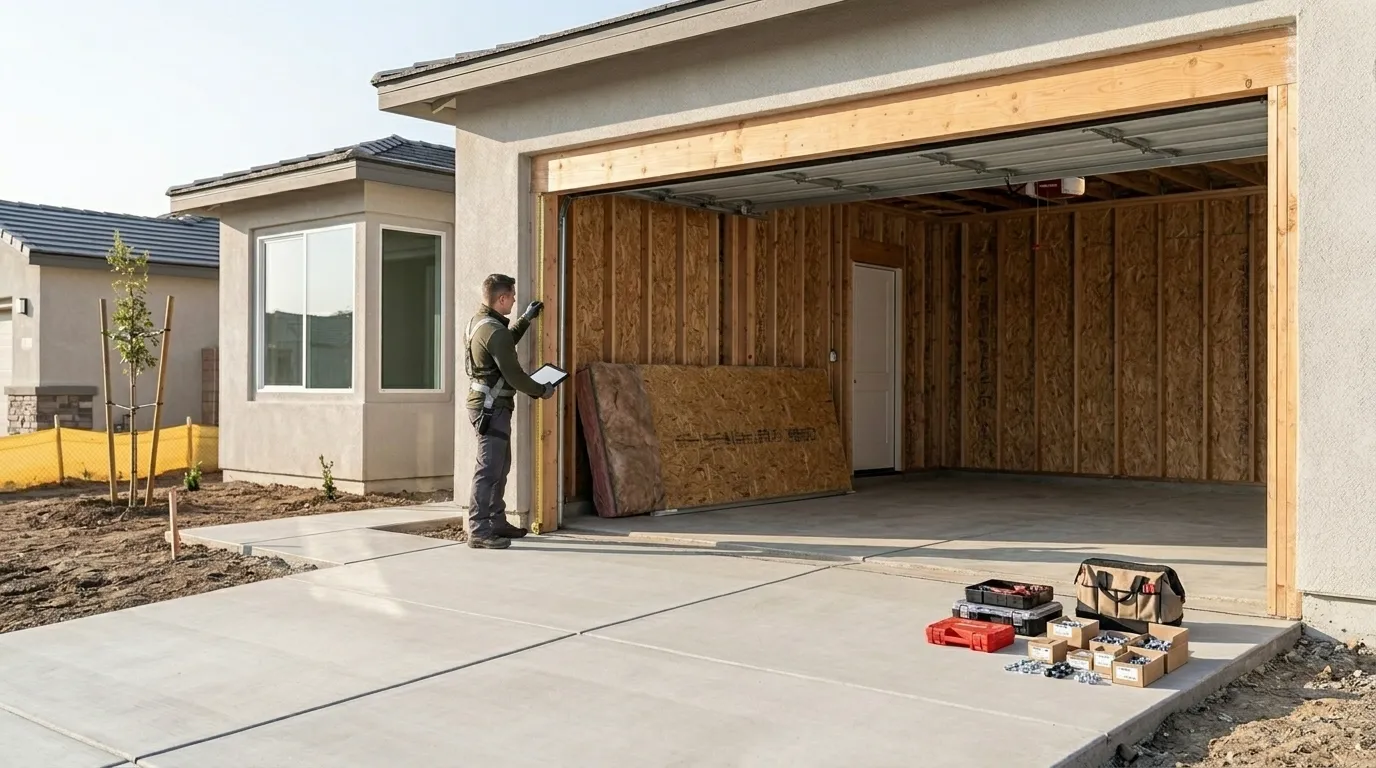
Most of Commerce City's housing dates to around 2004, which is noticeably newer than the median across the wider service area (1981). That means fewer of the older one-piece doors and side-mounted torsion setups you'd find in older Denver-area neighborhoods, and more standard sectional steel doors on extension or torsion springs installed by production builders during a fast growth period.
What that hardware tends to show after fifteen to twenty years isn't age-related failure so much as neglect. Rollers that were never lubricated start binding in the track. Cable ends fray where they were never re-tensioned after the initial settling of a new build. Openers installed by the builder are often base-model units with no battery backup, and those start losing sync with the wall button first.
The cold-climate factor here also plays a role. Steel track contracts in winter, and a door that was fine in July can start binding or reversing early in January simply because the tolerances tightened up. That's not a defect - it's a seasonal check item, and it's the kind of thing that gets caught on a maintenance visit instead of a breakdown call.
Booking a Visit
We run out of Denver, about 10 miles from Commerce City, so a maintenance visit here is scheduled, not a same-day drop-in. That's worth knowing up front - if your opener is dead and your car is stuck inside, call, but don't expect a truck within the hour.
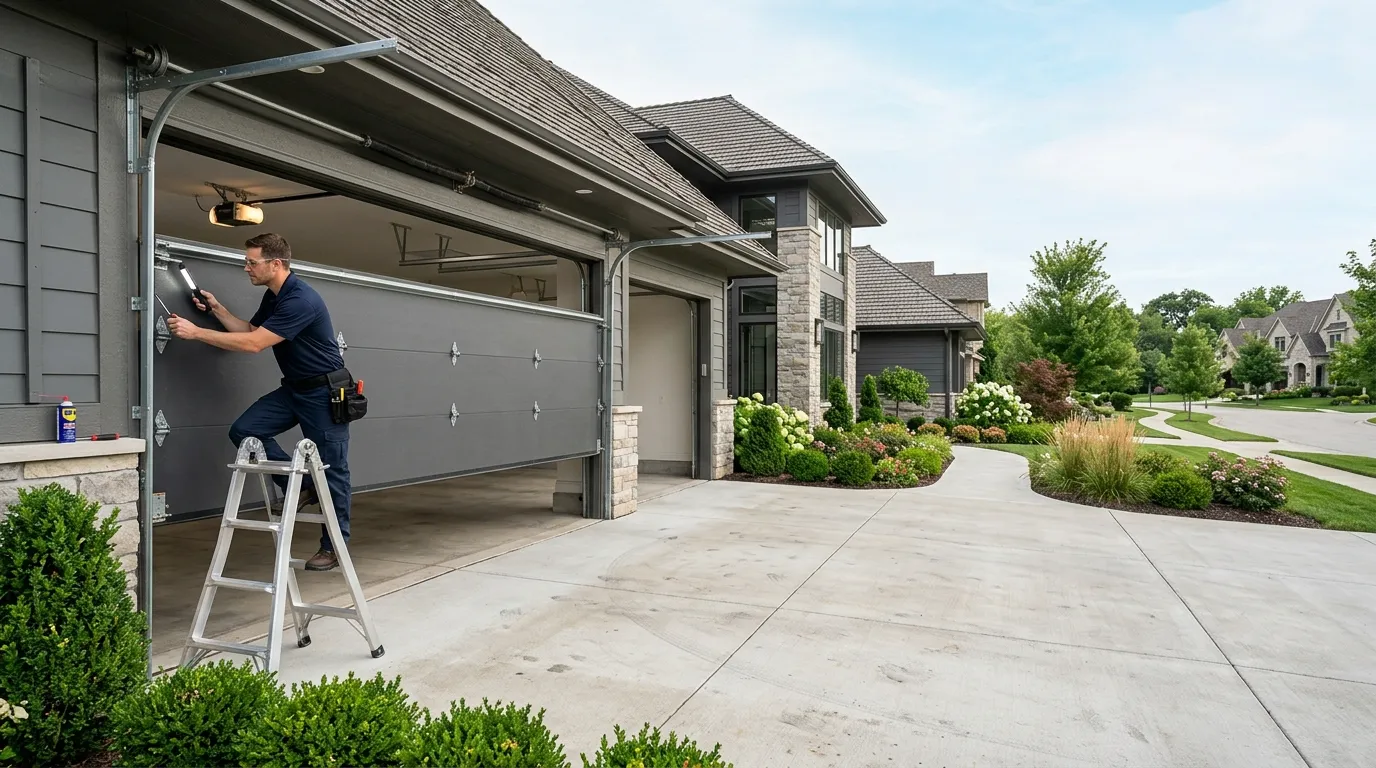
What we check on a standard visit: spring tension and balance, cable and drum condition, roller and hinge wear, track alignment, opener force settings and the auto-reverse safety test, and weatherseal condition. On a 2004-era door that's had regular use and no maintenance, we usually find at least one of these needing attention - most often the spring balance has drifted enough that the opener is doing more lifting work than it should.
Bring us the make and rough age of your opener if you know it. Builder-installed openers from that era vary a lot in parts availability, and knowing what we're dealing with before the truck leaves Denver saves a second trip.
Where This Job Goes Sideways
The most common mistake we see in Commerce City is treating a 2004-built door like it's still new because the house is. Builder-grade hardware from that period wasn't premium to begin with, and two decades of Colorado winters is real wear even without heavy daily use.
The second mistake is DIY spring adjustment. Because these are mostly standard torsion setups rather than the older, harder-to-source hardware you'd find on pre-1980s stock elsewhere in the service area, parts are easy to get - which makes people overconfident about doing the swap themselves. The tension involved doesn't care how common the part is.
Third: skipping the opener's force-setting check. A door that's slightly out of balance gets compensated for by cranking up the opener's lift force, which masks the real problem and accelerates wear on the drive gear. We catch this often enough on maintenance visits that it's worth mentioning specifically - a door lifting fine under high opener force isn't a door that's fine, it's a door about to need two repairs instead of one.