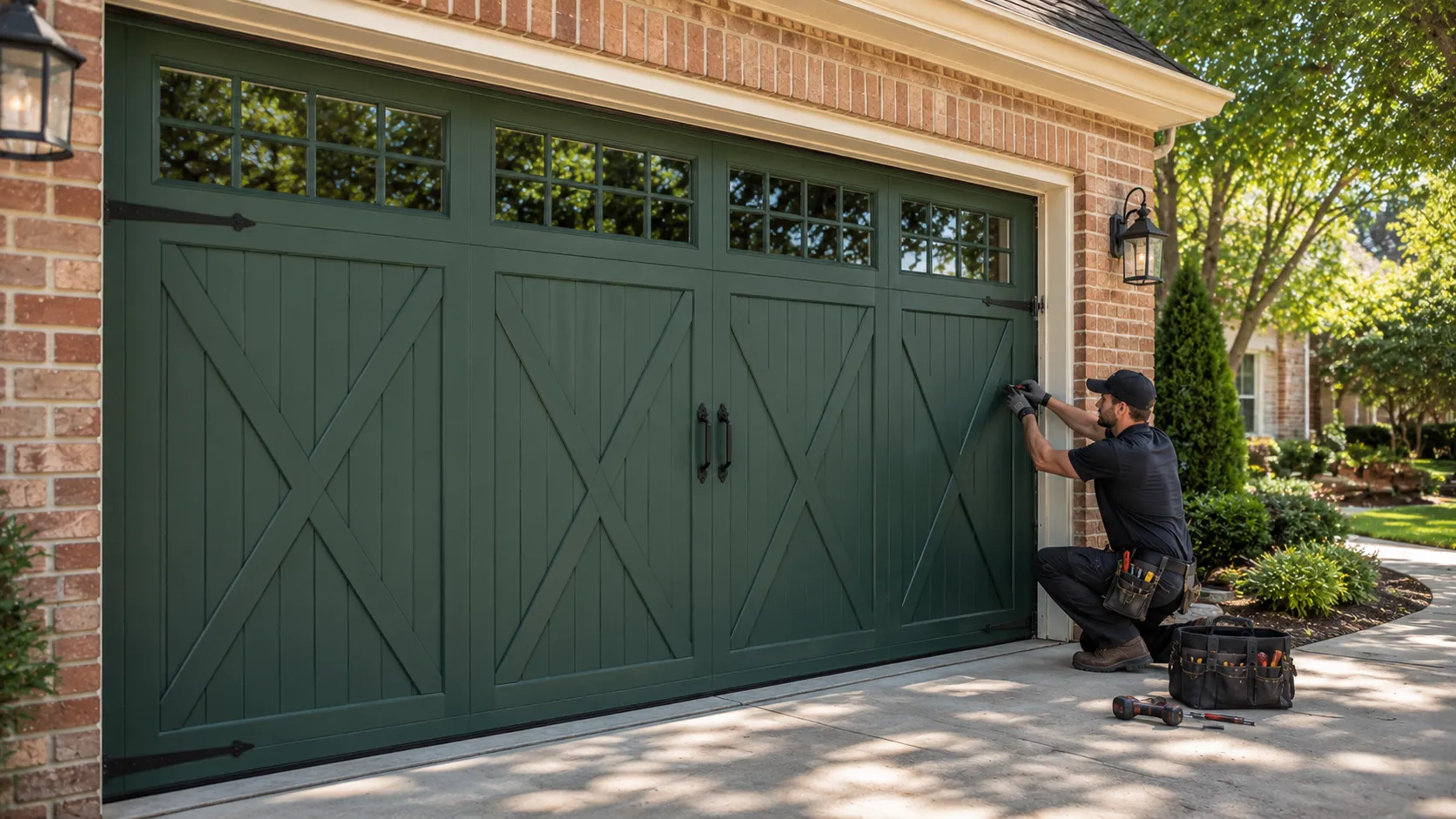
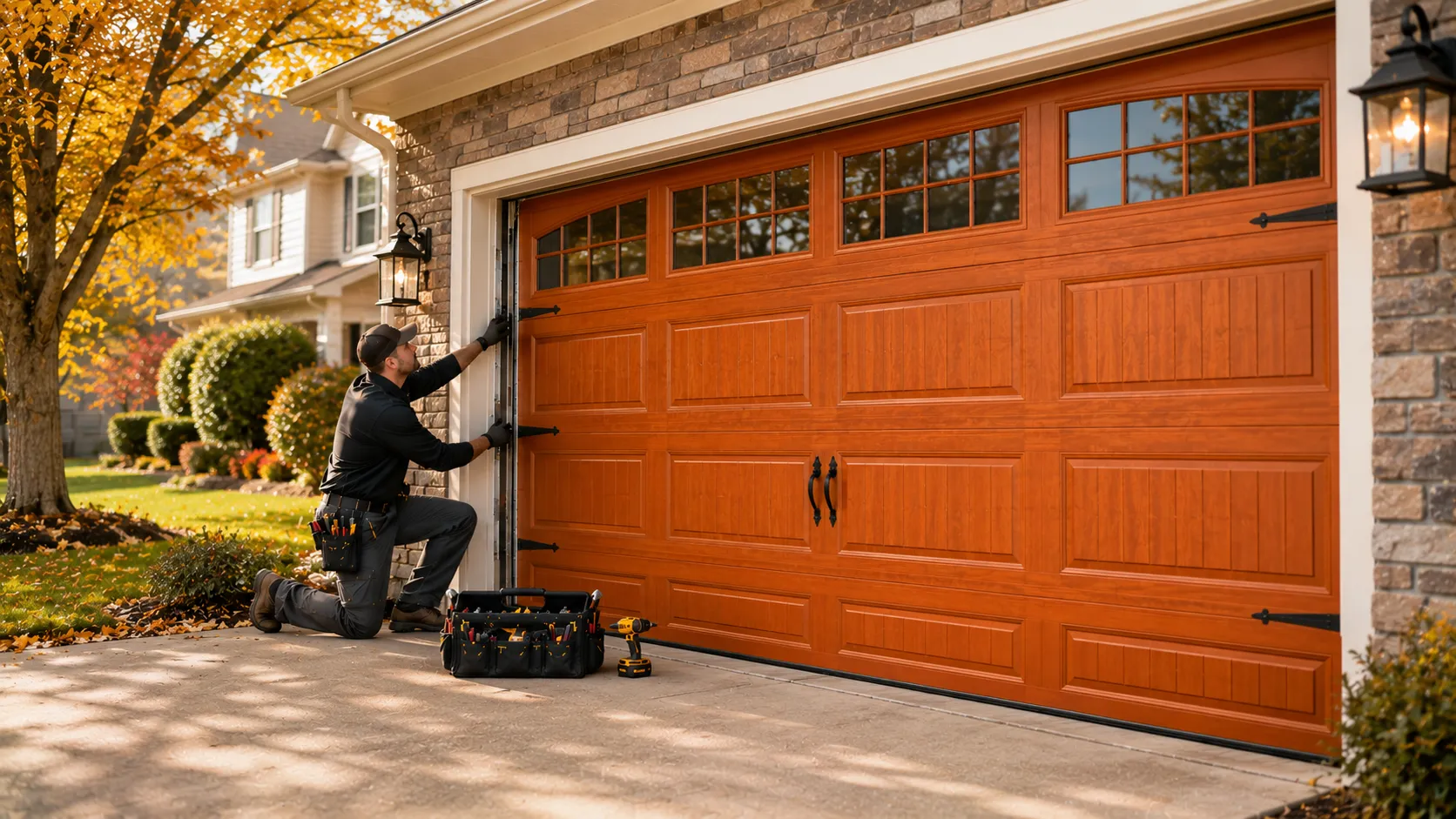
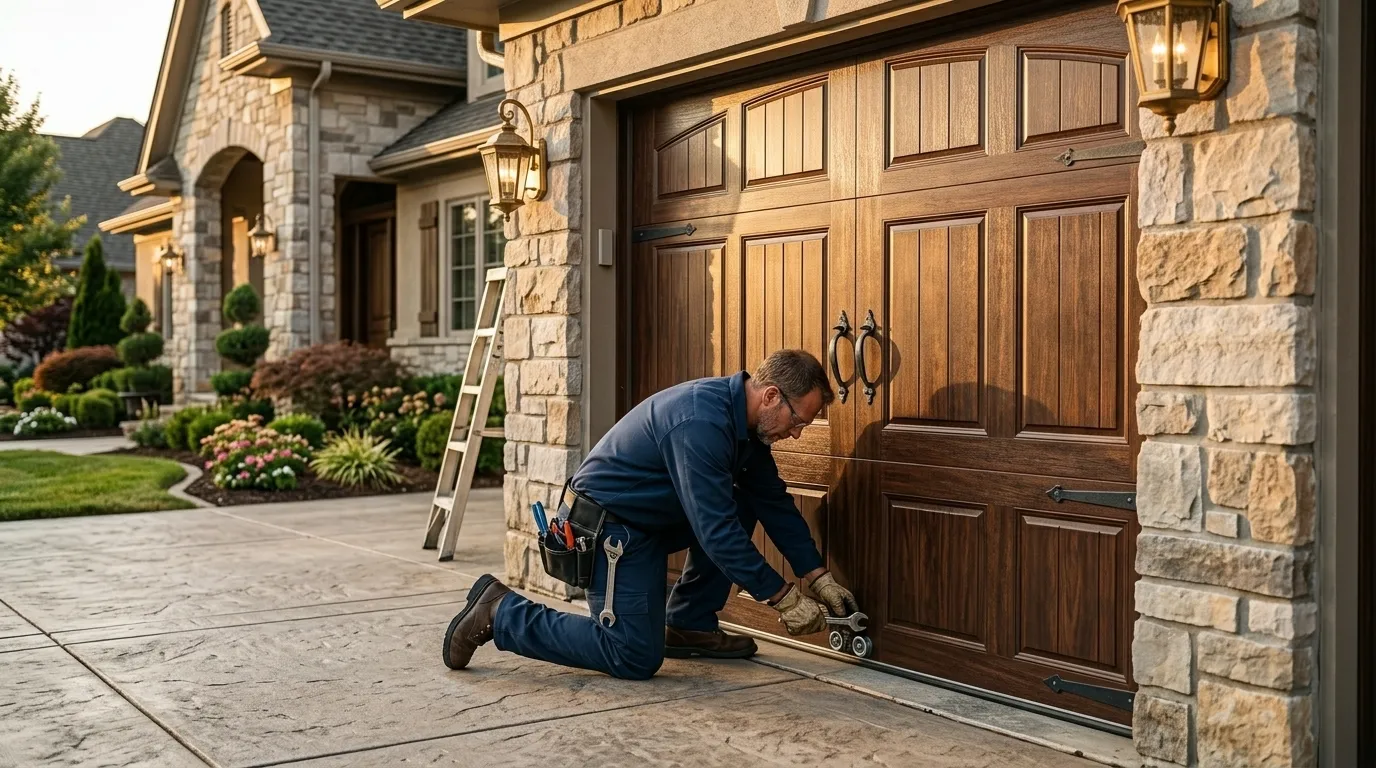
Garage Door Repair for Commerce City's Original Hardware
Commerce City homes mostly went up after 2000, so the springs and openers on most doors here are still the originals. We travel from Denver to fix them.
Most houses in Commerce City were built around 2004, which means a lot of the garage door hardware out there has never been touched. That's the first thing to understand before you pick up a wrench: if your door is original to the house, you're not dealing with a door that's had three owners and two spring swaps. You're dealing with one set of torsion springs, one opener, one set of cables, all roughly the same age as the driveway.
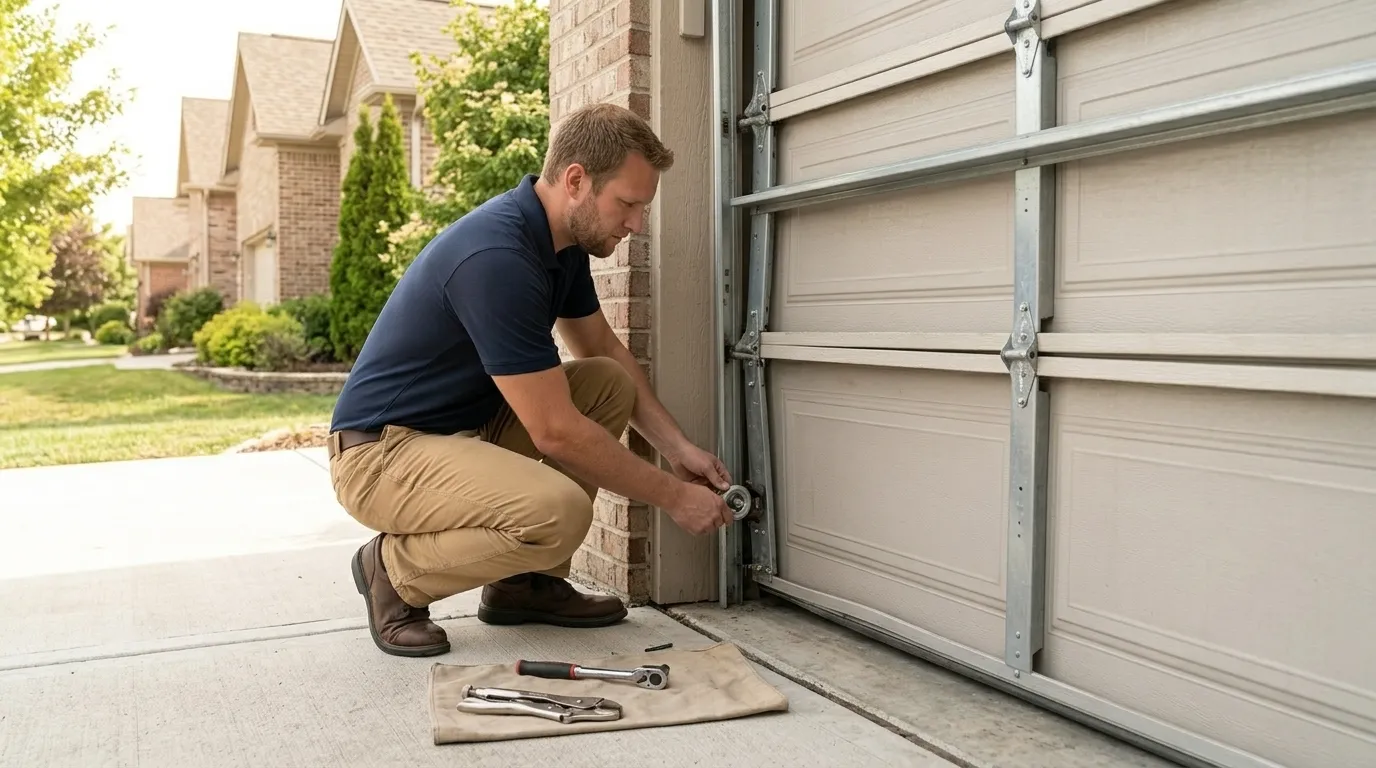
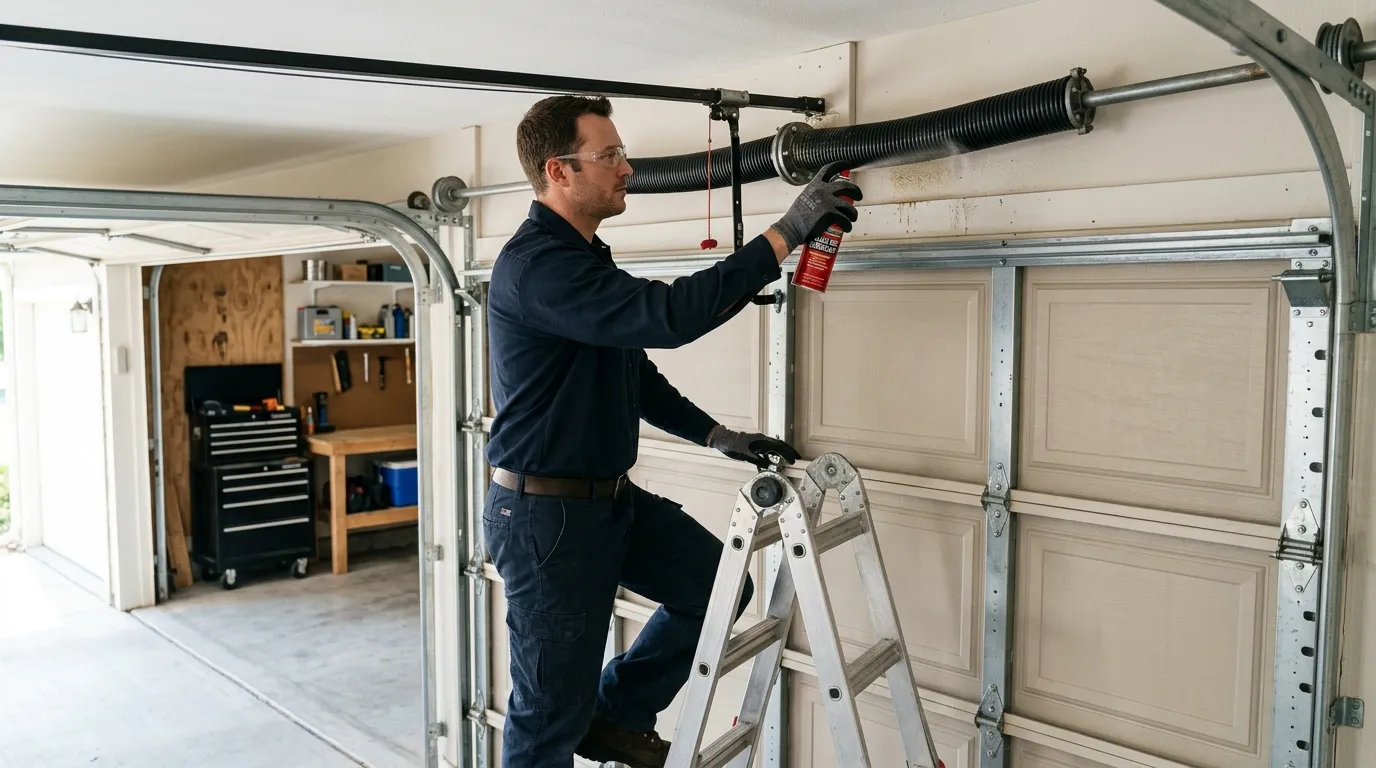
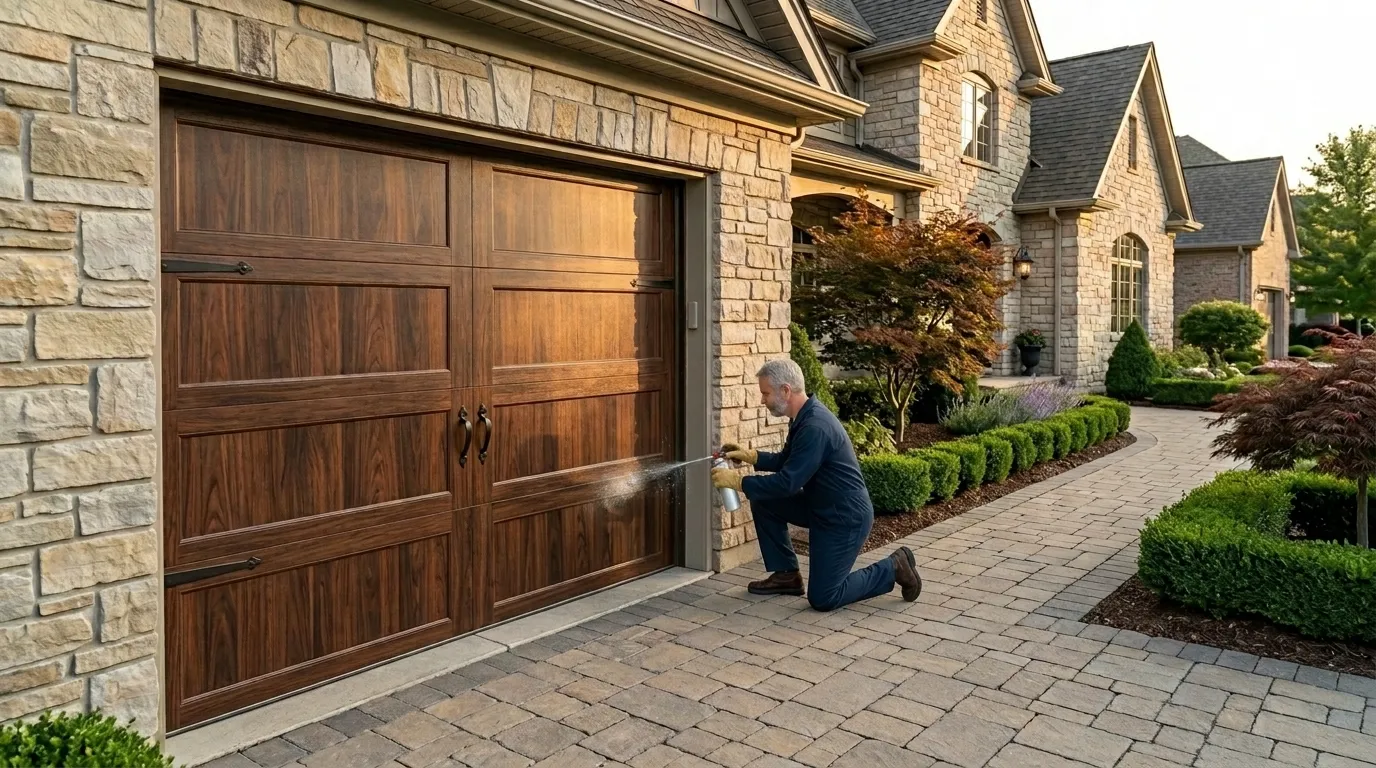
There are things you can safely do yourself. Lubricating rollers and hinges, checking that the track bolts are snug, testing the auto-reverse safety feature by placing a block under the door and watching it stop. There are things you should not do yourself, and a torsion spring on a door this age is at the top of that list. A spring that's held tension for close to two decades doesn't fail gently - it lets go all at once, and the bar it's wound around can put someone in the hospital. If the spring looks stretched, rusted, or has a visible gap in the coil, that's not a project, that's a call.
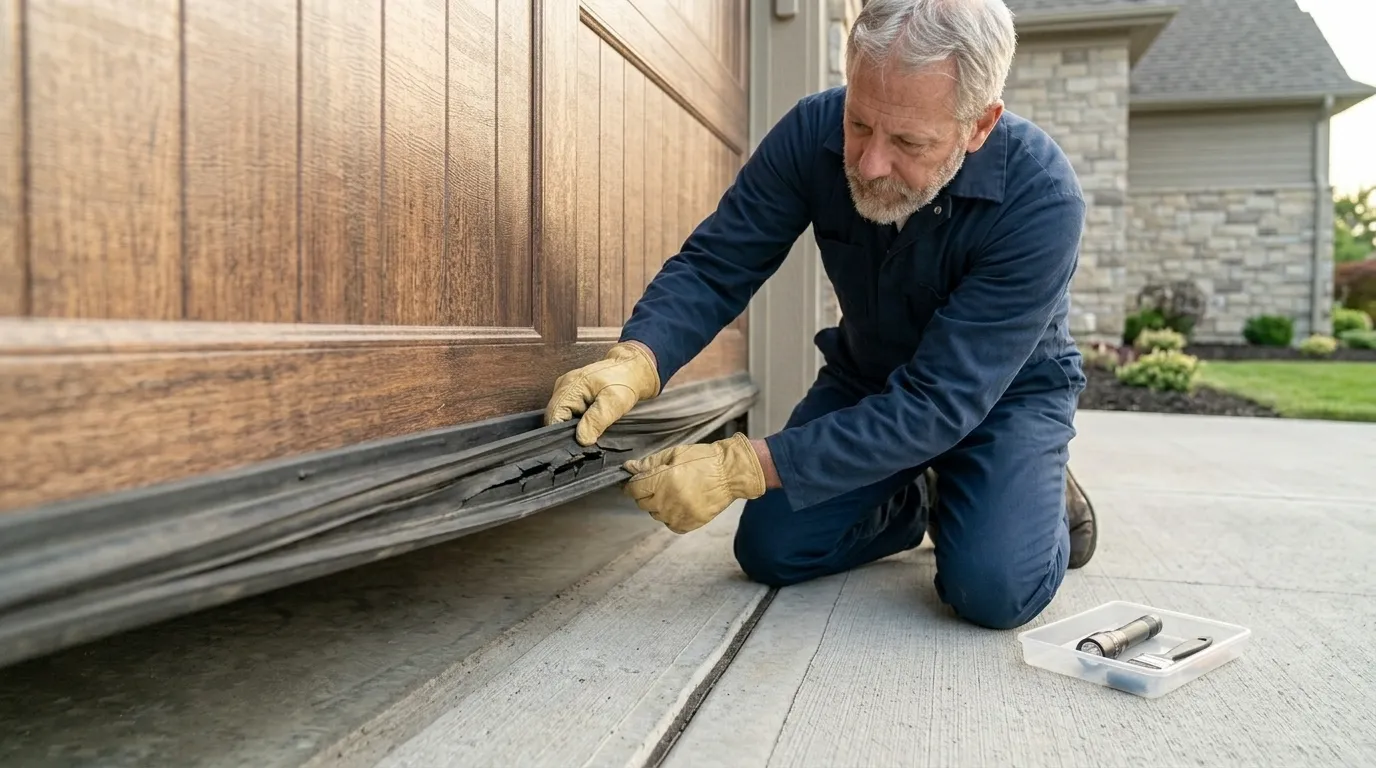
One honest limit: if the door panel itself has water damage behind the weatherstrip, no amount of spring or cable work fixes that. At that point you're looking at a new door, not a repair.
What You Are Seeing
On a door with original 2004-era hardware, the failure pattern is pretty consistent. The spring goes first, usually announced by a loud bang from the garage and a door that won't budge or that slams down instead of lowering. Next most common is the opener - the drive gear inside the unit wears down after enough cycles, and you get a motor that hums but a door that doesn't move, or a trolley that disconnects from the carriage.
Rollers are the quiet one. Steel rollers on 20-year-old track wear a groove into the track itself over time, and by the time you notice the door is loud or jerky, the track may need straightening or replacing along with the rollers, not just a lube job.
Because this area sits in a cold, severe winter climate, temperature swings put extra strain on aging springs and lift cables. Steel contracts in the cold, and a spring that's already near the end of its rated cycle count is more likely to snap on a January morning than a July afternoon. If your door has gotten harder to lift by hand as the temperature dropped, that's the spring telling you it's close to done, not a coincidence.
Booking a Visit
We run out of Denver, about 10 miles from Commerce City, so we don't keep a branch or a truck parked in town - we schedule the job, load the parts most likely to fit a house from this era, and drive out. That means we ask more questions up front than a company with a local depot might: age of the door, whether it's ever been serviced, what the opener brand is if you can see it on the housing.
We don't promise a same-hour response for this suburb, and we won't pretend otherwise. What we can do is get the diagnosis right the first trip by knowing, before we arrive, that a house built in this window almost certainly has the door and opener it shipped with. That cuts down on guesswork and second visits for the wrong part.
Why This Fails Locally
Commerce City's housing stock skews newer than a lot of the wider Denver area, where homes commonly date back to the late 1940s through the 2000s. Here, the concentration around 2004 means the springs, cables, and openers on an average house are all roughly the same age - there's no staggered replacement history to fall back on. When one part fails, the others aren't far behind.
The cold climate rating for this region matters more than people expect. A torsion spring is rated for a number of open-close cycles, and cold steel is more brittle than warm steel. A spring that's already near its cycle limit after 20 years of use is far more likely to snap during a hard freeze than during a mild stretch. That combination - original-era hardware plus a severe cold climate - is the specific reason this fails here the way it does, not a generic '
How it works
From “it’s stuck” to “it’s fixed”
01
Tell us what’s wrong
Describe the symptom - won’t open, loud bang, opener runs but the door won’t move.
02
On-site diagnosis
A technician tests the door under power and by hand and finds what actually failed.
03
Clear, up-front plan
You get the fix that’s needed and what drives the cost - before any work starts.
04
Repaired & tested
The repair is done, the door is set true and tested, and the work area left clean.
Serving Denver, CO - tell us what your door’s doing and we’ll take it from there.