Booking a Visit
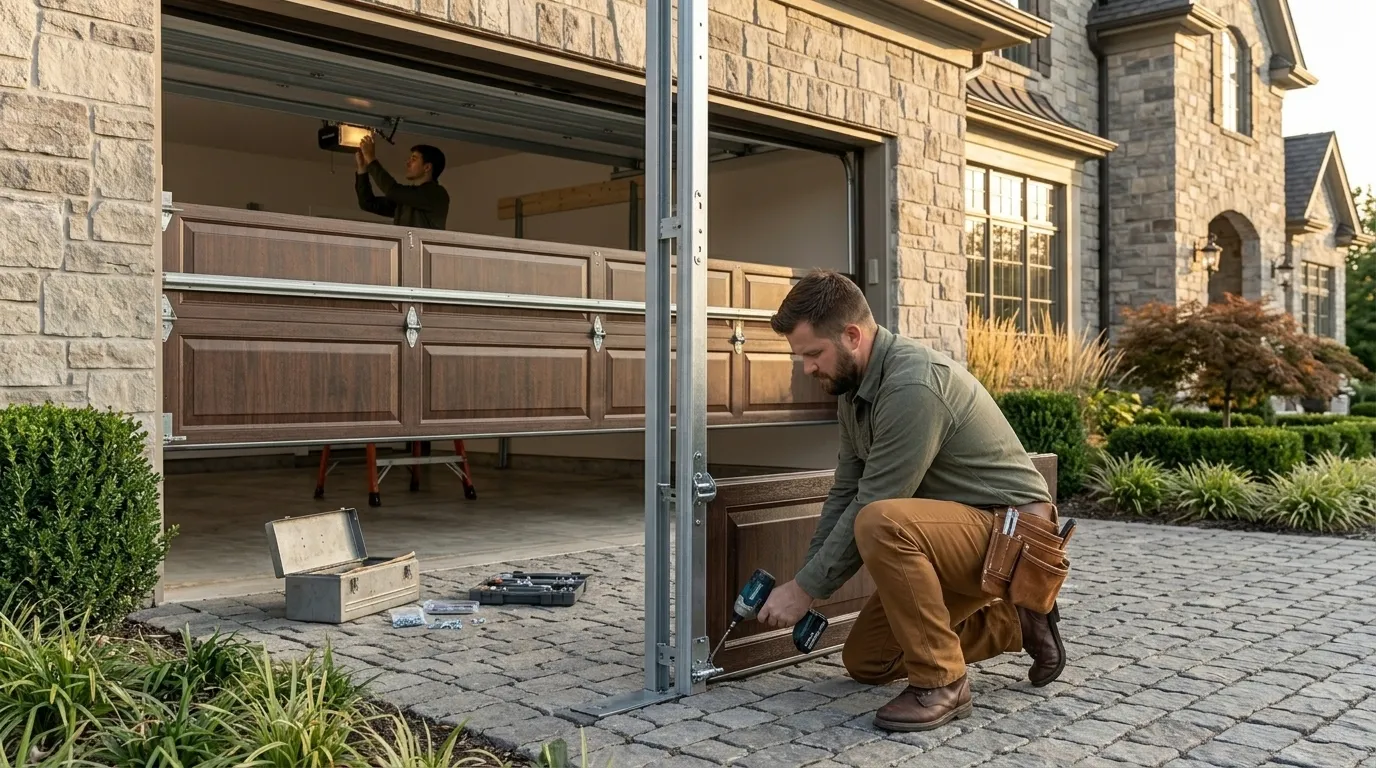
When you call, we ask the build year of the house if you know it, whether the opener chain-drives or belt-drives, and whether it still has a working wall button or you're already down to the emergency pull cord. For a lot of Columbine addresses the answer is 1976 or close to it, and that alone tells us most of what we need about the mounting hardware and the rail length we'll be bringing. We schedule the opener install as its own visit rather than bundling it into a general repair call, because a full swap - old unit down, new rail up, safety sensors aligned, wall control wired - runs longer than a spring or cable job. If you want a look at what a full install involves before you book, our main opener page for the Denver area covers the mechanics of it: /garage-door-opener-installation-denver-co. For anything specific to houses in this town, our local page is here: /columbine-garage-doors/.
Can You Do This Yourself
Swapping an opener yourself is doable if you're comfortable on a ladder with a wired garage circuit and you've done it before. Where it goes wrong most is the safety sensor alignment and the travel-limit setting - get either wrong and the door either won't close on its own or it'll come down on something it should have stopped for. If your house still has the original 1976 opener, there's a decent chance the wiring at the outlet or the switch box hasn't been touched since, and that's not something to guess at while you're up on a ladder alone. We'll say plainly: we don't do the electrical panel work if your circuit needs upgrading first - that's a licensed electrician's job, and we'll tell you straight if that's what we're looking at before we install anything. If you're set on doing it yourself, at minimum get a second person to hold the door while you disconnect the old unit, since these panels are heavier than they look coming off the track.
Why This Fails Locally
Severe cold does specific damage to an opener that's been running since 1976: old grease in the gear housing stiffens up hard in a freeze, which puts extra load on a drive gear that's already worn thin from four-plus decades of use. Metal contracts in the cold too, and on an old chain-drive rail that means slightly more slack, slightly more noise, and a slightly higher chance of the chain jumping a tooth on a cold start. None of that is unique to any one house - it's what happens to old hardware in a place that gets this kind of winter. Columbine's household income runs well above the wider service area's median, and we've seen that translate into more owners here choosing a belt-drive unit with battery backup over a bare like-for-like swap, since a battery backup means the door still opens in a power outage during a winter storm, which matters more if you're not planning to replace it again for another 30 years.
Stocked Parts
We carry the openers and rail kits that cover most swaps outright, along with the sensors, wall controls, and standard chain and belt-drive hardware. What we don't keep on the truck is anything specific to a legacy 1976-era unit that a homeowner wants repaired rather than replaced - parts for openers that old are largely discontinued, and chasing down a working part for a motor that age usually costs more in time than a new unit costs in parts and labor combined. That's the honest trade-off: repair sounds cheaper until you're waiting on a part nobody makes anymore. For a straight opener swap, though, we're not waiting on anything special to get your garage running again.